

https://shop.fervogear.com/cart

How New Tools Have Boosted McLaren’s Performance

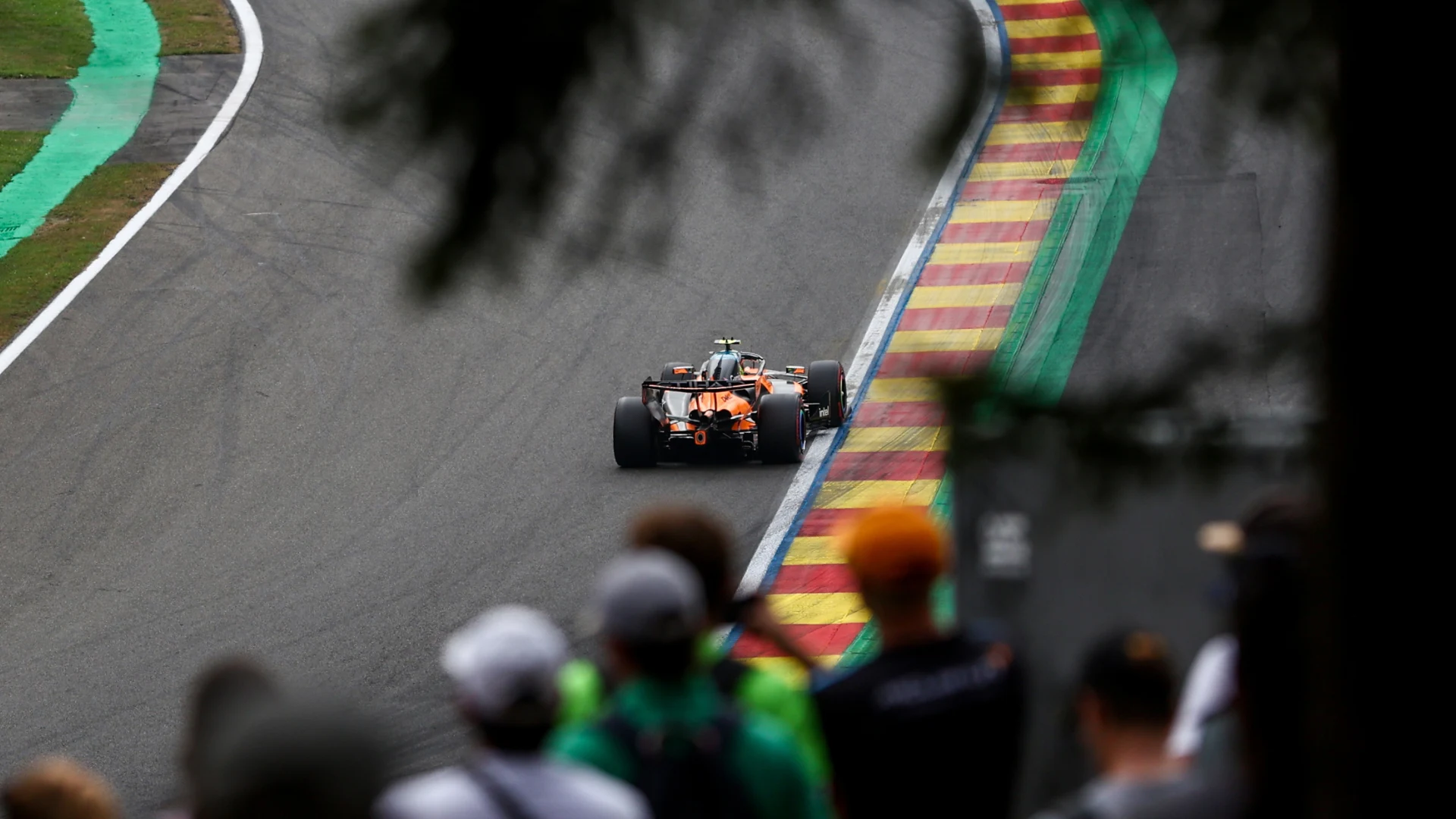
Highlights
- McLaren gained access to Mercedes power unit simulation tools at Spa.
- Simulation tools improve energy management and power unit deployment strategies.
- Lando Norris showed strong pace, despite a power unit grid penalty.
- Delayed tool access was due to complex power unit regulations.
- McLaren plans car upgrades starting in the Hungary Grand Prix.
- Better tools aim to narrow gap to front-runners in 2026 season.
McLaren levels a key preparation deficit at Spa, gaining access to Mercedes power unit simulation tools for the first time in 2026. The change delivers immediate competitive gains.
Andrea Stella frames the move as pivotal on power-sensitive tracks. Spa rewards precise energy deployment, mapping, and lift-and-coast management.

The tools sharpen pre-weekend planning and in-session responses. They also align McLaren’s preparation with the works team’s baseline.
Qualifying underlines the effect. Lando Norris shows front-running pace, while Oscar Piastri loses time on the final straight and through Blanchimont.
Stella attributes that loss to subtle deployment differences, not driving. The pattern mirrors gaps between Antonio Giovinazzi and George Russell at Mercedes.
McLaren first uses Mercedes’ power unit simulation suite at Spa, closing a key preparation gap to the works team.
Before Spa, McLaren relied on internal simulations and offline runs. The arrival of the Mercedes tools broadens scenarios and validation, as detailed in the latest Mercedes engine update for McLaren.
Track running still demands adaptation. Not every deployment profile or weather variable is modelled, but the baseline is stronger and more reliable.
Energy deployment differences, not driver error, explain Piastri’s key qualifying time loss at Spa.
Stella accepts frustration after Silverstone over not receiving the latest spec. He stresses the delay reflects complex power unit rules and modelling effort.
He describes it as a timing issue, not a lack of cooperation from HPP. That aligns with McLaren’s broader priorities in Andrea Stella’s strategic focus.
Spa practice and qualifying validate the shift. Norris runs second in two sessions, then tops one qualifying segment and finishes third in another, supporting the analysis of McLaren’s Belgian GP pace.
Norris posts session-topping laps at Spa but takes a grid drop for new power unit elements.
A grid penalty for new power unit parts drops Norris from third to 13th. Stella accepts the short-term cost for long-season reliability and performance.
McLaren plans chassis upgrades from Hungary to compound gains. The team also continues to refine driver-specific deployment, with Piastri’s development path a notable factor.
Improved tool access plus upgrades should sustain momentum. Stella views Spa as evidence that better weekends are coming.
Visual Summary
🪖
McLaren
Simulation Power Bridge
Mercedes PU
Simulator
Simulator
🏭
New simulation tools unlocked McLaren’s pace at Spa!
P1 & P3 for Norris in qualifying
(before a power unit penalty dropped him to P13)
P1 & P3 for Norris in qualifying
(before a power unit penalty dropped him to P13)
Before Spa
After Spa
Simulation power → McLaren performance
“It’s not about driver skill — just a few simulation tweaks made all the difference.”
Momentum to Hungary & Beyond!
Simulation unlocked.
McLaren’s leap at Spa: new tech, pole pace, and a path to the front!
McLaren’s leap at Spa: new tech, pole pace, and a path to the front!

Daniel Miller reports on Formula 1 Grand Prix weekends with race-day analysis, team-radio highlights, and point-standings updates. He explains power-unit upgrades, aerodynamic developments, and driver rivalries in straightforward, SEO-friendly language for a global F1 audience.