

https://shop.fervogear.com/cart

Fernando Alonso Reveals Aston Martin Upgrade’s Most Promising Boost

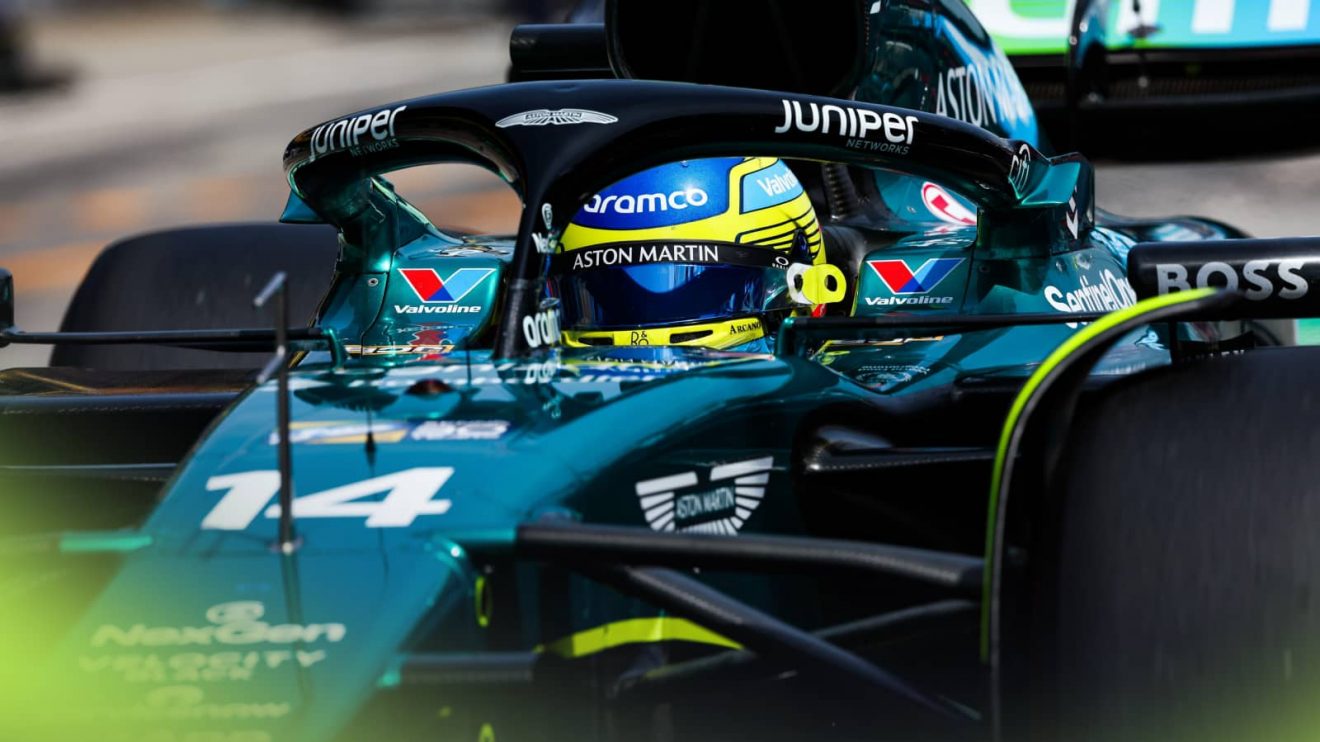
Highlights
- Alonso tested Aston Martin’s major 16-part upgrade in Hungary.
- Upgrade created a near B-spec AMR26, improving performance.
- Alonso finished 13th in FP1, Aston Martin’s best session result.
- Car felt more stable and predictable, aiding cornering control.
- Further engine tests planned at Zandvoort for enhanced competitiveness.
- Team focuses on setup learning amid challenges and limited track time.
Fernando Alonso evaluates Aston Martin’s overhauled AMR26 in Friday practice at the Hungarian Grand Prix, debuting a major 16-part upgrade aimed at restoring competitiveness after a difficult 2026 campaign.
The changes are so extensive Alonso describes it as a B-spec car, with only the front suspension, engine, and gearbox carried over from the previous specification.

Initial returns are encouraging. Alonso places 13th in FP1, Aston Martin’s best session since Monaco delivered the team’s lone point of the season.
FP2 proves less representative. Alonso ends 19th after his quickest lap is deleted for track limits amid red flags and traffic that fragment long-run and qualifying simulations.
Lance Stroll’s rear suspension failure in FP1 limits him to 11 laps across the day, reducing cross-car comparisons and constraining setup learning on the new platform.
“The car feels more stable and glued to the ground,” Alonso says, highlighting improved predictability.
Crucially, Alonso reports strong correlation between wind tunnel, CFD, and track behaviour, validating development tools and giving confidence the aerodynamic direction is correct.
That stability makes the car more predictable through corners, improving grip management and consistency, though both chassis refinement and power unit performance still require work.

Sixteen new parts leave only the front suspension, engine, and gearbox unchanged.
The Hungarian upgrade forces a reset on setup priorities, with ride-height, mechanical balance, and aero platform demands shifting relative to recent events.
Zandvoort is targeted for a revised engine specification, intended to complement the chassis work with improvements in drivability, efficiency, and reliability under race conditions.
Zandvoort is earmarked for a new engine version to complement the chassis gains.
Within a compressed midfield, even small gains in correlation and predictability can convert to qualifying track position and softer tyre management in stints.
The team frames this as step one, with learning here feeding next year’s car and Alonso’s continued push for updates through the season.
The immediate objective is to extract the new baseline cleanly across FP3 and qualifying, avoid reliability setbacks, and convert practice promise into points on Sunday.
Visual Summary
B-SPEC UNVEILED
16 Upgrades | 1 Leap Forward
From Prototype 🛠️ to Progress
FP1↑
13th
Best since Monaco
13th
Best since Monaco
FP2↓
19th
Track Limits + Traffic
19th
Track Limits + Traffic
“The most encouraging thing is how close the car felt to what we saw in the wind tunnel and CFD. It was more stable and glued to the ground.”
– Fernando Alonso
16
New Parts
New Parts
3
Original Components
Original Components
2
Sessions, Data Gained
Sessions, Data Gained
Hungary
Zandvoort
Zandvoort
Next up: new engine evolution debuts at Zandvoort
Fernando Alonso & Aston Martin unveil B-Spec—16 upgrades, clear progress, eyes set on the next step.

Daniel Miller reports on Formula 1 Grand Prix weekends with race-day analysis, team-radio highlights, and point-standings updates. He explains power-unit upgrades, aerodynamic developments, and driver rivalries in straightforward, SEO-friendly language for a global F1 audience.