
https://shop.fervogear.com/cart

Inside the Epic F1 Battle Between Ferrari and Mercedes

Highlights
- Ferrari and Mercedes battle over rear wing design at Hungary GP
- Hungaroring’s slow layout enables innovative high-downforce aerodynamic setups
- Ferrari’s SF-26 uses complex triple-element rear wing design
- Mercedes W17 features curved linkages and inverted T-shaped rear profile
- Aerodynamic rivalry impacts performance in corner-focused circuits like Zandvoort
- Technical duel reflects intense competition on track and in wind tunnels
Ferrari and Mercedes escalate a rear-wing design duel at the Hungarian Grand Prix, exploiting Hungaroring’s high-downforce window. The contest matters because cornering performance defines lap time more than drag here.
The twisty, low-speed layout reduces straight-line compromises. Teams can trial aggressive geometry and slot-gap treatments that would be risky on power-sensitive circuits.
Ferrari’s SF-26 runs a complex package. A triple-element wing sits on the main plane, complemented by three additional trailing-edge profiles to enhance load and consistency.
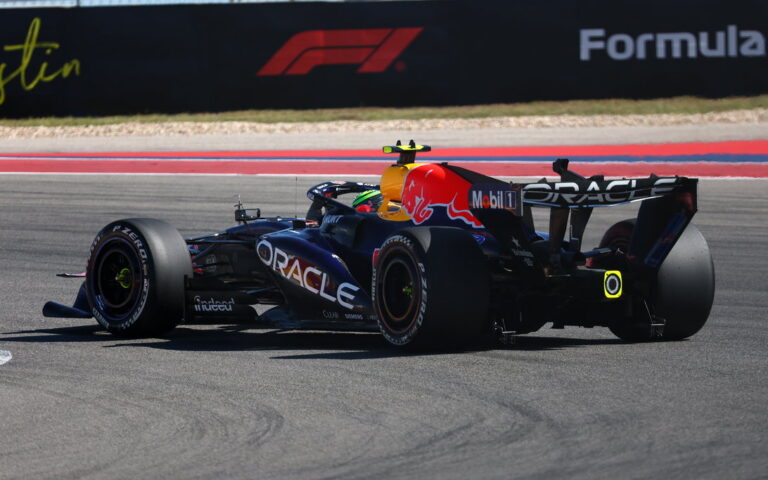
Mercedes counters with intricate mechanics. Curved linkages feed a central actuator that manages the flap while shaping flow beneath a distinctive inverted T-profile. Extra mid-span winglets refine local load distribution.
Ferrari’s SF-26 combines a triple-element main plane with three trailing-edge profiles to maximise downforce at slow speeds.
The gains are track-specific. Hungaroring, Monaco, and Zandvoort reward maximum rear stability and tyre-friendly load. Ferrari expects benefits at Zandvoort if conditions mirror Budapest.
Early Budapest running supported the direction, with Ferrari’s pace in second practice reinforcing high-load priorities.
Zandvoort’s corner-dense layout should favour similar high-downforce rear-wing architectures.
Mercedes pursues similar aims with different detailing. The linkage-driven flap strategy targets controllable stall margins and DRS efficiency without sacrificing mid-corner support.
Such details can swing qualifying. A tenth gained through cleaner mid-span flow often determines track position at overtaking-light venues.
Recent insights into Ferrari’s Hungarian strengths frame these developments as decisive in tight grids.
Small winglets and profile tweaks can decide front-row starting spots at the Hungaroring.
Driver confidence is central. Teams chase peak grip without rear-end snap, ensuring predictable load transfer over kerbs and through long-duration corners.
Several rivals, including Lewis Hamilton, flagged Ferrari’s potential on high-downforce tracks before running began.
As the season resumes after the break, the wind-tunnel race intensifies. Rear-wing concepts refined here are likely to inform late-season packages at corner‑critical circuits.
Visual Summary
Ferrari
🔬 Triple-layered Innovation
VS
Mercedes
🔧 Actuated Precision
The Hidden War of Wings:
Ferrari’s Triple-Element Attack vs Mercedes’ Curved Precision
Ferrari’s Triple-Element Attack vs Mercedes’ Curved Precision
Hungaroring: Downforce Laboratory
⚡
Ferrari and Mercedes are locked in a design shootout:
Every detail = tenths gained or lost
Ferrari and Mercedes are locked in a design shootout:
Every detail = tenths gained or lost
Zandvoort & Monaco next:
Who dares, wins.
➡️
Aero Wars 2026

James William covers the IMSA WeatherTech SportsCar Championship, from the Rolex 24 at Daytona to sprint-race formats. His reports include prototype performance reviews, GT class battles, and pit-stop strategy insights for endurance-racing fans.