Skip to content
https://shop.fervogear.com/cart

Martin Brundle Reveals Truth Behind Max Verstappen’s Strange Car Degradation Claim

Highlights
- Max Verstappen finished second at the Hungarian Grand Prix.
- He faced car degradation and handling problems during the race.
- Verstappen gained position after Lewis Hamilton’s late pit stop.
- Martin Brundle explained aerodynamic damage caused downforce loss.
- Verstappen’s strong lap times secured a crucial podium finish.
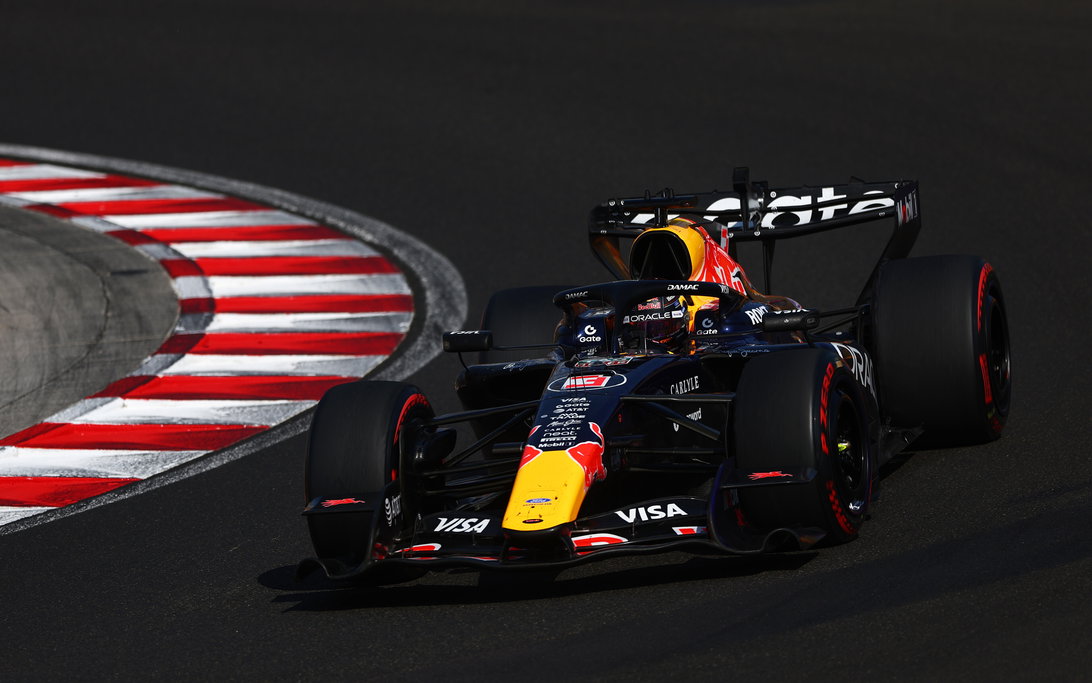
Max Verstappen finishes second in the Hungarian Grand Prix despite persistent handling complaints and suspected aerodynamic degradation, gaining position when Lewis Hamilton pits late under the Virtual Safety Car.
The result matches his season best and sustains his title push. It also underlines Red Bull’s capacity to extract points on difficult Sundays.

Verstappen fights a Ferrari throughout, with a forceful Turn 1 move highlighting his race craft. He questions Hamilton’s braking on radio, but Martin Brundle deems the driving robust and fair.
Brundle’s reading focuses on aerodynamic load loss, most likely from floor damage. The Hungaroring’s kerbs punish low-ride-height cars, compounding sensitivity and degrading stability through long, loaded corners.
Loss of floor efficiency reduces downforce and tyre support, widening cornering traces and inflating slip angles. That invites temperature spikes and further balance drift across a stint.
[p]Red Bull’s scenario mirrors the known risk envelope for 2026-spec ground-effect cars: small floor harm, large lap-time penalty, especially in medium-speed sequences.[/p]
The team’s own Hungarian GP damage analysis sets out how minor abrasions can erode peak load. Verstappen also references gearshift inconsistencies that disrupt corner entry rhythm.
“Hamilton’s driving was fair,” Brundle says, countering Verstappen’s radio claim of aggressive braking.
Strategy proves decisive. Hamilton’s late stop under the VSC trims stationary time but still costs track position. Verstappen’s earlier positioning and consistent laps secure the undercut-like gain.
His Turn 1 commitment attracts debate, yet aligns with modern defensive and attacking norms. For context on such moves, see this dive-bomb explanation within recent stewarding boundaries.
Floor damage can slash downforce and grip, transforming balance and tyre life within a handful of corners.
Despite balance drift, Verstappen holds competitive lap time spread, protecting the podium. That resilience echoes elements from his broader Hungarian GP struggle across practice and qualifying.
Brundle’s assessment also fits the “small error, big cost” pattern highlighted in a recent hard truth about margins in modern F1. Ride-height windows remain punishingly tight.
Verstappen gains second when Hamilton pits under the VSC, then locks the result with composed, low-degradation laps.
Red Bull will chase robustness against kerb strikes and floor strikes to reduce recurrence risk. That effort carries weight with the Dutch and Italian rounds approaching on a demanding calendar.
The takeaways are straightforward: Verstappen converts a compromised car into maximum points available, while Red Bull’s sensitivity window, once breached, still defines the day’s ceiling.
Visual Summary
📢
“Car feels bad – degradation everywhere!”
“Car feels bad – degradation everywhere!”
P2 / Best 2026 result
Maintained pace
despite damage
despite damage
Brundle: “Impressive resilience”
🥇
Valuable championship points secured
(+finishing ahead of rival)
(+finishing ahead of rival)

Daniel Miller reports on Formula 1 Grand Prix weekends with race-day analysis, team-radio highlights, and point-standings updates. He explains power-unit upgrades, aerodynamic developments, and driver rivalries in straightforward, SEO-friendly language for a global F1 audience.