

https://shop.fervogear.com/cart

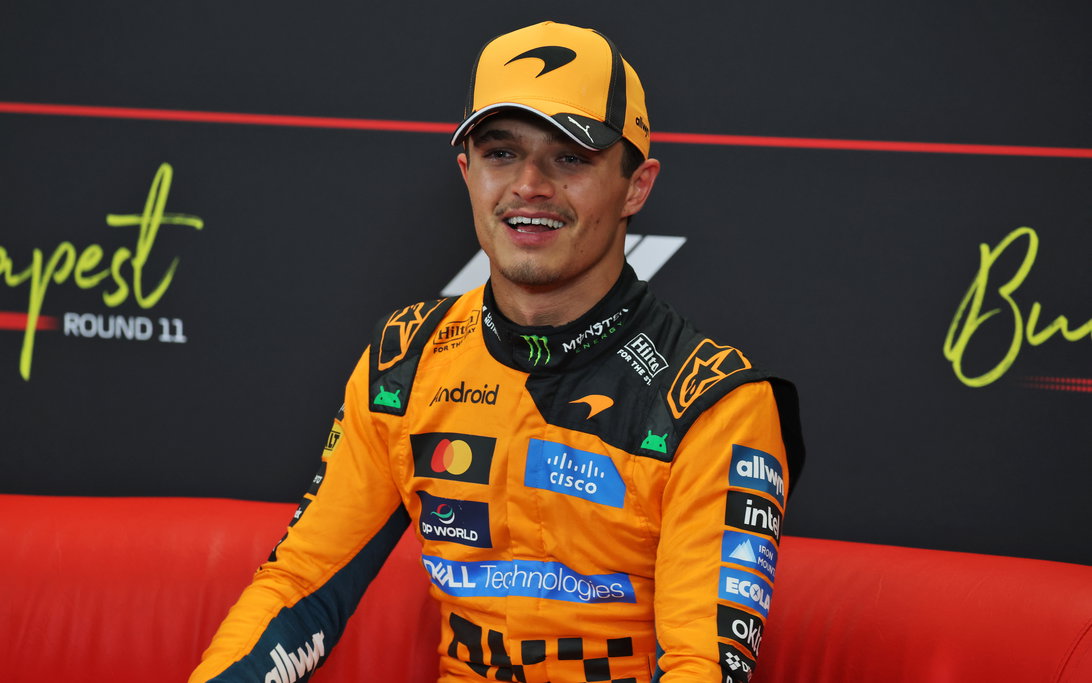
Lando Norris Reveals Shocking Shift in Key F1 Change

Highlights
- Lando Norris adapts his driving style yearly in Formula 1.
- George Russell struggles with new car generation and regulations.
- F1’s 2023 rules changed aerodynamics and power unit performance.
- Norris views adaptation as essential for top Formula 1 drivers.
- Drivers like Hamilton and Verstappen also face evolving car demands.
- Ongoing regulations keep challenging teams and drivers every season.
Lando Norris says continual adaptation defines his Formula 1 approach as the 2026 regulations bed in, drawing a contrast with George Russell’s difficulties extracting performance from the latest car generation.
This year’s technical package reshapes aerodynamics and power units, moving away from the ground-effect concepts introduced in 2022, and altering how drivers manage balance, ride, braking stability, and tyre usage.

Those changes have exposed weaknesses for some, notably Russell, who has often trailed teammate Kimi Antonelli and been compelled to re-evaluate inputs, corner approaches, and set-up preferences to regain competitiveness.
Norris frames this landscape as familiar. He says he has adjusted his driving every season, describing adaptation as a baseline requirement rather than an exception at the top level.
“I’ve had to change my driving style every single year of my life.” — Lando Norris
He referenced a 2018 Hungary test as a contrast, noting that techniques effective then required revision as machinery evolved, with each season demanding a fresh understanding of characteristics and limits.
For Norris, the measure of an elite driver is agility. If a competitor cannot recalibrate to a different car, he argues, that exposes a ceiling the category rarely forgives.
“If you’re not ready to adapt to a different car, then you’re not at a good enough level.”
He is blunt about responsibility. Drivers are paid to drive whatever they are given, good or bad, easy or difficult, and to refine techniques quickly through practice, debriefs, and simulation.
That process now hinges on extracting rotation without destabilising entry, managing energy deployment, and protecting tyres across stint profiles, tasks McLaren’s engineers and Norris iterate every weekend.
The contrast with Russell’s current trajectory is striking. Being shaded by Antonelli has forced changes to driving cues and feedback loops while the team chases a reliable operating window.
Experience should accelerate adaptation. Established figures such as Lewis Hamilton and Max Verstappen constantly adjust to new demands, leveraging continuity to shorten the learning phase versus less-seasoned teammates.
“It’s our job… to drive any car you get given, whether it’s good, bad, easy, or hard.”
Norris’s current outlook has been examined alongside the McLaren narrative and his title push and season objectives.
Equally, his mid-season recovery underscores the value of discarding ingrained habits quickly, with gains coming from methodical iteration rather than wholesale reinvention.
With regulations still evolving, adaptation will continue to decide margins. The drivers and teams that compress learning curves fastest should capitalise as performance windows shift from circuit to circuit.
Visual Summary
🦎
ADAPT
OR FALL BEHIND
OR FALL BEHIND
Lando Norris: “If you’re not ready to adapt to a different car, then you’re not at a good enough level.”
🔄
New Aero + Power Units
🕹️
Driving Style Reset
💸
Millions at Stake
New F1 regulations force radical change.
While some struggle to relearn, Norris stays in the chameleon zone:
adapt, survive, and thrive—or get left behind.
While some struggle to relearn, Norris stays in the chameleon zone:
adapt, survive, and thrive—or get left behind.

Daniel Miller reports on Formula 1 Grand Prix weekends with race-day analysis, team-radio highlights, and point-standings updates. He explains power-unit upgrades, aerodynamic developments, and driver rivalries in straightforward, SEO-friendly language for a global F1 audience.