

https://shop.fervogear.com/cart

Gary Anderson Reveals F1 2026’s Game-Changing Low-Drag ‘Monza Special’ Aero Tweaks


Highlights
- Monza balances low drag with downforce for stable high-speed corners.
- Drivers brake from 340 km/h to 80 km/h within just over a second.
- Rear wing adjusts from low drag to high downforce during braking.
- McLaren tests a 180-degree rotating rear wing for faster deployment.
- Ferrari upgrades turbocharger and modifies aerodynamics for Monza performance.
- One-stop strategy emphasized due to braking stability and tire management.
Monza demands low drag without sacrificing downforce, forcing teams to balance efficiency and stability. With heavy braking zones defining the lap, rear-end security and predictable brake balance decide performance.
Cars exceed 340 km/h on the straights at the Italian Grand Prix at Monza, then decelerate to around 80 km/h in roughly 100 meters, taking just over a second. That compresses margin for error at braking points.

Rear wings switch from low-drag to high-downforce settings just before turn-in. Drivers hit the pedal hard, then bleed pressure as grip falls. Missed references quickly convert to tenths, or worse.
Drivers brake from 340 km/h to 80 km/h in just over a second at Monza.
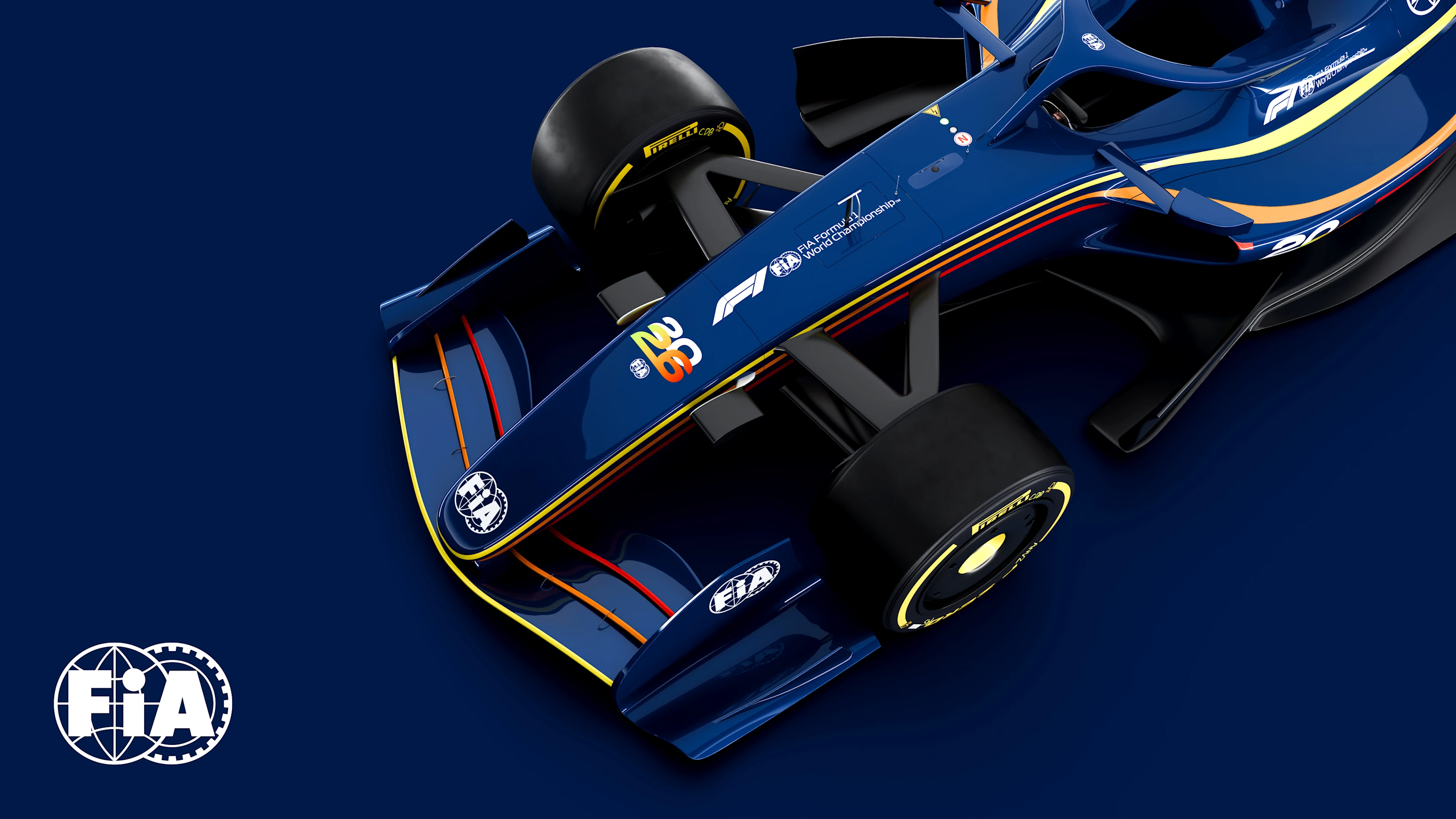
Energy harvesting from the rear axle tapers near the end of braking, handing more work to the hydraulic system. Anti-dive fronts and anti-lift rears stabilise pitch, safeguarding aero consistency.
Those devices reduce pedal feedback, so modulation becomes a driver skill differentiator. Hybrid sophistication helps, but precision with pressure release ultimately protects tyre grip and keeps the car straight.
Rear-wing actuation must complete within 0.4 seconds under the regulations.
McLaren continues testing its 180-degree rotating H-wing, prioritising rapid actuation and stability. Detailed review of Monza deployment patterns underlines the competitive value of instant aero load during braking.
The team only fits parts once convinced of gains. Revised actuator and linkage target faster movement and controlled opening. The wing must switch within 0.4 seconds. A gurney aids stability.
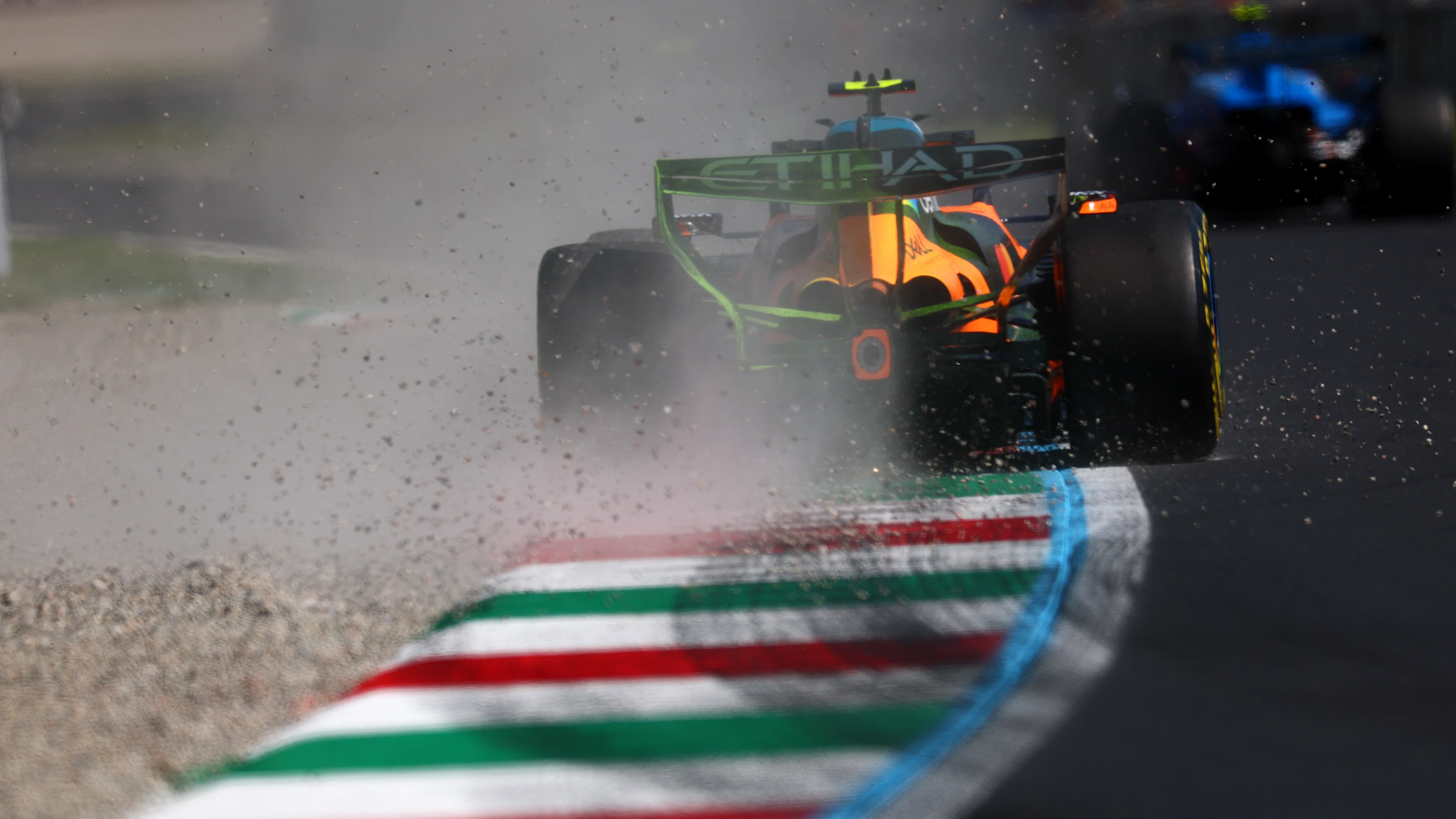
Ferrari treats Monza as a statement race, backing an upgraded power unit with a larger turbo.
Detailed insights into Leclerc’s Ferrari Monza campaign reflect that push. The old small-turbo launch edge fades under the FIA’s five-second start-light delay.
Aerodynamic revisions reduce bargeboard vanes from three to one, likely persisting beyond Monza. Rear brake ducts gain larger exits to aid temperature control through variable loads.
Monza’s long straights cool assemblies before heavy stops rapidly heat them, so consistent cooling matters. Ferrari also raises its exhaust gas blocker, closing more vertically while keeping a central opening.
Narrower side vanes without endplates reduce drag and may complement the turbo’s greater flow needs. The package seeks stability on entry without a straight-line penalty.
Mercedes drops rear-wing extensions but retains a gurney for rear stability. It also trims the mirror’s sidepod vane to shave drag, an accumulation play for long, flat-out sections.
Red Bull simplifies the rear wing’s trailing edge and runs a full-length gurney. Actuator geometry changes follow incidents in Austria and Silverstone, targeting robust operation under kerb strikes and yaw.
Williams adds small vanes near the halo to clean flow and shortens bargeboard trailing edges. The gains are modest but combine well at high speed.
Strategy converges on a one-stop race. Pit time loss is punishing as rivals run flat-out, increasing pressure on tyre life, brake stability, and gentle deployment of hybrid energy, as outlined in Italian GP expectations analysis.
One-stop strategy magnifies tyre management and braking stability across the stint.
Drivers must nurse worn tyres while nailing references lap after lap. Even small errors cascade into time losses, and no advantage is secure until the chequered flag.
Visual Summary
340 km/h
Max speed
on Monza’s straights
on Monza’s straights
BRAKE!
80 km/h
Minimum speed
in chicanes
in chicanes
Reaction margin: 1 meter too late = lost time
Red = danger
McLaren H-Wing: 0.4s actuation
Braking stability is everything at Monza.
Miss your mark by a meter—lose it all.

Daniel Miller reports on Formula 1 Grand Prix weekends with race-day analysis, team-radio highlights, and point-standings updates. He explains power-unit upgrades, aerodynamic developments, and driver rivalries in straightforward, SEO-friendly language for a global F1 audience.