

https://shop.fervogear.com/cart

De la Rosa Reveals How Aston Martin’s Bold Upgrades Succeeded


Highlights
- Aston Martin introduced major AMR26 upgrades at Hungarian Grand Prix
- Team focused all efforts on B-spec car for Round 11
- New Honda power unit debuted at the Dutch Grand Prix
- Fernando Alonso’s confident reaction eased team’s nerves post-upgrade
- Adrian Newey leads design; Mike Krack supports race operations
- Aston Martin currently sits tenth, aiming for continuous development
Pedro de la Rosa calls the Hungarian Grand Prix a turning point for Aston Martin, as the AMR26’s B‑spec upgrade delivered a clear step amid a challenging 2026 season.
The team front‑loaded development into Round 11, diverging from rivals’ incremental updates after early reliability and performance setbacks forced a reset of priorities and timelines.

The revised AMR26 qualified stronger, edging Cadillac and Williams, validating significant aero repackaging with slimmer sidepods and radiators, despite persistent concerns over cooling margins and efficiency.
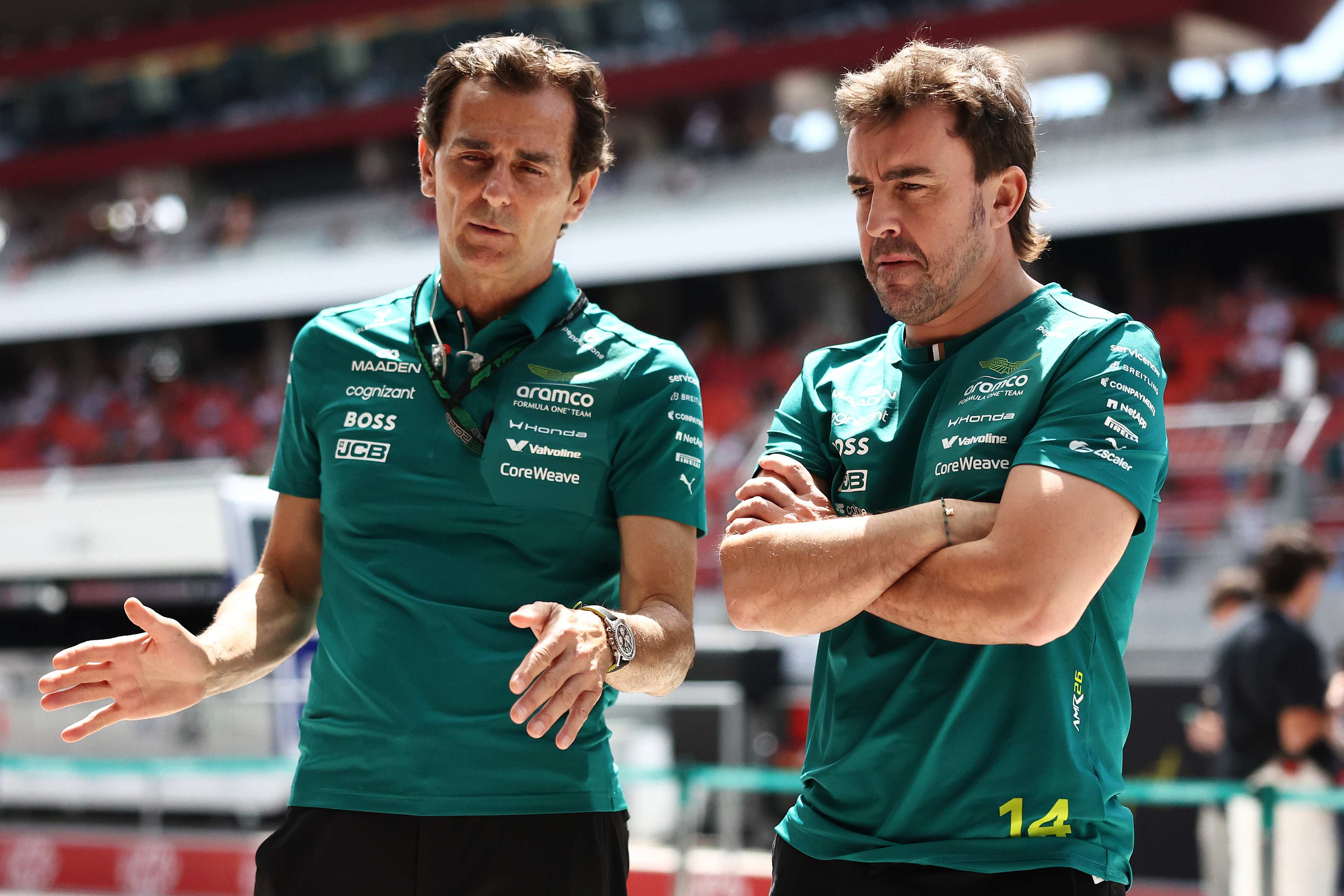
De la Rosa admits Budapest brought nerves after months of intensive rework, with the ultimate performance delta uncertain until the first representative laps.
Fernando Alonso’s immediate feedback calmed the garage. His body language after the installation lap suggested correlation, giving engineers confidence the concept had unlocked usable performance.
“Yeah, it’s there, it’s there.” — Fernando Alonso’s early verdict on the AMR26 B‑spec
Momentum continued at Zandvoort with a new Honda power unit, widening the performance envelope and reinforcing the step made by the bodywork and cooling revisions.
The approach contrasted with rivals’ smaller packages, but Aston Martin framed the risk as necessary. Their focused plan matched internal milestones and resource allocation.
The unusual schedule reflected a strategic bet on a single, cohesive package. It followed detailed planning outlined in the team’s upgrade plans.
Alonso’s future remains a talking point. De la Rosa stresses decisions won’t hinge on one race, but on belief in the broader project and its development cadence.
“You either believe in the project or you don’t.” — Pedro de la Rosa on Alonso’s mindset
That stance aligns with recent coverage around Alonso’s decision-making at Aston Martin, where long‑term direction outranks short‑term results.
Adrian Newey’s arrival raised expectations and scrutiny. De la Rosa says Newey leads the design direction, while Mike Krack supports race operations and continuity when Newey is away.
The reshaped structure is part of the team’s broader transformation following the Red Bull‑to‑Aston Martin signing wave that heightened pressure to deliver quickly.
Despite the progress, Aston Martin sits tenth with three points. The team accepts the deficit to leaders reflects execution speed and investment timing across departments.
B‑spec focus for Round 11 compressed months of development into one decisive rollout.
De la Rosa argues the recent gains prove the trajectory is upward from a low baseline. The priority now is sustaining upgrade flow and maintaining correlation.
With Honda support and a clearer development path, Aston Martin targets consistent gains rather than headline peaks, aiming to climb from lower points positions through relentless iteration.
“We can do it,” De la Rosa concludes, underlining the non‑negotiable: continuous development must not stop if the team is to close the competitive gap.
Visual Summary
⚡ “It’s there, it’s there.”
AMR26 ’s biggest leap: Hungary
Alonso’s instant confidence, team’s relief
Alonso’s instant confidence, team’s relief
➤
⛔
Rough start: Reliability & weak pace
🚀
Hungary: B-spec debut – Punches through the midfield!
⚙
Dutch GP: Honda power unit arrives – New energy
💪
Team spirit & belief returns
P10 in Constructors
3 points ▲
3 points ▲
Alonso’s glance = Belief ✨
No words needed. The team knew: upgrade success.
“We can do it. It’s just a matter of never stop the development path that we are in right now.”
Pedro de la Rosa ⚒
Development Race: Never Stop
Momentum Building…
Daniel Miller reports on Formula 1 Grand Prix weekends with race-day analysis, team-radio highlights, and point-standings updates. He explains power-unit upgrades, aerodynamic developments, and driver rivalries in straightforward, SEO-friendly language for a global F1 audience.