

https://shop.fervogear.com/cart

McLaren Blames 2025 Hangover for Struggling ‘Immature’ F1 Car

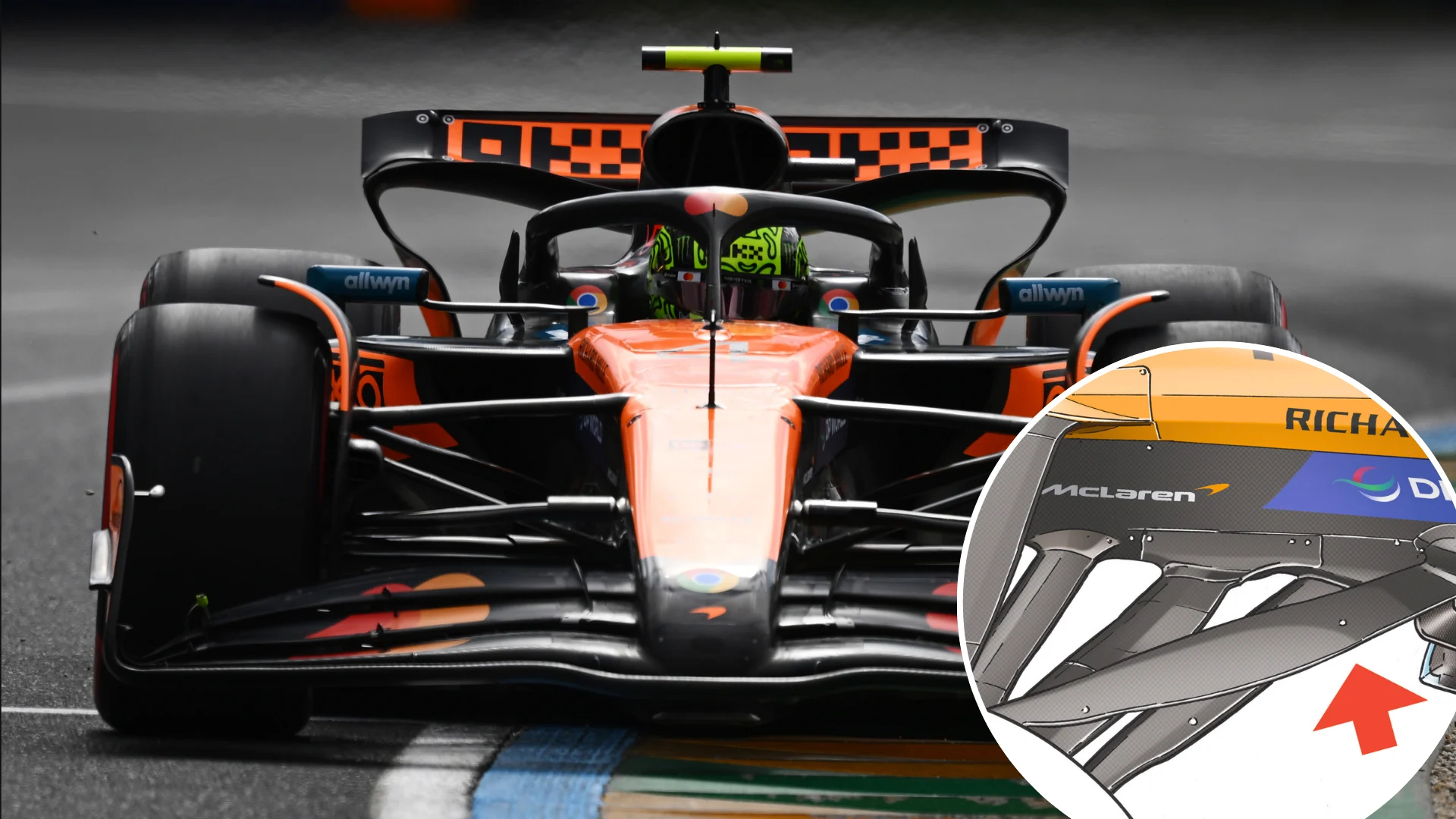
Highlights
- McLaren’s MCL40 described as an “immature project” for 2026.
- Lando Norris won at Hungary and Dutch Grands Prix.
- McLaren stands third, 52 points behind Mercedes in standings.
- Car performs better on high-speed circuits than slow corners.
- Development focus continued after 2025 championship affects current progress.
- Team aims to refine weaknesses and challenge for more podiums.
McLaren enters 2026 balancing progress with compromise, as Andrea Stella labels the MCL40 an “immature project” after the 2025 title push, yet recent gains make it a live contender.
Early races place McLaren behind Mercedes and Ferrari, limited by chassis form and the demands of integrating new power units alongside evolving aerodynamic targets.

The car excels on high‑speed, flowing layouts but loses predictability in slow corners, where braking stability, rotation, and kerb usage curb consistency for Lando Norris and Oscar Piastri.
Upgrades around Hungary shift momentum. Norris converts pole to victory in Budapest, adds another win at Zandvoort, and had earlier snatched pole in Spain after a tricky build‑up.
Andrea Stella calls the MCL40 an “immature project” despite clear performance gains.
Those results move McLaren to third, 52 points adrift of Mercedes, and 76 clear of Red Bull. The path reflects how development strategy dictates competitive peaks and troughs.
Stella notes McLaren sustained an aggressive programme after the 2025 double, creating a season‑long development battle while rivals eased off once title prospects faded.
Even on strong weekends, corner‑specific deficits persist. Braking phases and kerb interactions still cost lap time at venues that demand precision over low‑speed bumps and traction zones.
Lando Norris wins in Hungary and Zandvoort underline the MCL40’s growing competitiveness.
Setup refinement mitigates volatility. Norris’s surprise Spanish pole, following a difficult Friday, shows the car’s window is narrow but rewarding when the balance aligns.
Notably, the upgrade introduced at the Italian Grand Prix added key efficiency and integration steps, helping bridge aero‑mechanical and power‑unit interaction gaps across varied layouts.
Learning across three key tracks now shapes priorities, informing how McLaren protects high‑speed strength while targeting low‑speed gains.
The immediate focus is braking stability, kerb riding, and traction, delivered without compromising efficiency. That maturity should translate into more dependable qualifying and race execution.
High‑speed strength is clear; slow‑corner braking and kerb performance remain McLaren’s priority.
With the development rate intact, McLaren closes on the leaders. The MCL40 is not yet complete, but its ceiling looks higher as upgrades converge on its weaknesses.
Visual Summary
“Immature Project”
— Andrea Stella, early 2026
— Andrea Stella, early 2026
🏁 Race-winning
Potential
Potential
🇭🇺
Hungary
Win + Upgrades
Win + Upgrades
🇳🇱
Dutch GP
Win
Win
🇪🇸
Spain
Surprise Pole
Surprise Pole
3rd in Constructors’ – closing the gap to front-runners
↑
Continuous
Development
2025
⟶ 2026
Development
2025
⟶ 2026

Daniel Miller reports on Formula 1 Grand Prix weekends with race-day analysis, team-radio highlights, and point-standings updates. He explains power-unit upgrades, aerodynamic developments, and driver rivalries in straightforward, SEO-friendly language for a global F1 audience.