

https://shop.fervogear.com/cart

Will Williams F1’s Bold ‘Big Swing’ Upgrade Deliver Success?

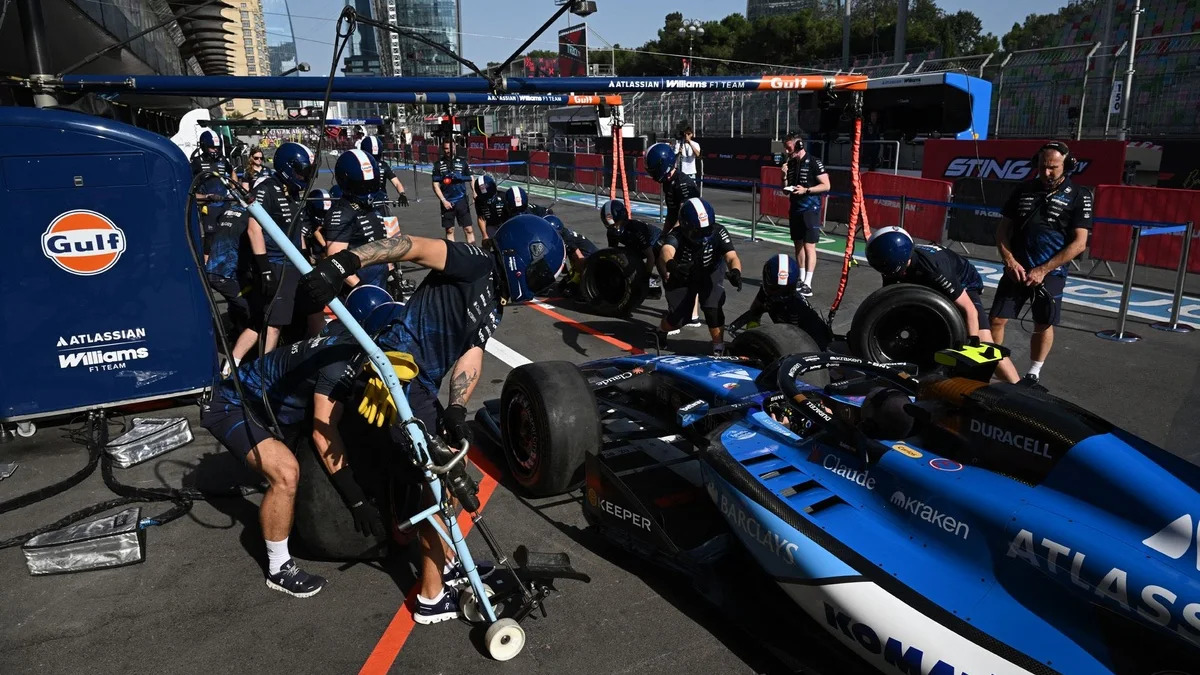
Highlights
- Williams introduces major FW48 car upgrade at Azerbaijan Grand Prix
- New chassis is lighter, addressing original car’s weight issues
- Upgrade includes revised floor, tail, brake airflow, and suspension
- Albon calls it a “big step,” Sainz says upgrade overdue
- Performance gains depend on aerodynamics, power unit, and suspension tuning
- Williams aims to close gap gradually amid rapid midfield development
Williams debuts a major FW48 upgrade at the Azerbaijan Grand Prix, delivering an “almost completely new” car James Vowles promised. The target is trimming the midfield gap and informing 2027.
Williams’ package centres on a lighter chassis, revised floor and tail, plus brake airflow and rear suspension tweaks. It targets weight reduction and more stable downforce after early crash-test failures.

Alex Albon calls it a “big step.” Carlos Sainz is more guarded, arguing this is where the car should have started, as outlined in his assessment of the upgrade.
At the season’s start, the FW48 was estimated at least 20kg overweight. Roughly 0.03s per kilo makes weight loss a clear lap-time gain, track dependent.
Earlier Miami updates brought a new floor, front wing, and Ferrari-style exhaust winglet. Despite progress, the car stayed heavy, with cost-cap limits enforcing opportunistic lightening during part replacements.
Lighter chassis addresses initial overweight, unlocking immediate lap-time.
The new chassis is largely invisible externally, so absent from FIA presentation documents. Structural changes aim to recover stiffness targets while trimming mass to reach the minimum limit.
Gains must correlate across windtunnel, CFD, and track. Baku’s long straights and heavy braking expose drag efficiency, brake cooling, and ride compliance over bumps and kerbs.
Albon expects the weight saving to yield meaningful time yet stays realistic about relative pace, given rivals’ development. That context underpins our wider Williams upgrade trend analysis.
Weight reduction alone can deliver several tenths, circuit and conditions permitting.
Sainz frames the package as overdue after early-season deficits to the midfield. That aligns with James Vowles’ long-term rebuild narrative in recent reflections.
Once minimum weight is reached, performance hinges on aerodynamic efficiency, power unit calibration, and mechanical platform. Williams already adjusted rear suspension geometry earlier this season.
Against relentless midfield iteration, single big steps rarely reset orders. Resource choices under the cost cap must also plot the 2027 direction, as discussed around the FW48 B-spec milestone.
Aero steps only pay when the car’s platform and airflow structures work in harmony.
In Baku, results will hinge on opening the setup window quickly, managing brake temperatures, and trading straight-line speed against downforce for the castle sector.
Success should be judged against direct rivals on qualifying delta and high-fuel pace. Even if gains prove modest, this looks a necessary foundation for the programme’s next phase.
Visual Summary
🪨
🔩
⚙️
New Floor
💨
New Chassis
🔧
Aero
Williams Finally Goes Lighter & Faster
FW48 B-Spec revealed at Azerbaijan GP
⬇️ -20kg weight, new chassis, fresh aero, hope for pace!
⬇️ -20kg weight, new chassis, fresh aero, hope for pace!
Delay
Mar
Mar
Miami
May
May
Baku
Now!
Now!
Long-awaited upgrade: arrives mid-season, not at the start
🚗💨
Midfield pace
Williams
Chasing the pack – real gains, but rivals are still ahead.
🗣️
“It's a big step for us, but we need to see how much it’s worth out there.”
“It's a big step for us, but we need to see how much it’s worth out there.”
– Alex Albon
💬
“This is what should’ve been at race one. We still have work to do.”
“This is what should’ve been at race one. We still have work to do.”
– Carlos Sainz
The Baku upgrade is a leap – but there's still a marathon ahead.
Lighter, reworked, and with fresh hope, Williams finally sheds its heaviest baggage. The fight for midfield relevance is not over yet.
⚡️

Daniel Miller reports on Formula 1 Grand Prix weekends with race-day analysis, team-radio highlights, and point-standings updates. He explains power-unit upgrades, aerodynamic developments, and driver rivalries in straightforward, SEO-friendly language for a global F1 audience.