
https://shop.fervogear.com/cart

Gary Anderson Unveils Audi’s Massive F1 Upgrade Impact

Highlights
- Audi unveiled major car upgrades at the Azerbaijan Grand Prix.
- New front wing design improves airflow around front tyres.
- Sidepod and cooling exit redesigned for better aerodynamic efficiency.
- Diffuser supports and rear wing trimmed for enhanced performance.
- Cooling exits increased to four for improved radiator pressure drop.
- Audi aims to close midfield gap with extensive upgrades.
Audi introduces one of the season’s most extensive upgrade packages in Baku, aiming to reduce the midfield deficit at the Azerbaijan Grand Prix.
The value rests on correlation and how the elements interact, not volume. The focus is tyre-wake control, floor sealing, and a broader cooling and rear-end efficiency push.

Audi brings one of 2026’s largest upgrade packages to Baku, targeting a meaningful midfield step.
The front wing is redesigned. The mainplane adopts a sharper outboard upsweep while retaining its link to the footplate, with the flap stack shifted further inboard.
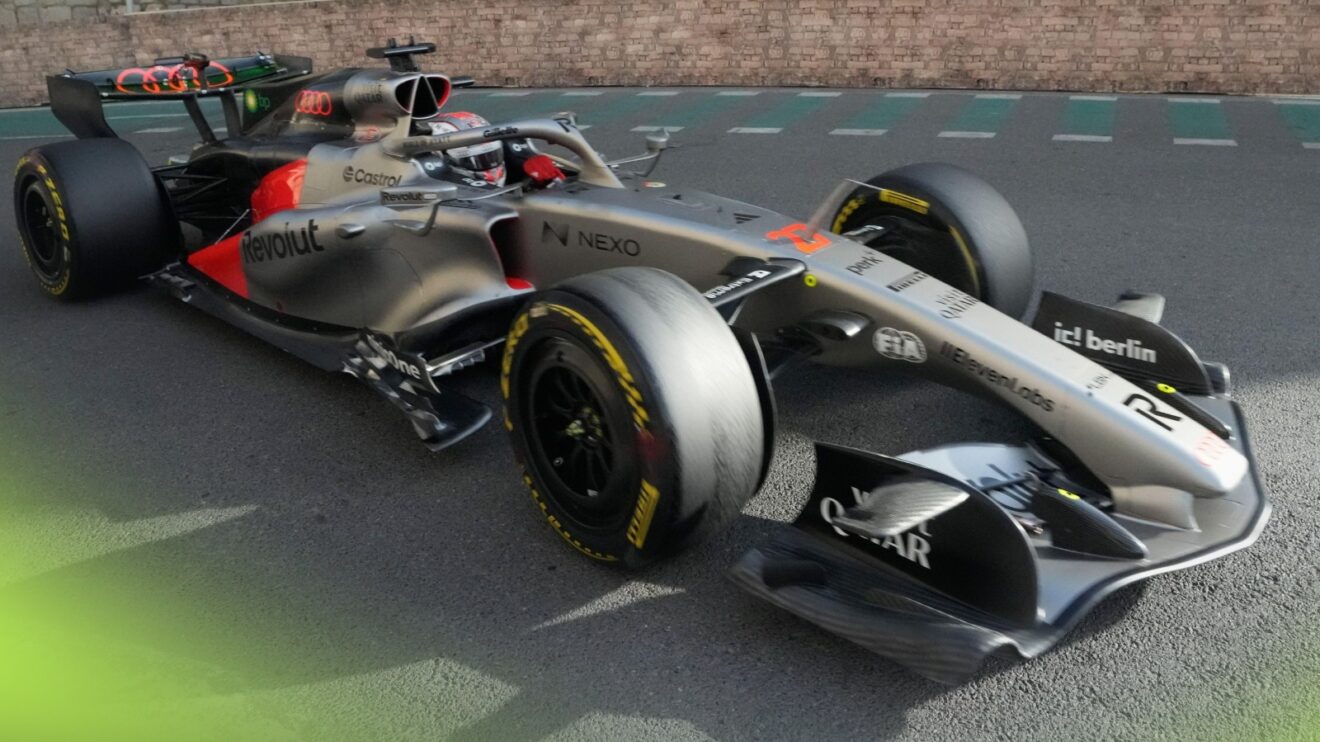
This targets more stable airflow around the front tyre across steering lock. A more three-dimensional endplate leading edge is designed to strengthen outwash.
Vane geometry changes complement that. The horizontal vane loses camber, while the near-tyre vane grows in size and complexity to improve wake conditioning.
The front-wing actuator remains on top, notably smaller rather than hidden, preserving packaging freedom while trimming disturbance.
Reworked front-wing geometry and endplate shaping aim to increase outwash and stabilise the crucial tyre wake.
The sidepod leading edge and radiator inlet, long an Audi hallmark and recently echoed by McLaren, are also reprofiled to refine upstream flow control.
A more rounded section at the floor’s leading edge likely smooths flow feeding the underfloor or guiding it around the floor’s flank.
Stronger sidepod downwash prompts a switch from fine louvres to a larger, conventional cooling exit, split between a forward opening and a bulbous rear section.
Behind the forward floor fences, a sharp turned-up edge sheds a sealing vortex, helping stabilise floor load and improve efficiency.
Additional vanes ahead of the rear-tyre contact patch promote outwash, protecting diffuser inflow quality from tyre wake encroachment.
Detail work includes a vane at the halo–headrest junction to calm turbulence in a sensitive region, subtly improving stability for the driver.
Cooling exits increase to four, improving radiator pressure drop while managing the inevitable downforce trade-off.
Cooling exits expand to four, targeting better radiator pressure drop without a significant downforce penalty.
Diffuser stays are lengthened and re-angled, aiming to stiffen the assembly and unlock a higher diffuser operating window.
The rear wing receives trailing-edge trim options, offering drag and load trade-offs to suit Baku’s unique demands across the weekend.
Re-angled diffuser stays and trailing-edge wing trims broaden setup flexibility for circuit-specific demands.
The midfield remains ultra-compressed. Alpine and Williams have also pushed recent upgrades, with Williams prioritising weight reduction, raising the execution bar.
Audi’s form has fluctuated, including a notable setback earlier this season, underlining the importance of reliable correlation.
Momentum is the target, particularly after a recent winning streak, with Baku offering a stern test of drag efficiency and stability.
Baku’s long straights and heavy-braking zones reward low-drag efficiency and predictable balance. The package offers tuning latitude; the verdict arrives over the next events.
The upgrade sits within a wider project, alongside planning for Audi’s 2027 F1 lineup, as the team seeks sustainable competitive gains.
Visual Summary
○○○○
Audi Unleashes Mega-Upgrades in Baku
Sweeping new parts, radical wing, vortex tricks, and bold cooling revamp.
Can Audi turn engineering ambition into points?
New Parts:
9+
9+
From struggle ➔ chasing breakthrough
🚗
Alpine
Williams
Audi
Williams
Audi
🚙
🏎️
Audi joins the upgrade arms race—is this the leap they need?
👀
All eyes on Audi.
New innovations, bold chances, and the belief that Baku could spark a turnaround.

Daniel Miller reports on Formula 1 Grand Prix weekends with race-day analysis, team-radio highlights, and point-standings updates. He explains power-unit upgrades, aerodynamic developments, and driver rivalries in straightforward, SEO-friendly language for a global F1 audience.