

https://shop.fervogear.com/cart

Max Verstappen Issues Bold ‘One Second’ Claim After George Russell Loss

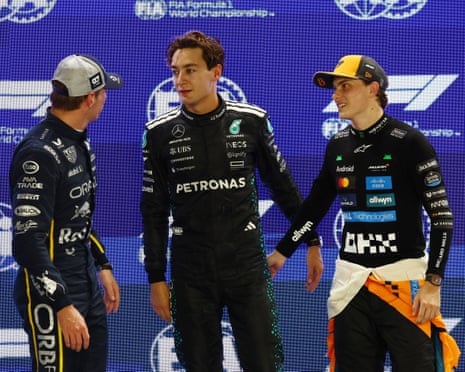
Highlights
- Max Verstappen finished narrowly behind George Russell in Azerbaijan GP.
- Verstappen started eighth and struggled in qualifying before the race.
- Tyre strategy was crucial, with a late switch to soft tyres aiding pace.
- Safety car after Alex Albon’s crash enabled Verstappen’s tyre change.
- Verstappen said overtaking Russell would be difficult even from second position.
- Close rivalry between Red Bull and Mercedes continues this F1 season.
Max Verstappen falls 0.2s short of victory in Baku, finishing second to George Russell after a charge from eighth on the grid in Saturday’s Azerbaijan Grand Prix.
The Red Bull driver clears traffic early but lacks the track-position leverage to attack a well-managed Mercedes stint, despite competitive race pace and improved speed on soft tyres.

Verstappen finishes 0.2s behind Russell after a late soft-tyre charge.
Verstappen says even starting second would not guarantee a pass, suggesting Russell’s pace and Baku’s passing dynamics would still keep him bottled up in the decisive phase.
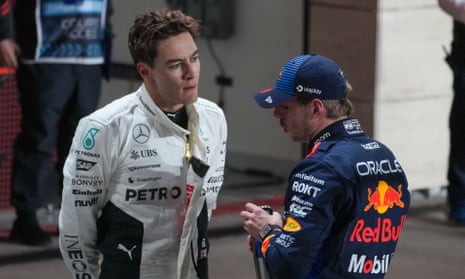
Grid position still matters. Beginning nearer the front would simplify his first stint, reducing early tyre stress and traffic exposure, but the underlying pace picture remains finely balanced.
Tyre usage defines his afternoon. He extends the medium in stint one while managing lap time, then targets a short, aggressive run on softs to maximise grip and braking confidence.
A safety car for Alex Albon’s crash creates the ideal window to switch. The stop commits Red Bull to the soft, unlocking late-race pace and trimming Russell’s margin to tenths.
Safety car for Albon’s crash enables Red Bull’s decisive stop to softs.
The final laps settle into a one-second yo-yo. Low degradation lets both drivers push. Verstappen notes a brief yellow-flag-related boost cut that skews the run to the finish.
That nuance explains the near photo-finish, even though the underlying delta hovers around a second for several laps.
The result underscores a narrow gap between Mercedes and Red Bull. Around the Azerbaijan Grand Prix, track position, tyre execution, and safety-car timing again prove decisive.
For Mercedes, Russell’s control validates recent upgrades and operational sharpness. It extends momentum from a wider Mercedes comeback narrative that increasingly tolerates pressure without sacrificing stint efficiency.
Red Bull draws encouragement from pace after a difficult qualifying. Converting that into wins now hinges on cleaner Saturdays, especially where overtaking suffers from layout constraints and DRS-train behaviour.
Verstappen’s combative edge persists, including a recent attempt to block Russell’s record, signalling a rivalry that may pivot on marginal calls and micro-strategy.
Verstappen: “Starting P2 wouldn’t have made passing Russell easy.”
The power-unit conversation also lingers. Boost-control events around yellow phases and energy deployment could prove pivotal, an area explored in recent engine expert analysis.
Attention now shifts to upcoming rounds. If Red Bull recovers qualifying form, Verstappen’s race pace suggests he remains poised to convert soon.
Visual Summary
+0.18s
SO CLOSE!
🏁
🏁
Started: P8
Finished: P2
Gap: 0.18s
🚗🟨
Medium ➔ Soft
“
“With the pace George had, it would have been very hard to pass.”
– Max Verstappen
Verstappen
Russell
⏭️
Next up: Can Verstappen convert speed into victory?
Next up: Can Verstappen convert speed into victory?

Daniel Miller reports on Formula 1 Grand Prix weekends with race-day analysis, team-radio highlights, and point-standings updates. He explains power-unit upgrades, aerodynamic developments, and driver rivalries in straightforward, SEO-friendly language for a global F1 audience.