
https://shop.fervogear.com/cart


Kyle Larson Questions Stage Points, Calls Them ‘Participation Awards’

Highlights
- Kyle Larson criticized NASCAR stage points as “participation awards.”
- Larson earned full 55 points in one race at Kansas Speedway.
- Stage points can equal passing several track positions in scoring.
- Ryan Preece’s top-10 finishes yield fewer stage points, limiting standings.
- Removing stage points shifts Ryan Blaney from fifth to seventh place.
- Stage points impact championship, affecting race strategy and final standings.
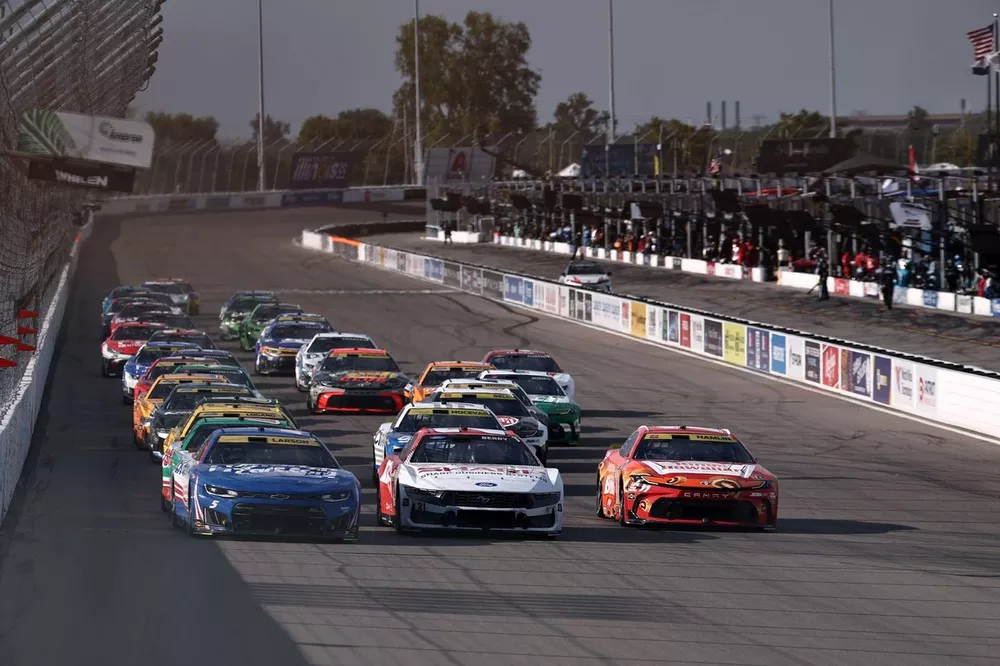
Kyle Larson ignites debate over NASCAR stage points during the Chase, labelling them “participation awards” as teams weigh segment rewards against traditional race results.
Stage points heavily shape standings and can overshadow finishes. One stage point approximates one on-track position, equalising a 22nd-place finisher with 20 stage points and a stage-less runner-up.

Larson calls stage points “participation awards,” questioning their weight in the Chase.
Larson banked the maximum 55 points at Kansas Speedway by sweeping both stages and the race, underlining how a perfect stage day transforms the championship picture.
Larson’s Kansas sweep delivered the maximum 55 points, a rare clean sweep of both stages and the win.
Larson expanded on his view after racing at Las Vegas Motor Speedway, admitting limited analysis but stressing stage influence. He cited Ryan Preece’s top-10 consistency offset by modest stage returns.
As a result, Preece gains little ground despite clean runs. Drivers suffering crashes or mechanical issues can still exit with comparable totals, a trade some competitors deem inequitable.
One stage point roughly equals one on-track position, amplifying the value of segment finishes.
Stage points aim to reward sustained pace at the front. Larson argues that metric can devalue steady execution, even as he leads the stage ledger himself this Chase.
Through four Chase races, Larson leads stage scoring with 58 points. Denny Hamlin holds 46, Ryan Blaney and Joey Logano 45, Christopher Bell 44, and Chase Briscoe 25.
Remove stage points and the order barely shifts. Larson still leads, by less, while Blaney drops from fifth to seventh, reshaping the Chase picture this month.
Without stage points, Ryan Blaney slips from fifth to seventh in the current Chase.
Strategy reflects that calculus. Teams often trade long-run track position for stage-end rewards, adjusting pit cycles to bank segment points that cushion setbacks.
The argument endures as the season advances. Segment scoring keeps mid-race intensity high, yet many still value pure results. Every point, and every stage, can decide the title.
Visual Summary
🏁
Stage
Points
58
“Participation
Award?”
🥈
Final
Finish
1st
Stage points can tip the championship scales
🚗💨
Larson 58
🔧
Preece Top 10s, 14th in stage points
📉
Blaney drops from 5th → 7th*
“Sometimes, the system gives out little participation awards instead of rewarding pure performance.”
— Kyle Larson
Stage Leaders
(Chase 2026)
Larson 58
Hamlin 46
Blaney 45
(Chase 2026)
Larson 58
Hamlin 46
Blaney 45
Stage points ≈ track position
Every race segment matters
Every race segment matters

John Martinez delivers real-time NASCAR Cup Series and Truck Series news, from live race updates to pit-lane strategy analysis. A graduate of the University of Northwestern Ohio’s Motorsports Technology program, he breaks down rule changes, driver tactics, and championship points with crystal-clear reporting.