
https://shop.fervogear.com/cart


Mercedes Chooses Driver Facing Big F1 Upgrade Penalty at Singapore GP

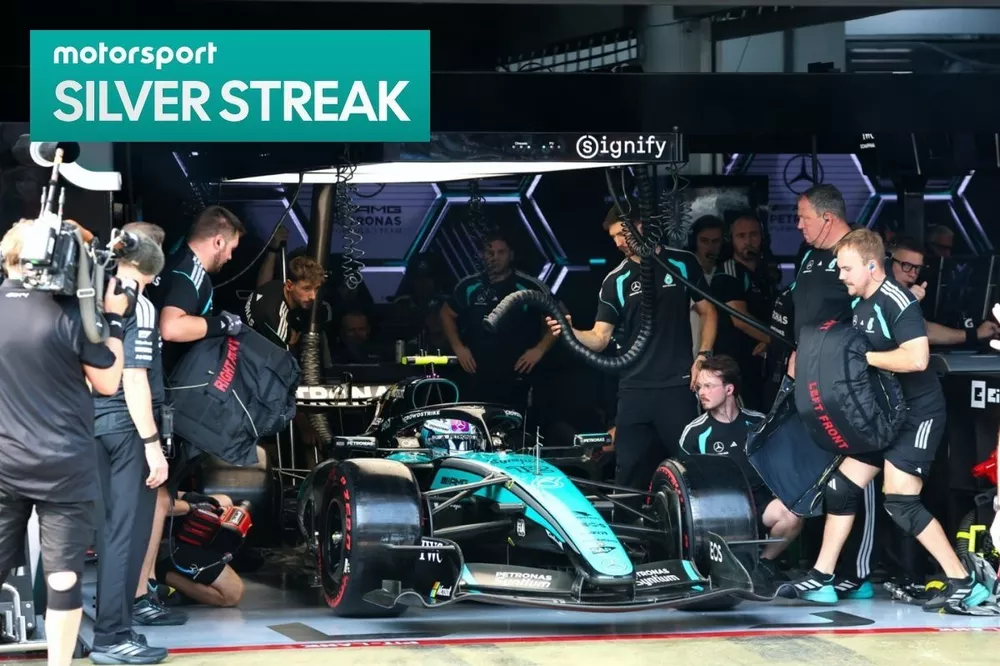
Highlights
- Mercedes to run split aerodynamic specs at Singapore Grand Prix.
- George Russell using older car spec due to grid penalty.
- Kimi Antonelli retains latest Malaysia upgrade package.
- Split test aims to analyze recent aero upgrade issues.
- Russell starts from back; focuses on data gathering.
- Team hopes to improve car performance from test data.
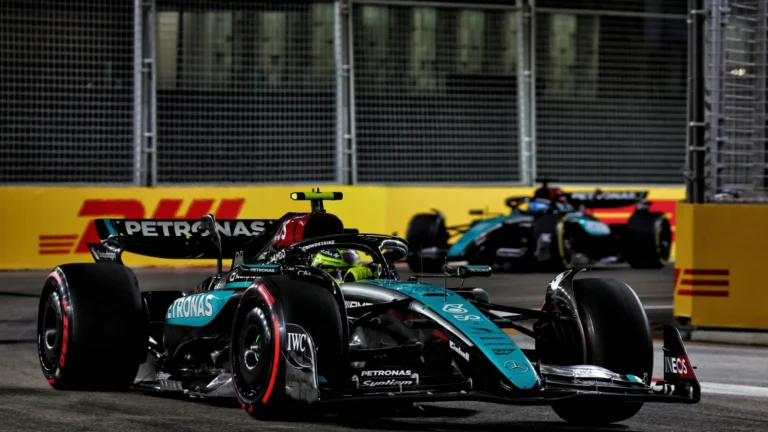
Mercedes confirms a split-specification plan for the Singapore Grand Prix, with George Russell reverting to an older aero package while Kimi Antonelli retains the latest Malaysia upgrade.
The move targets clear answers on recent correlation issues and balances risk, reflecting Toto Wolff’s drive for data-led decisions at a demanding street event.

Russell’s downgrade aligns with his heavy grid penalty from Sepang after a power unit failure, leaving him at the back where overtaking at Marina Bay is notoriously difficult.
Russell will run the older floor and aero as Mercedes’ in-race benchmark.
Antonelli keeps the contentious, potentially quicker package to maximise his championship lead, with Mercedes ring‑fencing performance on a layout that punishes instability and rewards traction.
With a single 60‑minute FP1 before parc fermé in this sprint format, Mercedes’ Singapore GP objectives prioritise robust correlation and minimal risk to Antonelli’s points potential.
A single FP1 and parc fermé make split-spec testing unusually high value.
Engineers will map load distribution, ride-height sensitivity, and corner-phase behaviour, isolating whether the Malaysia floor improves efficiency or simply shifts balance toward trickier operating windows.
Russell’s programme likely centres on aero sweeps, tyre conditioning, and race-relevant runs, while Antonelli targets qualifying preparation and execution under parc fermé restrictions.
The split carries drawbacks. Setup divergence complicates comparisons and limits cross-learning, yet Russell’s compromised start position tilts the cost‑benefit firmly toward real-time validation.
Antonelli retains the Malaysia upgrade; Russell carries the grid penalty.
Competitive upside remains. Antonelli can bank points with a cleaner path, while Russell hunts opportunity through strategy variance, safety cars, and tyre flexibility from the rear.
Context matters. This evaluation arrives amid fluctuating form and external scrutiny, including investigation concerns and a recent FIA aid debate that Mercedes publicly addressed.
Key indicators include sector three rotation, traction off slow entries, and straightline drag. If the upgrade sustains load without drag penalties, Singapore should validate its direction.
Executed cleanly, the plan converts a setback into a controlled experiment and informs development beyond Singapore, shaping the next steps in Mercedes’ pursuit of sustained dominance.
Visual Summary
A
Malaysia Upgrades
R
Old Spec
⚡️
Kimi Antonelli
George Russell
Mercedes Splits Its Bet in Singapore 🏁
Antonelli vs Russell – Two Specs, One Experiment
Antonelli vs Russell – Two Specs, One Experiment
Title Leader
#1
New Aero
#1
New Aero
Grid Penalty
P20
Old Aero
P20
Old Aero
60 min
🛠️
Single Practice
🛠️
Single Practice
One Team,
Two Approaches:
Upgrade Title Defence
| Gather Hard Data
Mercedes turns Russell’s penalty into a real-time R&D lab—will the gamble pay off for Antonelli’s title dream?

Daniel Miller reports on Formula 1 Grand Prix weekends with race-day analysis, team-radio highlights, and point-standings updates. He explains power-unit upgrades, aerodynamic developments, and driver rivalries in straightforward, SEO-friendly language for a global F1 audience.