
https://shop.fervogear.com/cart


FIA Unveils Key Findings on Sepang Formation Lap Glitch

Highlights
- FIA found a software bug causing formation lap power issues.
- Heavy rain delayed Bahrain Grand Prix start by roughly 40 minutes.
- Singapore GP will use Malaysia’s power unit software configuration.
- Further software updates planned for United States Grand Prix.
- FIA to enhance software testing based on Sepang incident findings.
- Nikolas Tombazis highlighted need for improved testing and validation.
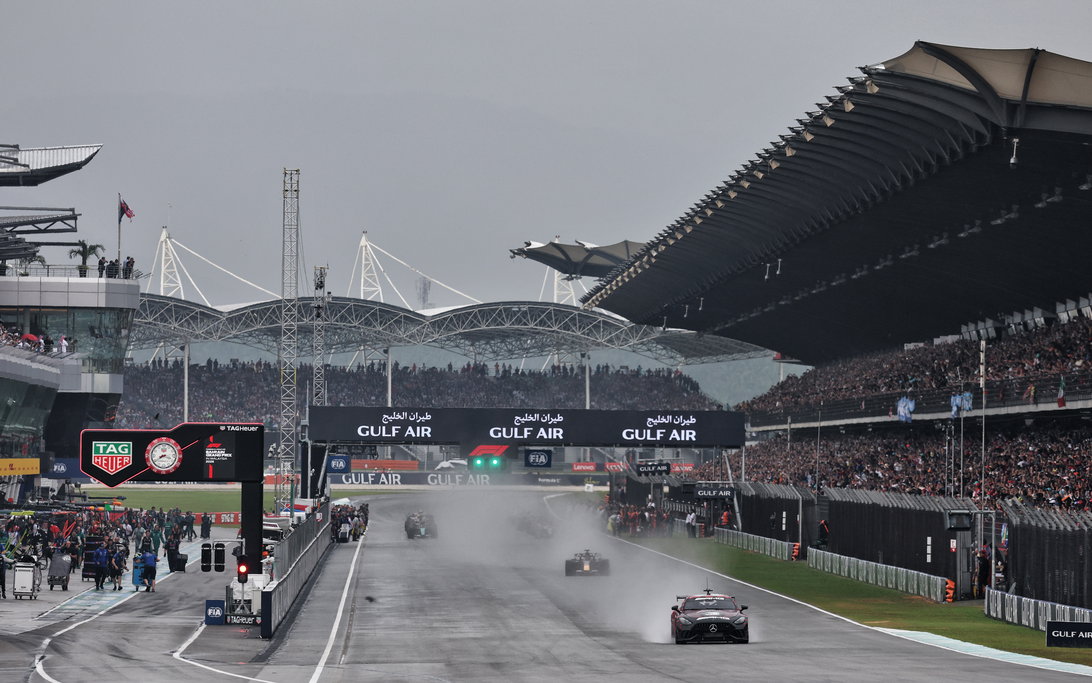
The FIA has concluded its inquiry into the Bahrain Grand Prix formation-lap problems at the Sepang International Circuit, identifying a software bug that triggered widespread power loss in heavy rain.
Several cars struggled to maintain low-speed deployment, with some stopping. The start slipped by roughly 40 minutes as rain intensified. Drivers reported intermittent power at throttle tip-in.

The FIA review targeted four areas: the root cause, prevention, improved wet-weather settings, and cross-checking data from teams and manufacturers, including the standardized ECU supplier.
Analysis showed a software fault limiting energy management at very low speeds in wet conditions. The software bug constrained deployment, undermining drivability across multiple power units.
To stabilise risk, Singapore will run the same configuration used in Malaysia. The approach prioritises predictable mapping over experimental wet settings for the immediate term.
Further updates are scheduled for Austin, targeting wet-weather robustness and correlation. Test benches and prior events, including Belgium and the Netherlands, failed to replicate Sepang’s exact profile.
FIA traced formation-lap power loss to a wet-weather software management fault at low speeds.
Validation will now expand, with independent audits and wider scenario libraries. The FIA will coordinate results with teams and power unit manufacturers to strengthen sign-off.
Single-seater director Nikolas Tombazis said Malaysia’s circumstances exposed test gaps. He committed to tighter processes to avoid repeat disruption during formation laps.
Nikolas Tombazis: Sepang revealed where our testing and validation must be stronger.
Teams are revisiting procedures for low-speed torque control, regen limits, and pitwall guidance. The aim is consistent behaviour in out-of-window conditions without sacrificing performance.
That push aligns with feedback from senior figures, including Helmut Marko’s comments on software failure after Sepang. Reducing edge-case exposure should limit cascading start-sequence complications.
The Sepang weekend also prompted start-position changes, underlining how small technical variances can escalate operationally. Clearer mapping should reduce such knock-ons.
Singapore will run the Malaysia configuration; Austin will introduce targeted wet-weather updates.
With processes tightened, fans should see cleaner getaways. The 2026 season can progress with fewer formation-lap risks as teams and the FIA implement these measures.
Visual Summary
💥
Chaos On The Sepang Formation Lap: Power Loss in the Rain
Heavy Rain
Delays Start 40 Minutes
Delays Start 40 Minutes
Formation Lap Failure
Multiple Cars Stop
Multiple Cars Stop
FIA Finds Software Bug
Plans Massive Fixes
Plans Massive Fixes
Unexpected rain exposed an invisible weakness:
A small software bug brought F1 machinery to a halt. The FIA’s lightning-fast investigation means future wet races could see flawless starts—no more grid chaos!
Timeline: Sepang (Power Bug) → Fix Singapore → Major Upgrades Austin
Key Takeaway: F1’s digital brains must adapt as fast as their cars do. Expect new safeguards, deeper rain testing, and smoother starts—rain or shine.

Daniel Miller reports on Formula 1 Grand Prix weekends with race-day analysis, team-radio highlights, and point-standings updates. He explains power-unit upgrades, aerodynamic developments, and driver rivalries in straightforward, SEO-friendly language for a global F1 audience.