

https://shop.fervogear.com/cart


FIA Reveals Why F1 Engine Bug on Formation Lap Went Undetected

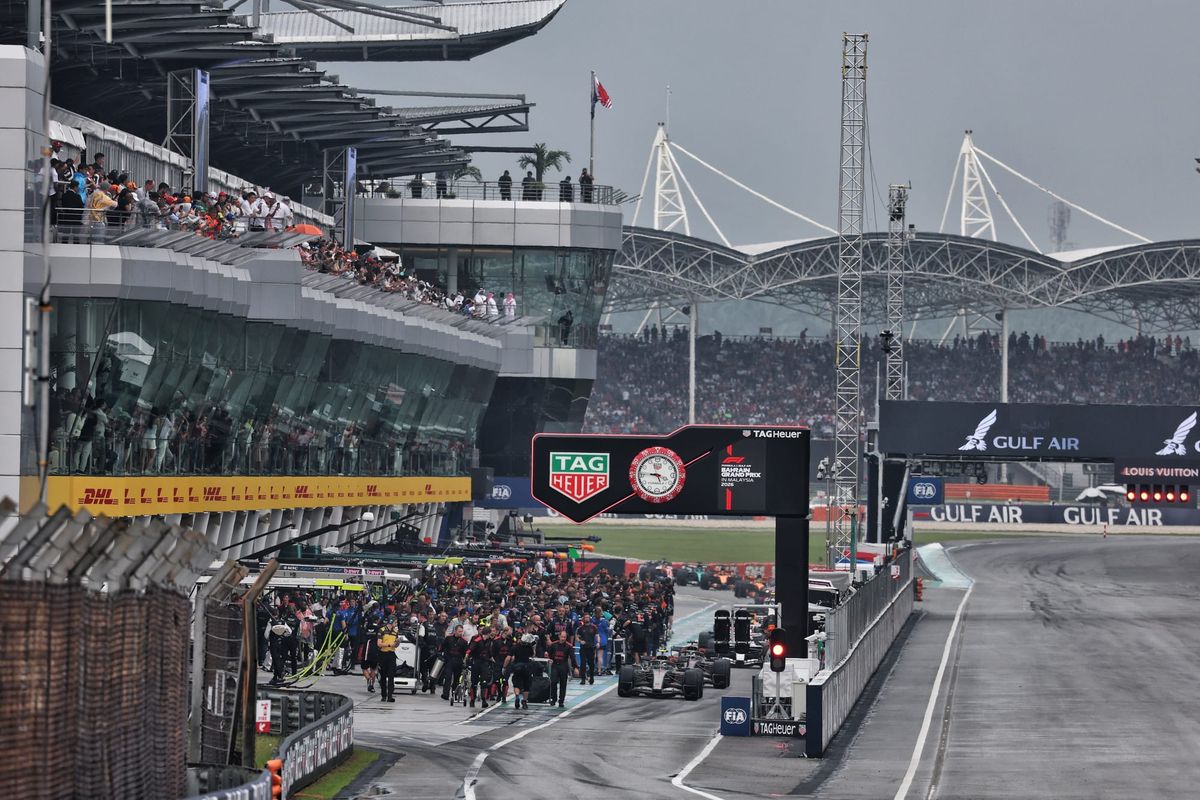
Highlights
- Software bug caused slowdowns during Sepang wet-weather safety car laps.
- Low speeds at Turn 9 triggered the bug, unseen in tests.
- FIA applied software patch to all cars before race restart.
- Nikolas Tombazis confirmed bug unlikely to happen again.
- Wet-weather mode reduces engine power from 350kw to 250kw.
- FIA committed to improving testing for future weather scenarios.
The FIA explains why a software bug on formation laps escaped detection before surfacing during Sepang’s wet safety-car running, where several cars slowed dramatically and some stopped.
The problem first appears during the Bahrain Grand Prix formation lap, then re-emerges at the Sepang International Circuit in rain, most visibly on Max Verstappen’s Red Bull at Turn 9.

Wet-weather mode reduces power from 350kW to 250kW in defined zones. Trundling behind the safety car at unusually low speeds triggers a calibration bug, starving acceleration on several power units.
Wet‑weather mode cuts power from 350kW to 250kW in defined zones.
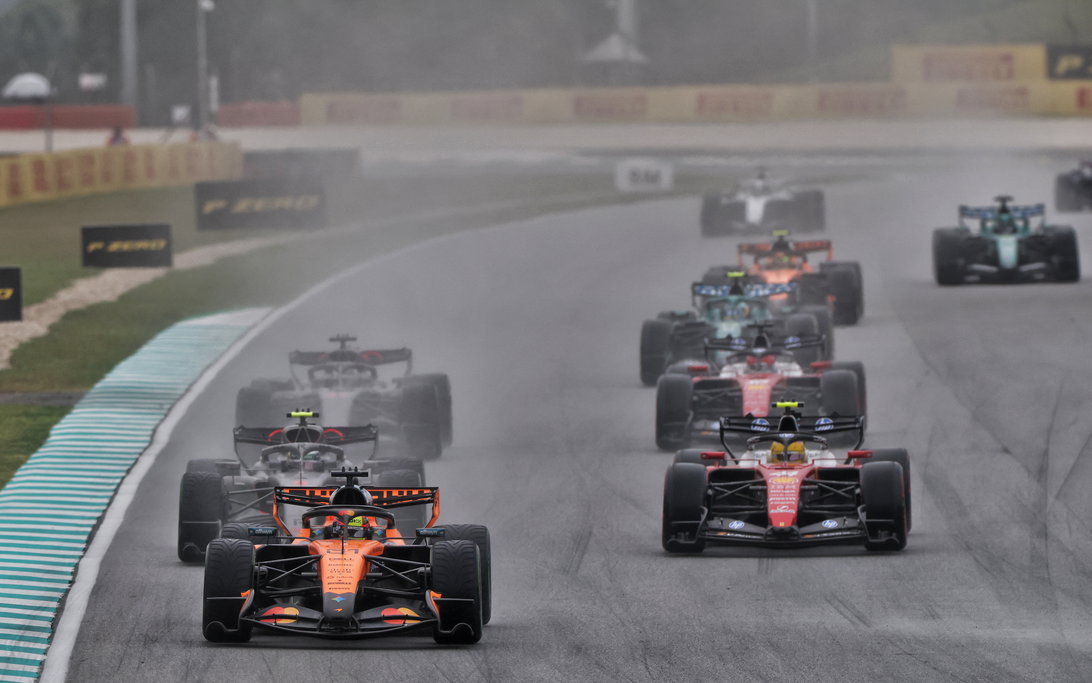
FIA single-seater chief Nikolas Tombazis says a rare confluence exposed the flaw. The cars ran slower than any validation scenario, well below software thresholds used in development.
Limited wet running across 2026 compounds it. Most events happen in stable conditions, restricting real-world checks of these maps despite controlled outings at Suzuka and Fiorano.
“The very low speeds that were far lower than you would do in testing caused it.” — Nikolas Tombazis
When multiple cars falter, race control shows the red flag. The field returns to the pits while FIA technicians roll out a unified software patch across all 22 entries.
FIA applies a software patch to all 22 cars before the restart.
The restart proceeds cleanly. Subsequent briefings detail the grid fix and confirm the patch as a permanent measure pending longer-term validation in future wet simulations.
Tombazis cautions that complex hybrid control systems inevitably carry defects. Rigorous post‑race reviews continue, but he expects this specific interaction not to recur.
Safety and competitive integrity remain central as electrical deployment is constrained. Teams adjust calibration windows, while lessons inform the FIA’s Bahrain GP response and expanded wet‑weather test matrices.
Visual Summary
SOFTWARE BUG HITS FORMATION LAP
WET-WEATHER MODE: FORMATION LAP
Verstappen
Hamilton
Bottas
Ocon
Slowed/Stopped
🔧 FIA PATCHED ALL 22 CARS → RACE RESTART!
350kw ➔ 250kw
ENGINE POWER DROPPED
IN RAIN MODE
IN RAIN MODE
THE
UNSEEN
SOFTWARE BUG
Only discovered
by super-low speeds and perfect storm of events
by super-low speeds and perfect storm of events
🚩 RED FLAG
RACE HALTED
& FAST FIX APPLIED
& FAST FIX APPLIED
All cars updated
before restart
before restart
Modern F1: Software, hybrid power & unpredictable events. The tiniest bugs, hidden until a single stormy lap, can risk fair racing for all.

Daniel Miller reports on Formula 1 Grand Prix weekends with race-day analysis, team-radio highlights, and point-standings updates. He explains power-unit upgrades, aerodynamic developments, and driver rivalries in straightforward, SEO-friendly language for a global F1 audience.