

https://shop.fervogear.com/cart


Oscar Piastri’s ‘Signature’ Revealed as Key to McLaren’s Ongoing F1 Challenges

Highlights
- Piastri struggles adapting to 2026 McLaren car’s driving demands.
- 2026 cars use ground-effect aerodynamics, altering downforce and stability.
- Piastri has two podiums and 138 points, behind Norris’s 201 points.
- McLaren plans upgrades this season; major redesign expected in 2027.
- Team principal Stella highlights need for aggressive driving input changes.
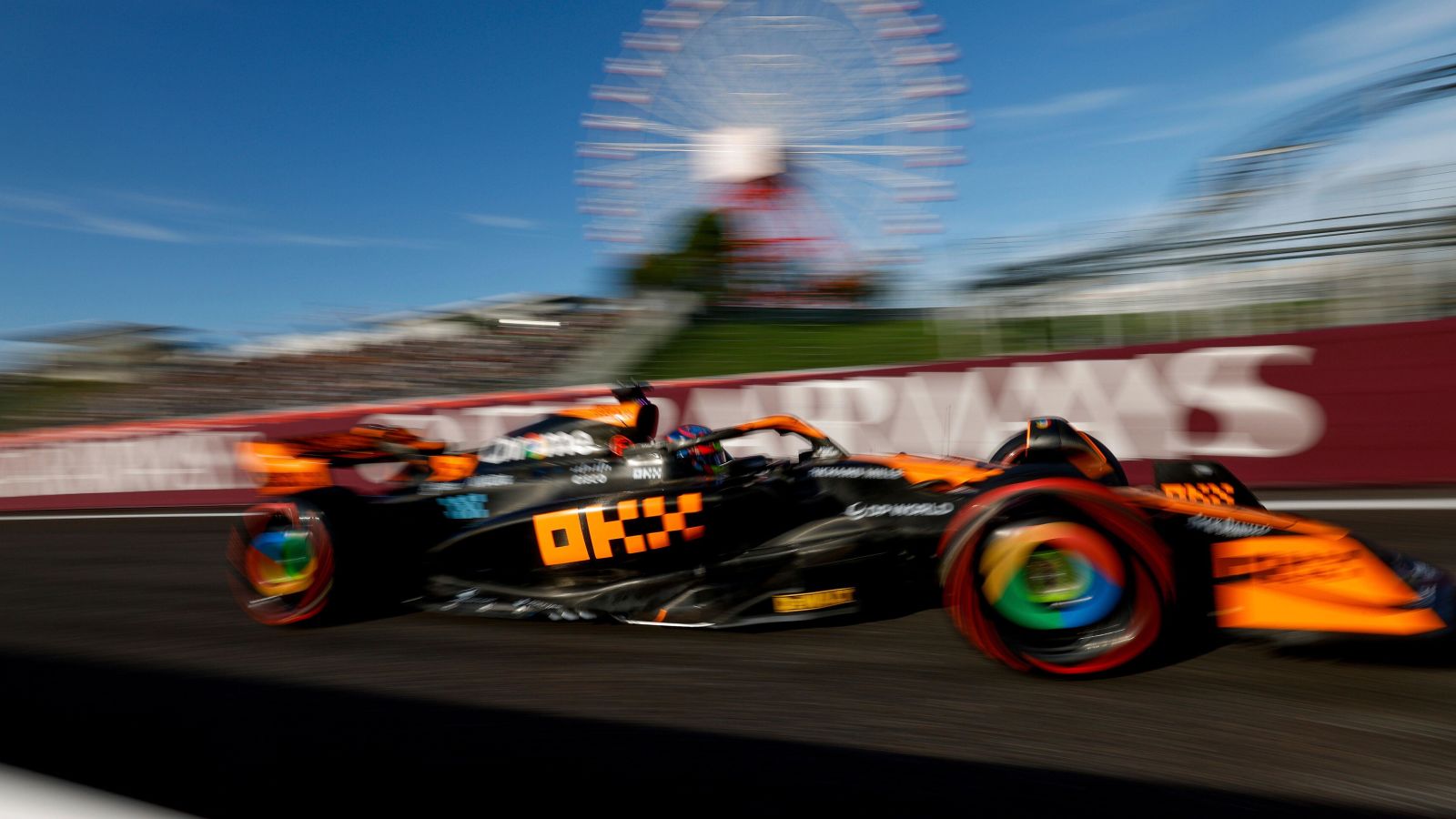
McLaren team principal Andrea Stella says Oscar Piastri’s driving style underpins his struggles with the 2026 car, as new ground‑effect traits expose limitations that teammate Lando Norris currently manages better.
The revised aero rules shift downforce generation and increase rear movement, reducing the stable platform drivers enjoyed in 2025 and demanding sharper inputs through braking, rotation, and throttle.

After seven wins and 15 races led in 2025, Piastri’s 2026 return is leaner: two podiums and 138 points to Norris’s 201, the last rostrum in Miami 14 races ago.
Stella says the car demands greater intensity and more assertive inputs than last year, requiring Piastri to deviate from his tidy, repeatable style to unlock corner entry and rotation.
“The car needs quite a lot of effort to deliver lap time,” says Stella, highlighting a higher intensity requirement than 2025.
The message is clear: fast no longer equals clean. Piastri must sometimes force the platform to rotate and accept micro-instability, rather than chasing pristine lines and minimal steering correction.
Norris has adapted faster, exploiting the car’s preferred window and widening the comparison. The gap was clear in the Singapore Grand Prix, where Piastri lacked pace despite extensive setup exploration.
McLaren will bring an upgrade package later this season, but Stella downplays a handling cure. The priority is more downforce without softening the car’s traits before a deeper 2027 redesign.
In effect, 2026 is about driver adaptation more than softening the platform. This mirrors the team’s season crisis analysis, alongside incremental aero gains rather than wholesale mechanical compliance changes.
Norris has adapted faster to the 2026 car’s window, widening the intra-team comparison.
For Piastri, the work likely centres on braking traces, faster steering rates, and committing earlier on entry, supported by simulator correlation to manage a narrower ride-height and aero sensitivity window.
Setup directions can still bite. Chase too much front support and the rear becomes snappy; chase stability and rotation suffers. That trade-off defines McLaren’s weekend ceiling more than raw downforce.
McLaren targets added downforce now, with a deeper 2027 redesign to address core characteristics.
The medium-term reset arrives with the MCL41 in 2027, when McLaren targets a broader operating window without surrendering peak load, supported by the upgrade path already planned for late 2026.
Piastri’s raw speed is not in doubt. Closing the gap now depends on embracing that higher-intensity style while McLaren delivers predictability, a balance Stella continues to champion in recent comments.
Visual Summary
Piastri: Clean
Norris: Aggressive
The 2026 F1 car demands grit, not just precision.
Piastri’s smooth touch is being tested by a restless machine.
OSCAR PIASTRI
14
races
races
since last podium
138
pts
pts
L. NORRIS
201
pts
pts
the adaptation leader
From smooth champion to student of chaos—the 2026 McLaren is forcing Oscar Piastri to reinvent his speed.
Even talent must evolve: Until the next upgrade, adaptation is the only path forward.

Daniel Miller reports on Formula 1 Grand Prix weekends with race-day analysis, team-radio highlights, and point-standings updates. He explains power-unit upgrades, aerodynamic developments, and driver rivalries in straightforward, SEO-friendly language for a global F1 audience.




