https://shop.fervogear.com/cart


Christian Horner Urges Urgent Rethink on F1 Budget Caps Amid $600M Spend

Highlights
- Christian Horner urges reconsideration of F1 budget cap rules
- Current cap excludes driver contracts and key staff salaries
- F1 team spending can reach up to $600 million annually
- Budget cap improved financial stability but leaves loopholes
- Williams highlights front-runners’ advantage from prior facility investments
- Calls for wider budget inclusion to level playing field
Christian Horner urges a rethink of Formula 1’s cost-control framework, arguing the current budget cap masks true spending that can reach $500–$600 million per team.
Introduced in 2021, the cost cap began at $145 million and now sits around $215 million. The budget cap rules aim to curtail escalation and keep teams financially sustainable.

However, the cap excludes driver contracts, the three highest-paid non-driver staff, travel, and marketing. Those exemptions distort comparisons and push money toward uncapped categories.
Horner also points to the separate $190 million power unit cap. Because it sits outside the primary limit, it elevates total budgets, particularly for manufacturer-backed teams.
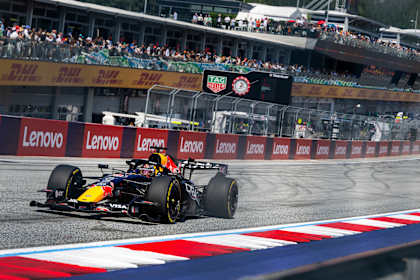
He managed Red Bull during its 2021 overspend penalty and says grey areas have since narrowed. Details of Red Bull’s budget cap issues underscore how compliance has evolved.
“Teams will always spend as much money as they can access.” — Christian Horner
The underlying behaviour remains consistent: teams divert resources to areas beyond the cap’s scope. Driver salaries, in particular, attract increased spending under a narrow cap.
Even so, the cap has improved financial stability and discipline. Before 2021, overspending and cash burn regularly pushed teams to the brink, eroding grid depth.
Despite the cap, all-in annual spending can still reach $500–$600 million once exempt areas and power units are included.
Operational culture has shifted. Accounting and financial controls now rival technical groups in strategic value, reducing waste such as surplus parts and unfocused development pathways.
Yet outcomes are uneven. Williams’ James Vowles argues front-runners benefit from heavy pre-cap facility investment, allowing more current budget to target performance gains.
Smaller teams must commit cap-limited funds to capital projects, constraining headroom for car development and personnel relative to long-established rivals with mature infrastructure.
Driver deals, top staff salaries, travel and marketing currently sit outside the headline cap.
Broadening the cap’s scope could better reflect real costs and compress competitive disparities. A wider review of F1 team finances would inform that debate.
Any reform must balance competitive parity with innovation, and pair tighter definitions with robust policing to avoid loopholes and unintended spending migrations.
Visual Summary
What F1 shows 💰
Hidden Costs:
Driver Salaries, Travel, Marketing, Power Units…
Driver Salaries, Travel, Marketing, Power Units…
💸
💸
💸
💸
💸
Christian Horner: Budget Cap ≠ True Cost
F1’s financial rules just show the tip of the iceberg.
F1’s financial rules just show the tip of the iceberg.
🔓
Budget cap deliberately excludes key costs
(Driver contracts, top exec pay, travel, promo…)
Budget cap deliberately excludes key costs
(Driver contracts, top exec pay, travel, promo…)
💰
Real annual spending: $500M–$600M
Real annual spending: $500M–$600M
⚖️
Horner: Widen the cap, make it fairer for all teams
Horner: Widen the cap, make it fairer for all teams
“Teams will always spend what they have. Control the whole iceberg, not just the tip.”
— Christian Horner, Red Bull Racing

Daniel Miller reports on Formula 1 Grand Prix weekends with race-day analysis, team-radio highlights, and point-standings updates. He explains power-unit upgrades, aerodynamic developments, and driver rivalries in straightforward, SEO-friendly language for a global F1 audience.