

https://shop.fervogear.com/cart


F1 Faces System Stress and Fatigue After Latest Tech Glitches

Highlights
- Software flaw caused power loss in Bahrain Grand Prix formation lap
- FIA issued emergency patch to bypass restrictive energy settings
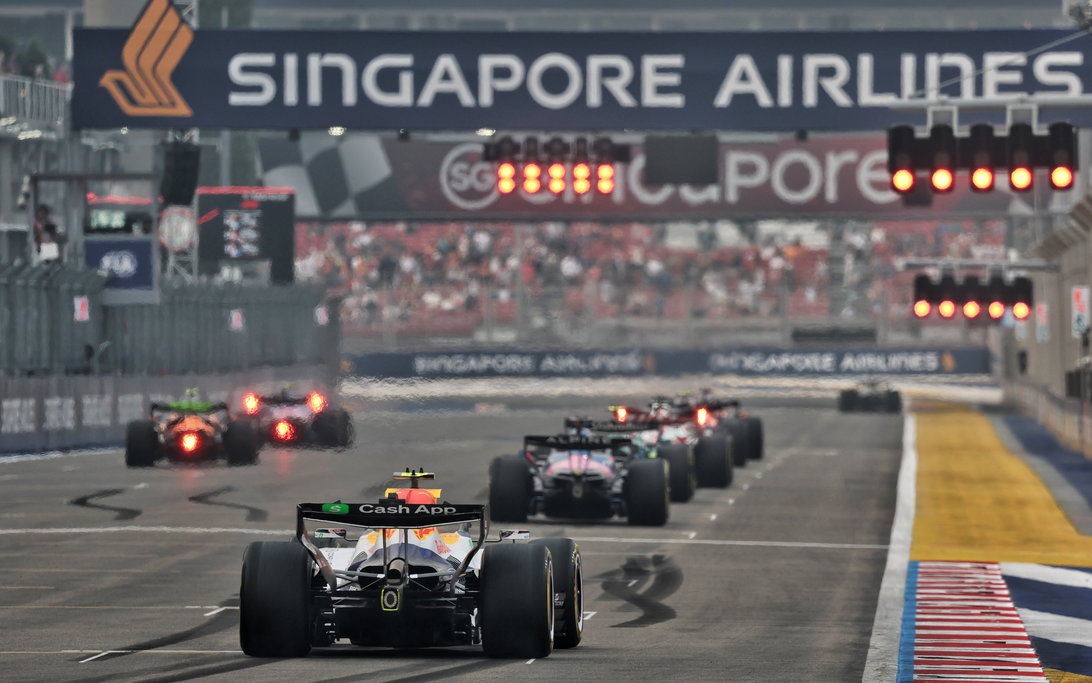
- Singapore qualifying delayed 20 minutes due to timing screen failure
- Human error triggered brief overtake mode during Sergio Perez crash
- FIA to update ECU software before United States Grand Prix
- Busy race schedule increases pressure on teams and technology
Formula 1 faces renewed scrutiny after consecutive race weekends in Malaysia and Singapore expose operational fragilities across timing, energy management, and race control systems.
The glitches disrupt sessions, force emergency fixes, and raise reliability questions around the standardised electronic architecture that underpins Formula 1 hybrid power units and officiating.

At Sepang, a wet‑weather power unit mapping bug enforces the 250kW energy cap during the formation lap, causing intermittent power loss on several cars.
Race control responds with an emergency bypass patch, restoring expected deployment levels so the start can proceed safely. A broader ECU parameter update follows for wet‑weather conditions.
FIA issues an emergency bypass to stabilise deployment after formation-lap power loss.
The FIA confirms a permanent ECU software revision targets rollout before the United States Grand Prix in Austin, subject to validation and team sign‑off.
In Singapore qualifying, timing screens fail to register several SQ1 laps, forcing a near 20‑minute delay while officials manually verify classifications before SQ2.
Separately, Sergio Perez’s crash triggers a brief, unintended overtake mode window of about 27 seconds, giving uneven energy availability before deactivation. Race control later attributes it to human error.
Singapore qualifying stalls nearly 20 minutes after timing failure; officials revert to manual verification.
Martin Brundle notes the pattern indicates system stress. He highlights compressed logistics—six races in seven weekends, nine in eleven—and frequent temporary facilities increasing failure risk, echoing warnings from Toto Wolff.
Frequent rebuilds heighten the chance of edge‑case software interactions and hardware misconfigurations, even within strictly homologated control units and regulated processes.
For teams, the implications are competitive and procedural. Any asymmetric energy deployment or timing outage can distort qualifying order and strategic options, especially on street circuits.
Brief overtake-mode activation for 27 seconds creates uneven energy availability before officials intervene.
Mitigations unfold on two tracks. The FIA refines central software and checks, while teams strengthen calibration reviews and redundancy for timing and telemetry pathways.
Expect tighter pre‑session validation and clearer fallback playbooks from Austin onward, as stakeholders prioritise transparency and parity in enforcement.
Visual Summary

Daniel Miller reports on Formula 1 Grand Prix weekends with race-day analysis, team-radio highlights, and point-standings updates. He explains power-unit upgrades, aerodynamic developments, and driver rivalries in straightforward, SEO-friendly language for a global F1 audience.