
https://shop.fervogear.com/cart


Discover Ferrari’s Bold Changes in Its Biggest 2026 F1 Upgrade

Highlights
- Ferrari to launch final 2026 upgrade at US Grand Prix in Austin
- Upgrade focuses on floor, sidepods, and upper bodywork changes
- Ferrari avoids radical sidepod redesign unlike McLaren and Mercedes
- Cooling system improvements planned for Austin and Mexico City races
- Floor revision aims to improve downforce and aerodynamic balance
- Major SF-26 development to end after Austin with minor tweaks
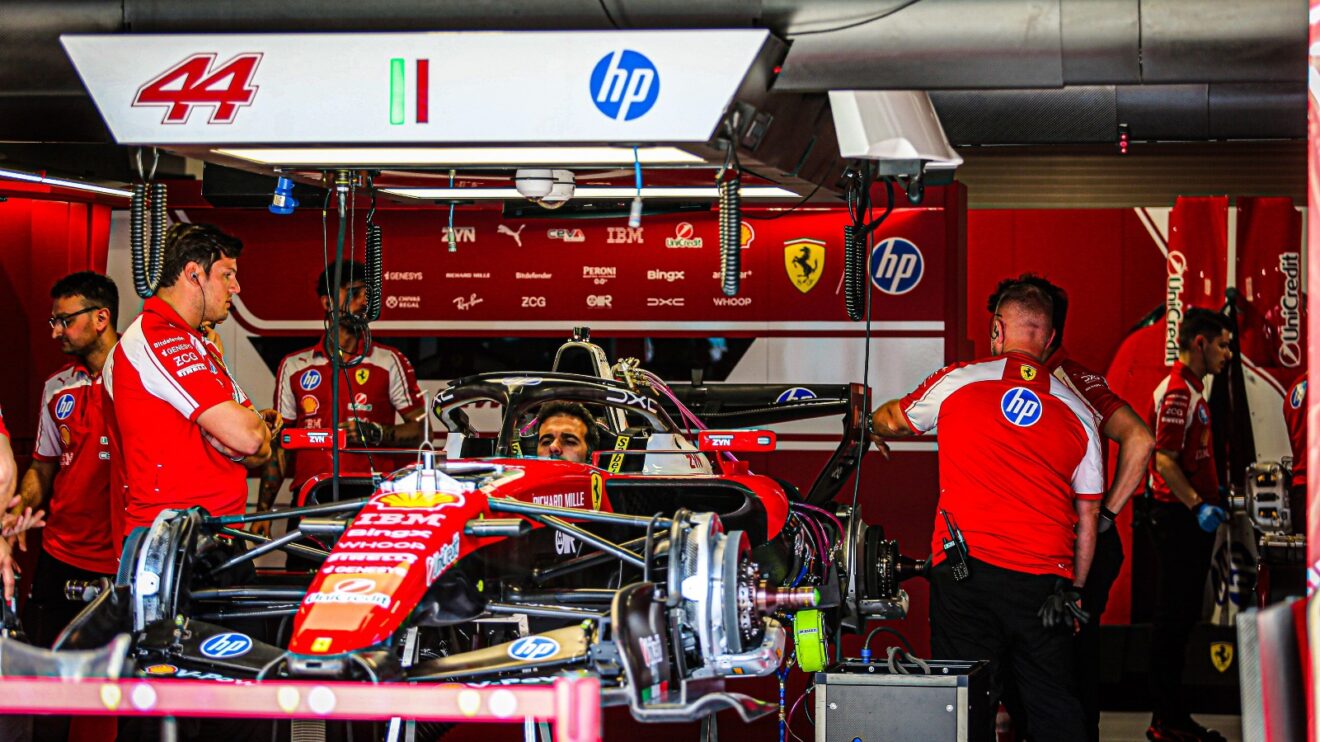
Ferrari will launch its fourth, most significant aerodynamic upgrade at the United States Grand Prix in Austin, detailed in its Austin development brief.
The package marks the final major SF-26 step as resources pivot to regulations arriving for 2027.

The update targets the floor, sidepods, and upper bodywork. Ferrari maintains its sidepod concept, chasing drag reduction to offset a relative engine deficit and preserve aerodynamic consistency.
Ferrari debuts its final major SF-26 upgrade in Austin, closing the 2026 development phase.
Cooling revisions accompany the bodywork. Reprofiled louvres manage hot-air extraction around the updated sidepod shapes. Mexico City will bring larger openings to address high-altitude cooling demands.
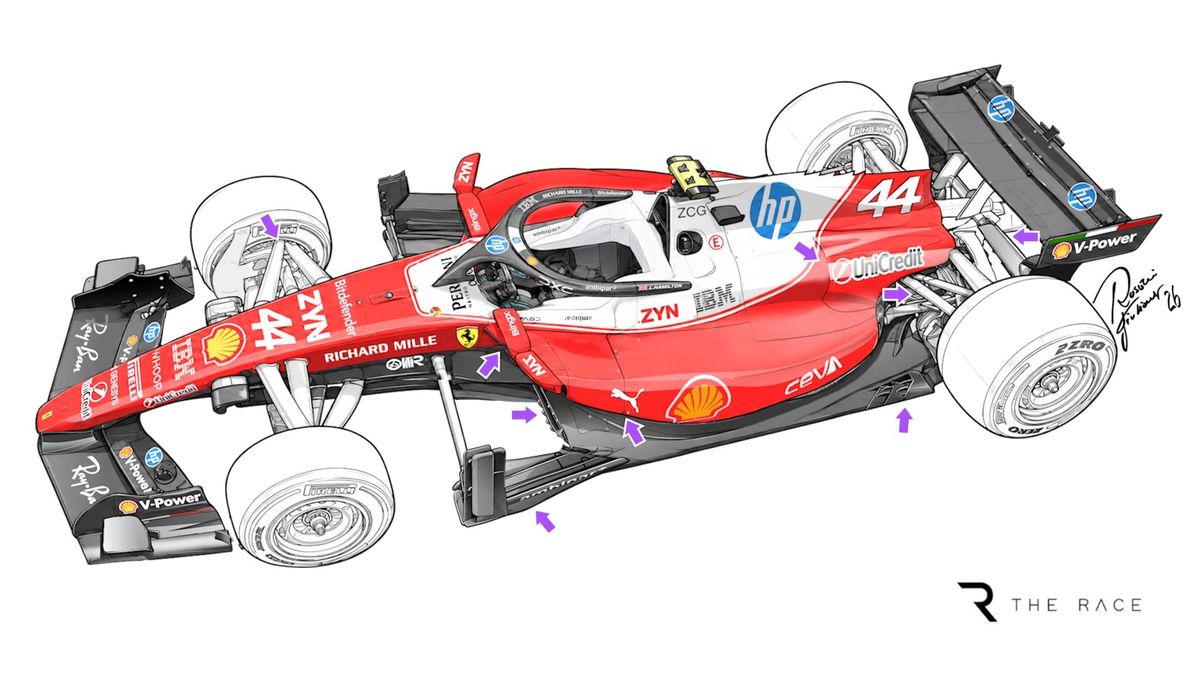
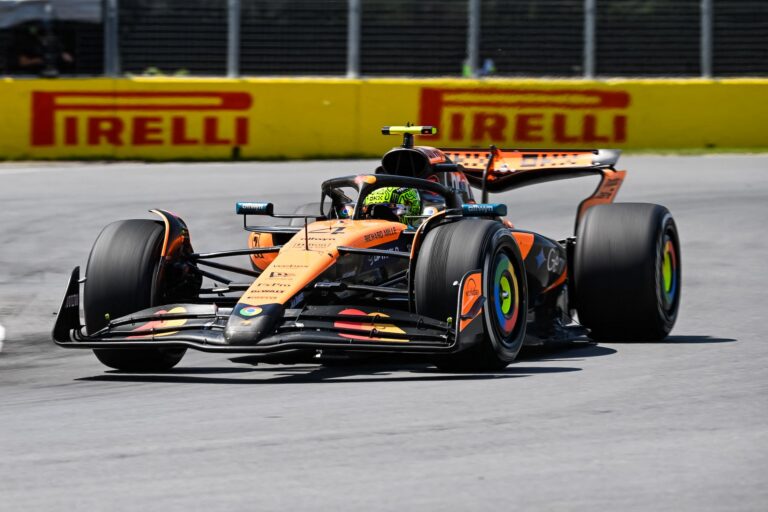
Rivals have pushed radical sidepod geometries. McLaren and Mercedes seek new airflow paths, yet gains have been inconsistent. Ferrari complements recent visual updates with measured aero steps.
A Red Bull-inspired sidepod, exploiting floor body stays as aero devices, was studied. The RB22 and later Audi approaches influence this. Ferrari rejects it now, citing integration cost and uncertain returns.
The floor redesign runs from the leading edge to the diffuser, targeting load and balance gains.
Austin’s centrepiece is a reworked floor, from the leading edge to the diffuser. It builds on Zandvoort learning and targets higher load with a rearward balance shift from a front-biased baseline.
A key objective is widening the floor’s operating window. Ferrari targets less ride-height sensitivity and stronger consistency across conditions, mirroring Red Bull’s enviable flexibility.
After Austin, major SF-26 development stops. Any remaining items become track-specific, with resources shifting to design and validation work for the next technical cycle.
Wind tunnel and simulation programmes feed the 2027 car. Leadership messaging in recent briefings underlines that direction. Expect fresh aero concepts with chassis continuity. Power unit work proceeds in parallel.
Cooling changes include revised louvres for Austin and larger openings planned for Mexico City’s altitude.
Correlation is the immediate test. Austin will show how the tools map onto reality, and whether drag cuts and floor load translate into race pace without compromising tyre management.
Execution still matters. Strategy sharpness from Charles Leclerc and the team, explored in recent analysis, remains crucial to converting any aerodynamic gain.
Visual Summary
Ferrari’s Last Big Push →
Austin – US Grand Prix – Final Major SF-26 Upgrade
4th
Aerodynamic
Upgrade 2026
Aerodynamic
Upgrade 2026
Last Major Development →
Resource Shift to 2027 Car
↓ Floor, Sidepod
& Diffuser Overhaul
& Diffuser Overhaul
Less Drag, More Pace
Fighting engine deficit (not 100% raw power)
Fighting engine deficit (not 100% raw power)
Radical? Not Yet
Ferrari sticks to its concepts;
no Red Bull-style floor stays.
Ferrari sticks to its concepts;
no Red Bull-style floor stays.
Cooling for the Sky
Louvres & openings
target Texas, then Mexico’s thin air
Louvres & openings
target Texas, then Mexico’s thin air
Austin: Last wide-ranging SF-26 upgrade
Development simulations vs. real-world pace — Austin decides.

Daniel Miller reports on Formula 1 Grand Prix weekends with race-day analysis, team-radio highlights, and point-standings updates. He explains power-unit upgrades, aerodynamic developments, and driver rivalries in straightforward, SEO-friendly language for a global F1 audience.