
https://shop.fervogear.com/cart


Oscar Piastri Reveals ‘Mercedes Envy’ Amid Tough F1 Challenge

Highlights
- Mercedes won 11 of 17 races, nearing ninth constructors’ title.
- McLaren struggles with tyre pressures and pace inconsistencies in 2026.
- Piastri cites Mercedes’ cornering confidence as a key performance gap.
- McLaren’s lead over Red Bull shrinks to seven points after triple-header.
- Piastri admits uncertainty about causes behind McLaren’s pace issues.
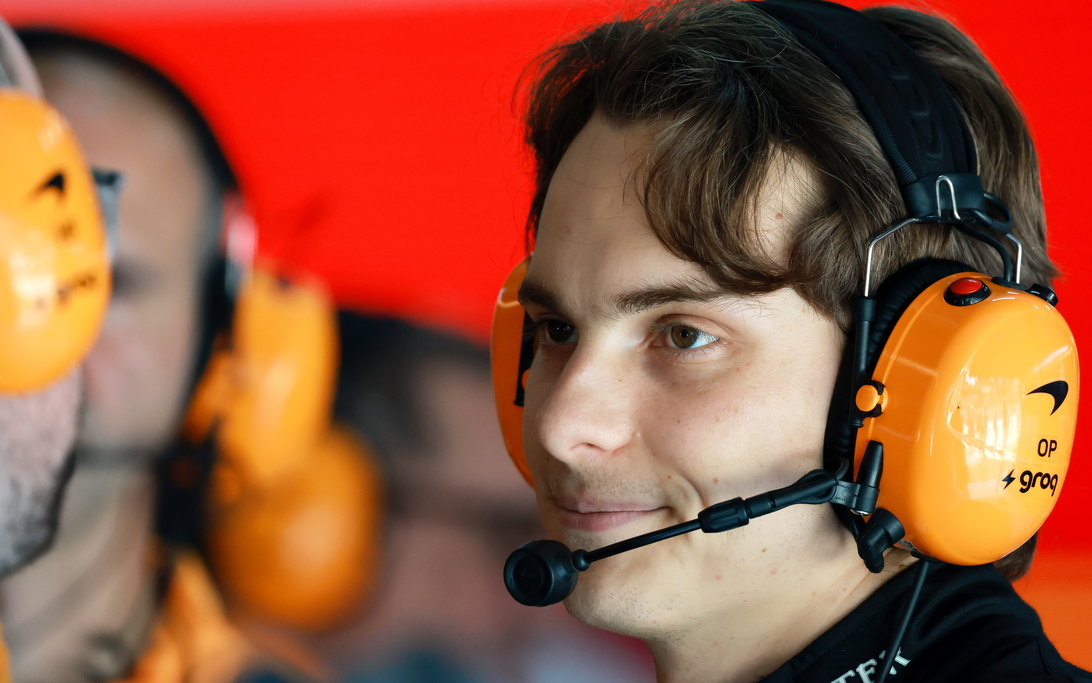
Oscar Piastri says McLaren has “Mercedes envy” over cornering performance, highlighting the deficit defining the 2026 Formula 1 fight.
Mercedes wins 11 of 17 races and closes on a ninth constructors’ crown, while Kimi Antonelli leads the drivers’ standings.

Mercedes win 11 of 17 and approach a ninth constructors’ title.
McLaren, last year’s constructors’ champion, struggles to adapt to new regulations and now defends third against a resurgent Red Bull.
Raised Pirelli tyre pressures, introduced to safeguard cars if active aero fails, increase carcass stiffness and ballooning, reducing confidence on corner entry.
Piastri accepts those pressures hurt, but argues they do not fully explain the deficit to Mercedes’ W17, especially in high‑commitment turns.
Piastri admits “Mercedes envy” over corner‑entry confidence and rotation.
He points to Mercedes’ ability to brake later and rotate cleanly, carrying speed while maintaining stability over longer stints and changing conditions.
Some of Lando Norris’s poles, Piastri suggests, come from exploiting short‑lived peaks beyond the car’s usual operating level.
The larger problem is inconsistency. McLaren peaks one session, then loses balance the next, aligning with themes in Piastri’s key F1 struggles this season.
That volatility complicates development, narrows the setup window, and exposes correlation risks between simulation tools and trackside behaviour.
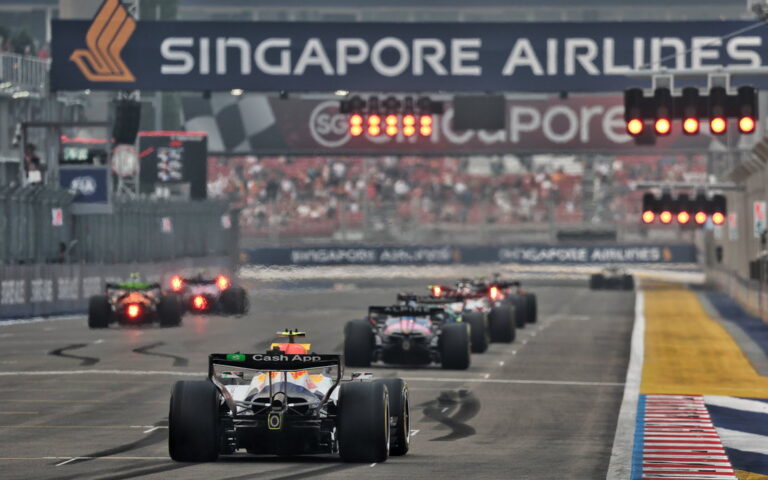
Recent swings, from sharp qualifying to fading race pace, echo patterns since Singapore, discussed in Piastri’s Singapore GP reflections earlier in the campaign.
Piastri also stresses driving‑style adaptation. Extracting entry rotation without overheating fronts demands precision with brake migration, diff settings, and minimum‑speed targets.
Execution becomes critical across variable fuel, wind, and track evolution, where Mercedes appears to retain a broader, more forgiving operating range.
After the triple‑header, McLaren’s cushion over Red Bull drops to seven points. The RB22 builds momentum with back‑to‑back wins, tightening the fight for third.
McLaren’s lead over Red Bull shrinks to seven points after the triple‑header.
That pressure extends to leadership and execution, highlighted in Brown’s warning to Norris and Piastri, and places strategy and pit‑wall agility under greater scrutiny.
To close on Mercedes, McLaren needs repeatable tyre preparation, improved corner‑entry stability, and a wider setup envelope across temperatures, compounds, and ride‑height constraints.
Converting intermittent peaks into sustainable race pace would reduce reliance on standout laps or Safety Car fortune and unlock consistent podium contention.
For now, Piastri’s candour frames McLaren’s task while Mercedes’ march continues, a context underlined in Mercedes F1 2026 champions analysis.
Visual Summary
“We envy that.”
McLaren
vs
Red Bull
vs
Red Bull
+7 pts
McLaren’s lead over Red Bull shrinks to just 7 points in the race for third
11
Mercedes wins
from 17 races
Mercedes wins
from 17 races
🎈
Higher tyre pressures complicate cornering
Higher tyre pressures complicate cornering
📈
McLaren
inconsistent pace
McLaren
inconsistent pace
Matching Mercedes’ cornering pace is McLaren’s toughest battle of 2026.
Every point, every curve now counts.

Daniel Miller reports on Formula 1 Grand Prix weekends with race-day analysis, team-radio highlights, and point-standings updates. He explains power-unit upgrades, aerodynamic developments, and driver rivalries in straightforward, SEO-friendly language for a global F1 audience.