

https://shop.fervogear.com/cart


Ferrari’s Final 2026 F1 Upgrade Fully Uncovered

Highlights
- Ferrari introduced final 2026 car upgrade at US Grand Prix
- Upgrade focuses on airflow, radiator fin, sidepod, and diffuser
- Increased fin size improves radiator airflow and floor consistency
- Diffuser vane changes aim to enhance downforce and airflow sealing
- Track bumps in Austin may require softer suspension, higher ride height
- Ferrari’s cautious pit strategies have cost points this season
Ferrari unveils what is expected to be its final 2026 upgrade at the United States Grand Prix in Austin, targeting consistency and downforce through detail-led aerodynamic refinements across bodywork and diffuser.
The car’s pace has generally stacked up, but operational choices have blunted results. That includes Hamilton’s Singapore VSC decision, underlining how caution in live calls can surrender points.

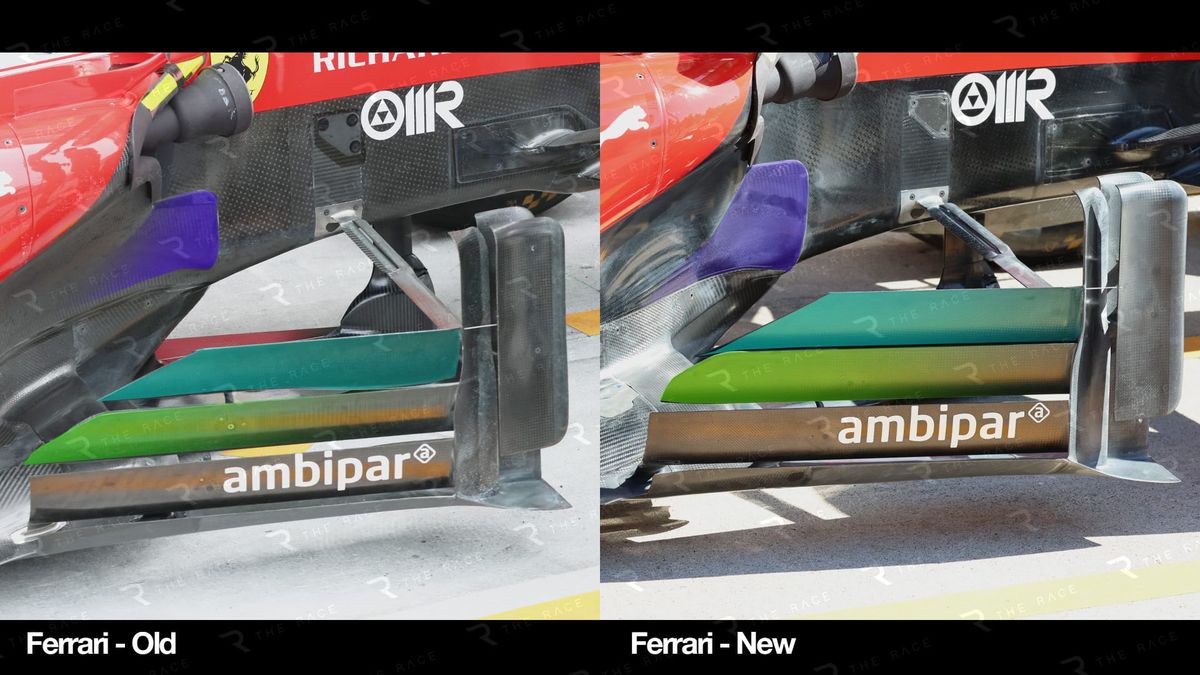
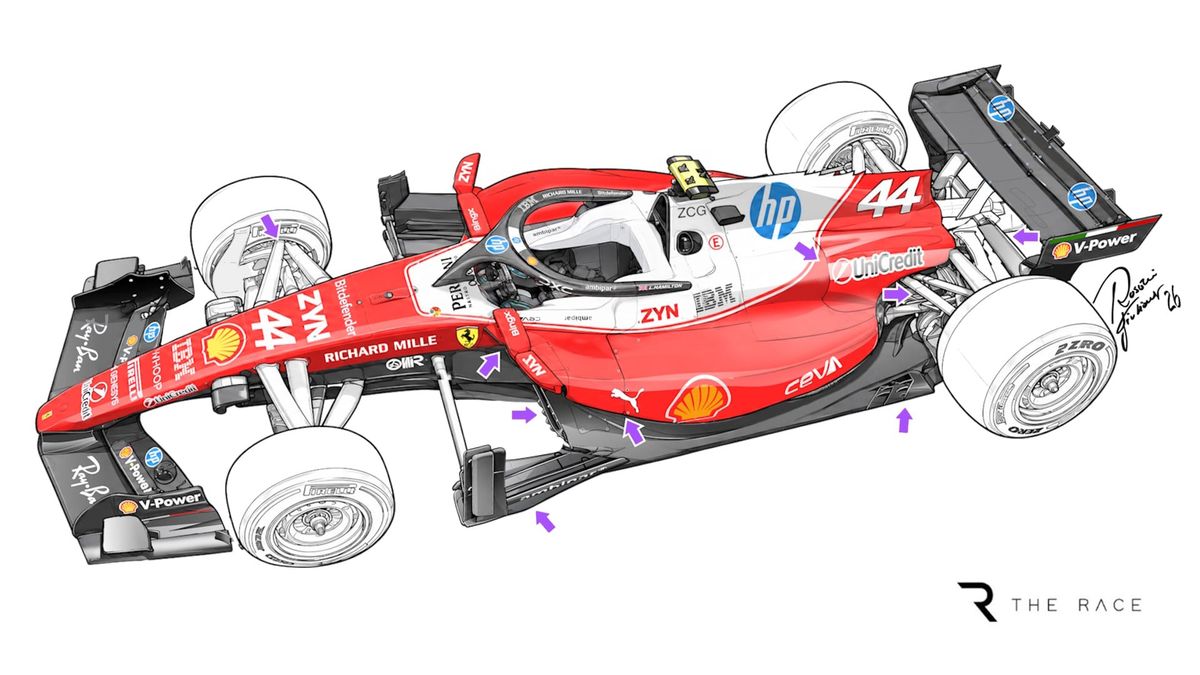
The package centres on airflow control. A larger fin separating the radiator intake from the coke-bottle undercut manages high-speed spillage, stabilising the floor and floor-edge devices for more predictable platform behaviour.
Sidepods adopt a lower rear upper surface to strengthen downwash. That reduces the rear sidepod volume and enlarges the coke-bottle channel between the inner bodywork and rear brake ducts.
Larger radiator fin manages high-speed spillage to stabilise the floor.
Ferrari also deepens the undercut beneath the CEVA decal, fine-tuning flow to the floor edge. Cutting edge-entrained air helps seal the underfloor’s low-pressure zone, improving grip and entry stability.
At the rear, a new outer-edge diffuser vane replaces a simpler gurney flap. It works with turning vanes in the rear brake ducts to smooth flow and delay detrimental separation at high load.
New outer-edge diffuser vane replaces a gurney to delay flow separation.
Lower-corner diffuser vanes are revised to generate stronger vortices, improving edge sealing to the track. The goal is steadier rear load, particularly through long, fast direction changes.
The trade-off is ride sensitivity. Austin’s bumps may force softer suspension and higher ride heights, trimming peak load to protect the aerodynamic platform, a compromise Mercedes also faces.
Austin’s bumps likely push Ferrari toward softer suspension and higher ride heights.
Strategically, Ferrari must pair these gains with cleaner execution. As outlined in the latest Ferrari upgrade analysis, marginal aero steps matter only if operations convert pace.
This package continues Ferrari’s 2026 development arc, building on its ongoing upgrade programme and the US GP upgrade preview. With multiple teams in contention, detail and decisiveness now decide outcomes.
Visual Summary
Precision, not drama
Before Austin
After Upgrade
After Upgrade
+0.17s/lap
Every millimeter counts: Ferrari chases fractional gains for elite performance.
⏱️
The Real Gap: Split-Second Pit Calls
?
Ferrari’s upgrades are razor-sharp — but hesitation on the pit wall still steals their edge.
Upgrades may be small,
but the stakes are mountain-high
but the stakes are mountain-high

Daniel Miller reports on Formula 1 Grand Prix weekends with race-day analysis, team-radio highlights, and point-standings updates. He explains power-unit upgrades, aerodynamic developments, and driver rivalries in straightforward, SEO-friendly language for a global F1 audience.