https://shop.fervogear.com/cart

Discover How Many Upgrades Each Team Unveiled in Canada

Highlights
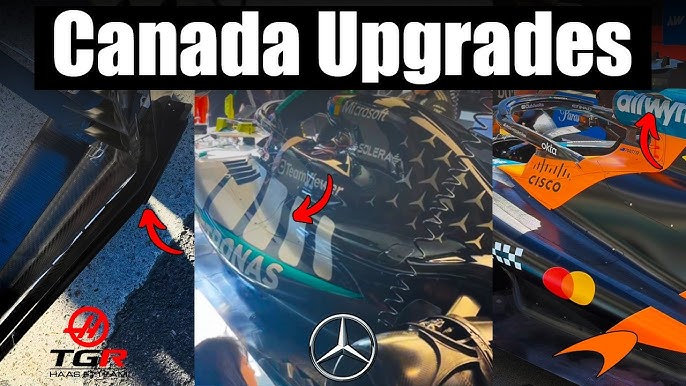
- Mercedes introduces new front wing and brake cooling upgrades in Canada.
- Ferrari focuses on optimizing Miami package, no new Montreal upgrades.
- McLaren adds front wing, engine cover, and suspension updates.
- Red Bull targets balance and brake cooling with front wing tweaks.
- Alpine and Haas unveil major floor and aerodynamic redesigns.
- Canadian Grand Prix runs May 22-24 with limited practice time.
Teams arrive in Montreal with targeted development for the Canadian Grand Prix, running May 22-24. The circuit’s heavy braking and long straights drive cooling and efficiency priorities.
Only one practice session precedes Sprint Qualifying, compressing setup work and validation windows. That raises the stakes for correlation and manufacturing accuracy.

With Mercedes unbeaten so far, the field seeks immediate gains. Context on venue demands sits within the broader Canadian Grand Prix build-up.
Mercedes introduces a revised front wing with lowered elements merging into the footplate. Additional strakes and reworked floor slots target cleaner rearward flow and greater load consistency.
Brake duct inlets and exits increase in size to manage Montreal’s thermal peaks. Reinforcements across floorboard, floor body, and rear corner aim to stabilise local loads.
The scale and coherence of Mercedes’ package reflect a confident leader. Their edge is examined in the detailed Mercedes advantage analysis.
Mercedes remains unbeaten in 2026 and doubles down with aero and cooling gains for Montreal’s stop‑start demands.
Ferrari elects against fresh parts after Miami’s update. The team prioritises optimisation and correlation, seeking reliability in performance rather than raw novelty.
This conservative stance aims to preserve momentum and reduce risk. It underlines trust in the Miami package’s underlying potential.
Ferrari focuses on extracting value from its Miami specification, preferring refinement over rapid iteration in Canada.
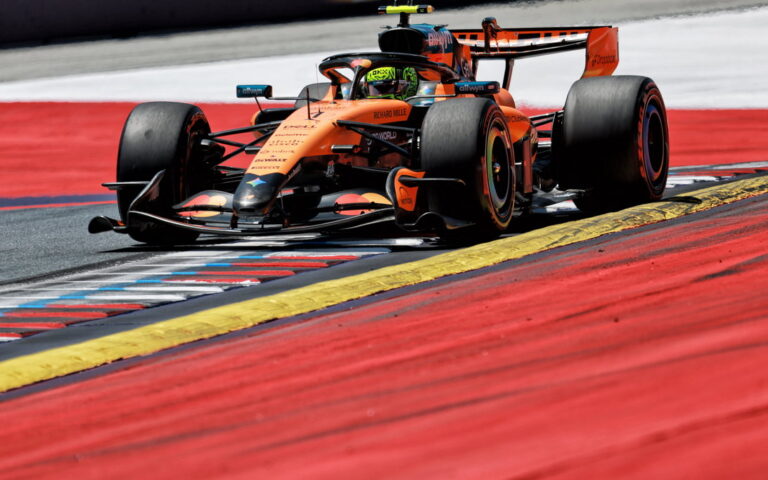
McLaren continues its aggressive push with a new front wing and engine cover. Revised rear suspension fairings and floor edges target stability through changeable braking phases.
A halo winglet and adjusted rear wing endplate manage local load distribution. Additional cooling louvres increase flexibility as ambient conditions shift.
Technical specifics mirror the team’s iterative approach detailed in the McLaren Canadian GP upgrade brief.
[pervogear_custom]Red Bull’s focus shifts to balance and brake cooling, anticipating sustained thermal stress across Canada and Monaco.[/pervogear_custom]
Red Bull targets balance and brake durability, tweaking flaps and enlarging exits to stabilise race-long performance.
Red Bull refines front wing flap geometry to adjust aero balance. Enlarged brake exit ducts reflect the twin demands of Montreal and Monaco.
A closed radiator exit panel on the engine cover improves thermal control. Minor bib trims and forward floor camber tweaks chase consistent load.
Alpine unveils a comprehensive floor redesign for broader efficiency. Rear wing modifications add local downforce without spiking drag.
Haas revises sidepod inlets and engine covers to energise rearward flow. A new floor, with sharper diffuser and floor edge splits, anchors the package.
Rear suspension changes and winglets aim to calm the platform under braking. The intent is predictable balance on corner entry and exit.
Racing Bulls reprofile floor geometry to raise underbody pressure. Reshaped rear corner devices and a new tailpipe bracket tidy the wake.
Beam wing alterations help extract more rear wing load. That should strengthen traction zones onto Montreal’s long straights.
Alpine and Haas commit to major floor concepts, betting on efficiency gains that carry beyond Montreal.
Williams brings circuit-specific brake hardware to stabilise temperatures. New suspension cladding improves front corner flow coherence.
A repositioned tailpipe better integrates with surrounding aero. More on the direction appears in the Williams Canadian GP change report.
Audi focuses on cooling with revised front and rear brake ducts. Diffuser changes seek extra rear load without adding instability.
New sidepod louvres support engine temperatures in heavy braking zones. That adds margin during safety car restarts and traffic.
Cadillac sharpens front corner leading edges to boost load and cooling. Refined brake duct geometry pairs with tweaked diffuser winglets.
Rear aero components receive local updates to strengthen rotation. The target is predictable rear support in low-speed chicanes.
Aston Martin brings no new parts after addressing Miami vibrations. The emphasis is consistency as the midfield compresses.
Compressed running places a premium on out-of-the-box performance. Teams must prove correlation fast or risk chasing balance all weekend.
With weather variability likely, cooling headroom and aero robustness matter. The sprint format magnifies setup decisions and tyre management windows.
Canada should reveal which philosophies translate under pressure. The early read will shape development choices heading to Monaco.
Visual Summary
➡️
➡️
⬆️
?
?
Upgrade Arms Race Ignites in Montreal
Every team brings a unique weapon—Mercedes leads with new aero, as rivals sprint to catch up on a track demanding cooling and downforce.
?
Mercedes
Front wing, brake cooling, new floor—still unbeaten
?
Ferrari/Aston
No new parts; perfecting existing gains
⚙️
RB, McLaren, etc.
Major floor/wing/chassis updates
1 PRACTICE SESSION
→
SPRINT QUALIFYING
→
UPGRADE ULTIMATUM
May 22–24
Circuit Gilles Villeneuve, Montreal
Circuit Gilles Villeneuve, Montreal

Daniel Miller reports on Formula 1 Grand Prix weekends with race-day analysis, team-radio highlights, and point-standings updates. He explains power-unit upgrades, aerodynamic developments, and driver rivalries in straightforward, SEO-friendly language for a global F1 audience.