
https://shop.fervogear.com/cart

Discover What’s Driving F1’s 2027 Aero Ban Changes

Highlights
- FIA bans exhaust wings and hanger extensions for 2027 F1 season
- Downforce levels in 2026 cars match early 2022 season standards
- New rules limit actuator fairing winglets, maintaining design innovation
- FIA aims to reduce 80kg car weight and shrink car size
- Drivers praise improved car handling and increased driving challenge
- Rules target fair racing with closer car following and less turbulence
The FIA confirms new aerodynamic bans for 2027, targeting downforce control and development costs after aggressive 2026 innovations. The measures aim to protect racing quality and reduce wake sensitivity.
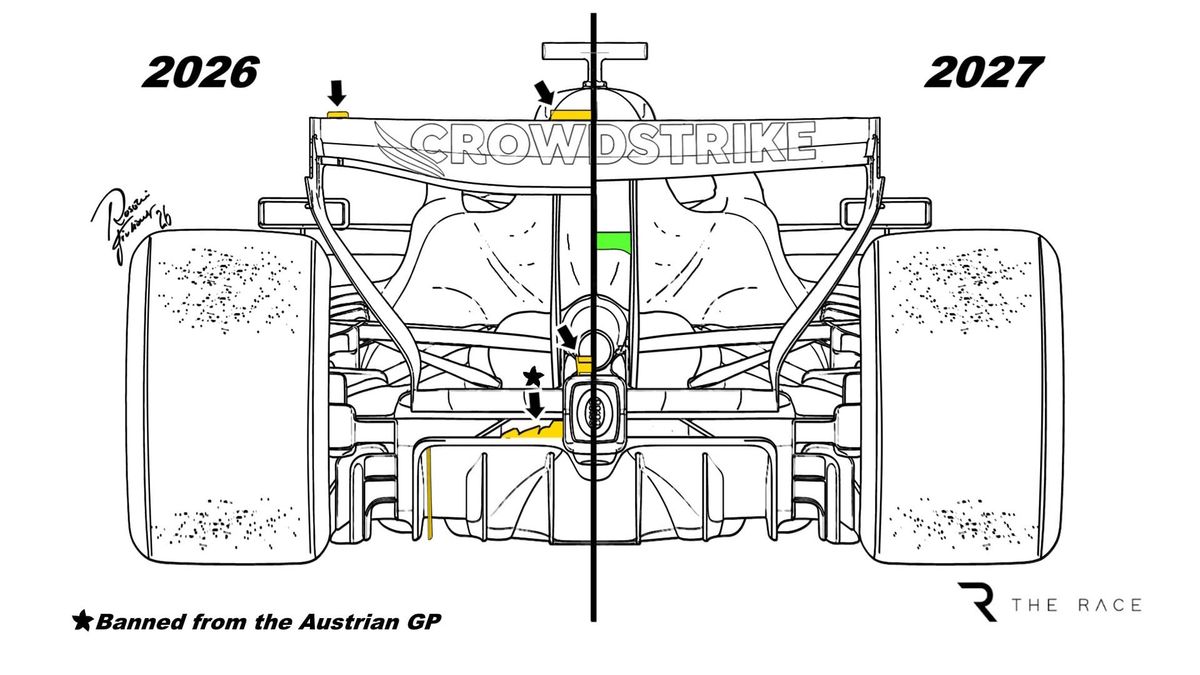
Exhaust wings and rear wing hanger extensions are outlawed. Tighter limits also arrive on actuator fairing winglets that proliferated from Monaco. The FIA says the core aero concept remains intact.

Regulators want cars to follow more closely without turbulent penalties. Nikolas Tombazis notes 2026 downforce sits near early-2022 levels, despite teams pushing hard on specific aero regions.
The 2022 benchmark unraveled as teams exploited freedoms, worsening wake turbulence. The downforce loss at 10 meters rose from 15% to 35%, compromising following. That context informs today’s safeguards.
Past offenders included front wing endplates, floor edges, and complex front wheel attachments. The FIA now closes loopholes while preserving limited scope for concept development and performance evolution.
Exhaust wings and rear wing hanger extensions are banned from 2027 as the FIA resets aerodynamic boundaries.
A narrower legality box surrounds the rear wing actuator area to police winglets. The intention is convergence over time without erasing avenues for creative, legal detail work.
Unexpected 2026 exhaust wing concepts triggered swift intervention. The FIA moves early to prevent a costly, marginal gains race that risks harming car-to-car combat.
Tombazis says 2026 downforce aligns with early 2022 levels, but without breaking the intended aero concept.
Drivers report improved handling from higher ride heights and reduced stiffness compared to 2025. Power unit rule debates continue, with penalties and usage rules detailed in the FIA F1 engine penalties explainer.
Tombazis stresses maintaining a driver challenge. The cars are lighter and smaller than 2025, with drivers praising a better balance between commitment and comfort on longer stints.
Future targets include cutting around 80 kilograms and making the cars shorter and more compact.
The FIA now chases a significant weight reduction, alongside a smaller footprint to sharpen agility and racing. Additional context appears in James Vowles’ comments on the 2027 rule and the season’s aerodynamic review in the FIA F1 2026 issues report.
Visual Summary
2027 ⛔ Big Aero Ban!
Exhaust wings, hangers & extra
winglets:
CUT to stop the “downforce arms race”
winglets:
CUT to stop the “downforce arms race”
FIA’s 2027 vision:
Fairer racing, closer battles.
Lighter, smaller, skill-based cars.
💡 Innovation stays—in a tighter box.
Fairer racing, closer battles.
Lighter, smaller, skill-based cars.
💡 Innovation stays—in a tighter box.
Downforce Loss When Following (10m)
Wake turbulence peaked in ‘26 — now cut back
2027 Target:
–80kg • Shorter wheelbase
–80kg • Shorter wheelbase
“We haven’t seen teams break the concept—this time the rules hold.” – Nikolas Tombazis, FIA
🏁 Exhaust Wings BANNED
⬆️ Ride heights INCREASED
🦅 Lighter, smaller cars
🤔 Innovation still allowed—just

Daniel Miller reports on Formula 1 Grand Prix weekends with race-day analysis, team-radio highlights, and point-standings updates. He explains power-unit upgrades, aerodynamic developments, and driver rivalries in straightforward, SEO-friendly language for a global F1 audience.