

https://shop.fervogear.com/cart

How a Failed 2024 F1 Upgrade Fueled a Major 2026 Victory

Highlights
- Racing Bulls faced a failed upgrade at 2024 Spanish Grand Prix.
- Team dropped from sixth to eighth in 2024 constructors’ standings.
- 2024 failure helped improve car development for 2025 and 2026 seasons.
- 2026 Spanish GP saw Racing Bulls as the fifth fastest team.
- Key staff include CTO Tim Goss and Technical Director Dan Fallows.
- Team plans further car upgrades while preparing for 2027 season.
Racing Bulls’ 2026 rise traces back to a failed upgrade at the 2024 Spanish Grand Prix. That misstep resets development priorities and underpins stronger cars and execution since.
Early in 2024, the team sits sixth in the constructors’ standings, clear of Haas and Alpine. Confidence is high as Barcelona looms with a major package.

The upgrade includes a reworked rear wing, revised sidepods, new engine covers, and a reprofiled floor. Wind‑tunnel and CFD numbers indicate gains that should lift race pace.

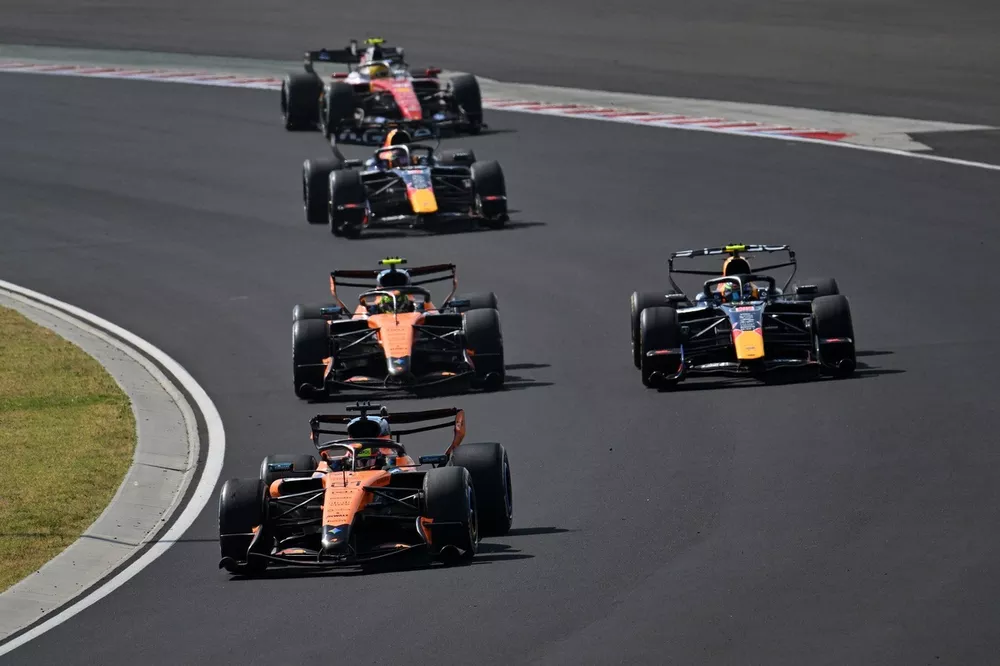
Reality diverges. Both Yuki Tsunoda and Daniel Ricciardo exit in Q1. Ricciardo finishes 15th, about 30 seconds off the leaders, while Tsunoda places 19th.
Team principal Alan Permane calls it a “double penalty”. Time is lost between updates, then more time vanishes diagnosing why the package fails.
“You’ve lost maybe four weeks, but you lose more because you don’t understand it either. That’s awful.” — Alan Permane
Trust in updates returns only late in 2024. By then Haas and Alpine have passed, and Racing Bulls drops from sixth to eighth overall.
Crucially, the failure reframes priorities. Permane says the group learns what truly makes the car quick and where to focus resources.
That clarity shapes the 2025 and 2026 specifications. At this year’s Spanish GP, Racing Bulls ranks fifth fastest, a clear step from the 2024 nadir.
“It was awful at the time, but we learned a lot about what makes a car quick.” — Alan Permane
Liam Lawson praises the upgrade cadence. He says every part brought so far works as intended, which sustains confidence and consistency.
Tunnel‑to‑track correlation stands out. Each addition delivers the modeled load and balance, enabling incremental gains in lap time and reliability.
Every upgrade introduced so far has performed as expected, strengthening correlation and execution.
Experienced hires underpin this. Chief technical officer Tim Goss and technical director Dan Fallows guide architecture, process, and validation.
A 2025 move to a new facility on the Red Bull campus in Milton Keynes tightens integration. Improved tools and co‑location accelerate feedback loops and output.
The team keeps specifics guarded, aware rivals study photos and data. The focus remains downforce, efficiency, and benign operating windows, not flashy concepts.
Development continues through 2026 while 2027 planning runs in parallel. The objective is steady, validated upgrades to climb the order.
Against a tight field, incremental gains decide outcomes. McLaren and Ferrari push hard; Ferrari’s upgrade chase underlines the premium on execution.
What starts as a painful Barcelona failure becomes the base for today’s form. Racing Bulls shows how structured learning converts setbacks into sustained competitive progress.
Visual Summary
2024
Confident Start
Confident Start
Spanish GP Upgrade
Failure
“Double Penalty”
“Double Penalty”
2026
Best Yet
The painful flop of 2024’s upgrades
became Racing Bulls’ Launchpad.
Q1
Double exit in Barcelona
(Tsunoda & Ricciardo)
Double exit in Barcelona
(Tsunoda & Ricciardo)
8th
Dropped in constructors’
(End of 2024)
Dropped in constructors’
(End of 2024)
5th Fastest
At Spanish GP
(2026 Turnaround)
At Spanish GP
(2026 Turnaround)
❝
“One of the reasons we’re in decent shape now is because we had that huge upgrade in 2024 for Barcelona that didn’t work at all…
It was awful at the time, but we learned a lot about what makes a car quick and where we needed to focus.”
—Alan Permane, Team Principal
Relentless development:
2027 targets already underway. Every lesson fuels the ascent.
Daniel Miller reports on Formula 1 Grand Prix weekends with race-day analysis, team-radio highlights, and point-standings updates. He explains power-unit upgrades, aerodynamic developments, and driver rivalries in straightforward, SEO-friendly language for a global F1 audience.