

https://shop.fervogear.com/cart

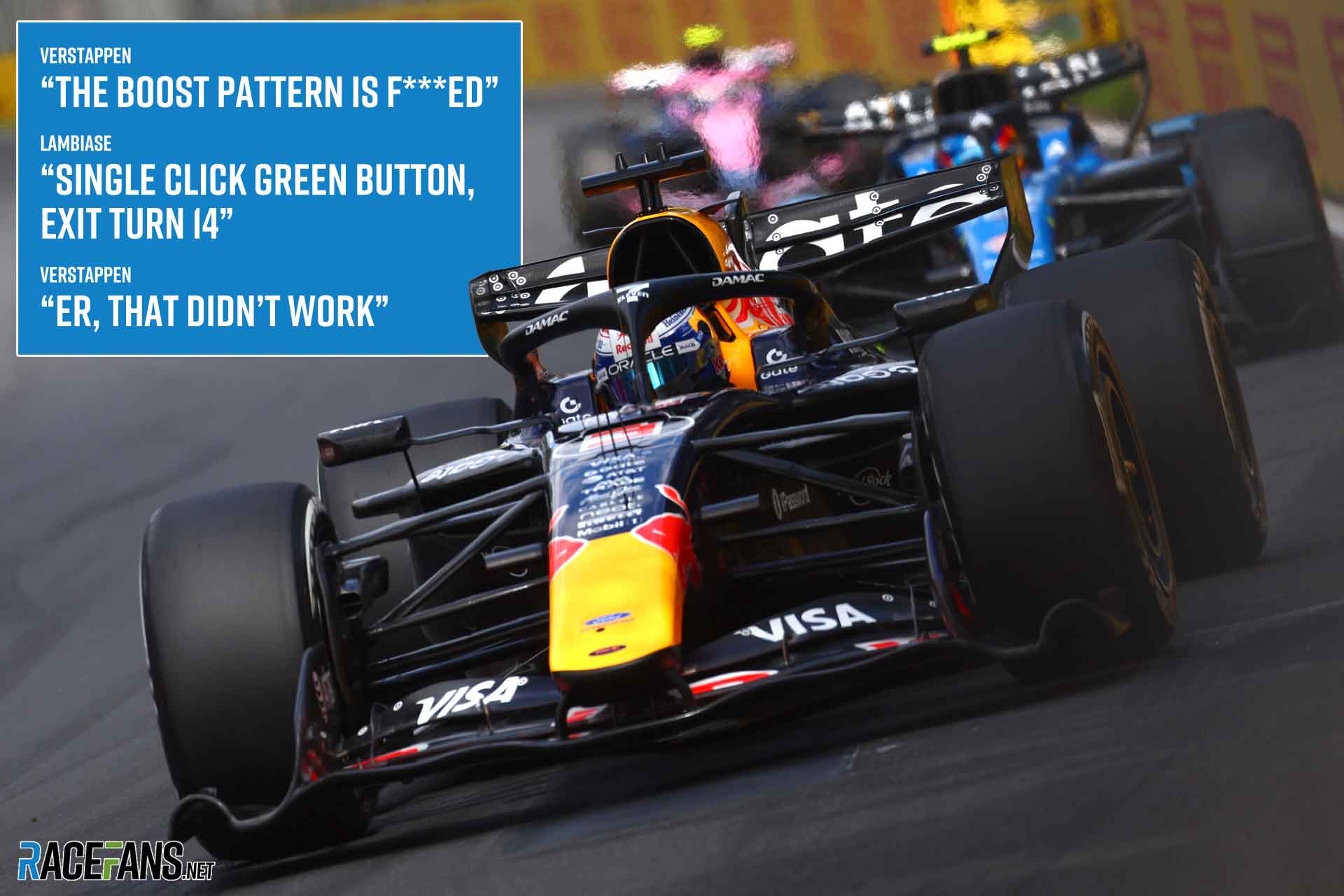
Max Verstappen Voices Frustration Over Limits Blocking His F1 Impact

Highlights
- Verstappen frustrated by limited driver impact in Formula 1 races.
- 2026 rules require F1 cars to use 50% battery power.
- Energy management now controlled by predictive onboard computer algorithms.
- Drivers must maintain smooth inputs to avoid reducing energy efficiency.
- Gaining time in corners results in speed loss on straights.
- New regulations encourage strategic pacing over aggressive racing styles.
Max Verstappen voices concern that current and incoming power unit rules curb a driver’s ability to shape races, shifting influence toward systems engineering and energy management.
The 2026 framework targets roughly a 50% electrical contribution, placing battery deployment and harvesting at the heart of performance and lap-time consistency.

Onboard control software increasingly determines deployment, learning driver patterns and optimising usage. Abrupt inputs can degrade predictions and reduce efficiency across a lap and stint.
2026 power units target a 50% electrical contribution to total output.
Verstappen highlights a new trade-off. Time gained in corners can be offset by reduced straight‑line speed, as deployment limits and harvesting priorities reallocate available energy.
Traditionally, a quicker corner brings a net lap benefit. Under the current control logic, those gains risk being neutralised by constrained deployment on the following straight.
Corner gains can be neutralised by reduced straight-line speed due to harvesting and deployment limits.
The result is a different driving brief. Brake shapes, gear timing, and throttle modulation must serve the energy plan as much as raw car speed through sequences.
That emphasis tends to compress performance spreads. Teams and team-mates converge as the software narrows optimal operating windows and punishes deviations.
The shift also feeds a more measured race rhythm, with pace changes and energy targets dictating attack windows. Visible risk-taking can diminish compared to prior eras.
This aligns with the broader 2026 F1 debate, where the balance between spectacle and sustainability sits under intense scrutiny.
Predictive control software governs energy deployment, demanding consistently smooth driver inputs.
Driver influence does not disappear but is reframed. Precision, repeatability, and communication about energy states become key differentiators in race execution.
Meanwhile, software, calibration, and deployment strategy grow as performance battlegrounds. Margins depend on how effectively teams fuse driver style with algorithmic models.
That context shapes evaluations of frontrunners and prospects alike, as seen in ongoing analysis of the Isack Hadjar–Max Verstappen dynamic within Red Bull’s ecosystem.
As teams iterate tools and drivers adapt, the central question remains whether this model enhances strategic depth or blunts on‑track drama.
The discussion will intensify across the calendar, not least around marquee events and storylines, including Verstappen’s Zandvoort farewell talk amid evolving technical priorities.
Visual Summary
Drivers “Tethered” by Algorithms
50% Power From Battery
Skill vs. System
Verstappen’s F1 frustration:
Push harder in corners?
Lose it on the straights.
Push harder in corners?
Lose it on the straights.
= 0
Any gain is balanced out
“
It’s hard for drivers to make a difference now.
The algorithms decide the game—push here, lose there.
”
— Max Verstappen
😤
F1 brilliance, held back by code

Daniel Miller reports on Formula 1 Grand Prix weekends with race-day analysis, team-radio highlights, and point-standings updates. He explains power-unit upgrades, aerodynamic developments, and driver rivalries in straightforward, SEO-friendly language for a global F1 audience.