
https://shop.fervogear.com/cart

McLaren reveals ‘no surprise’ as delicate F1 project shows clear evidence

Highlights
- McLaren cautiously developed rotating rear wing, debuting in Hungary GP.
- Ferrari introduced the 270-degree flap wing at Miami GP.
- Red Bull faced issues, withdrawing wing before Hungarian GP reintroduction.
- McLaren emphasized aerodynamic load and predictable handling effects.
- Track data prioritized over wind tunnel results for wing analysis.
- McLaren plans ongoing wing optimization throughout the F1 season.
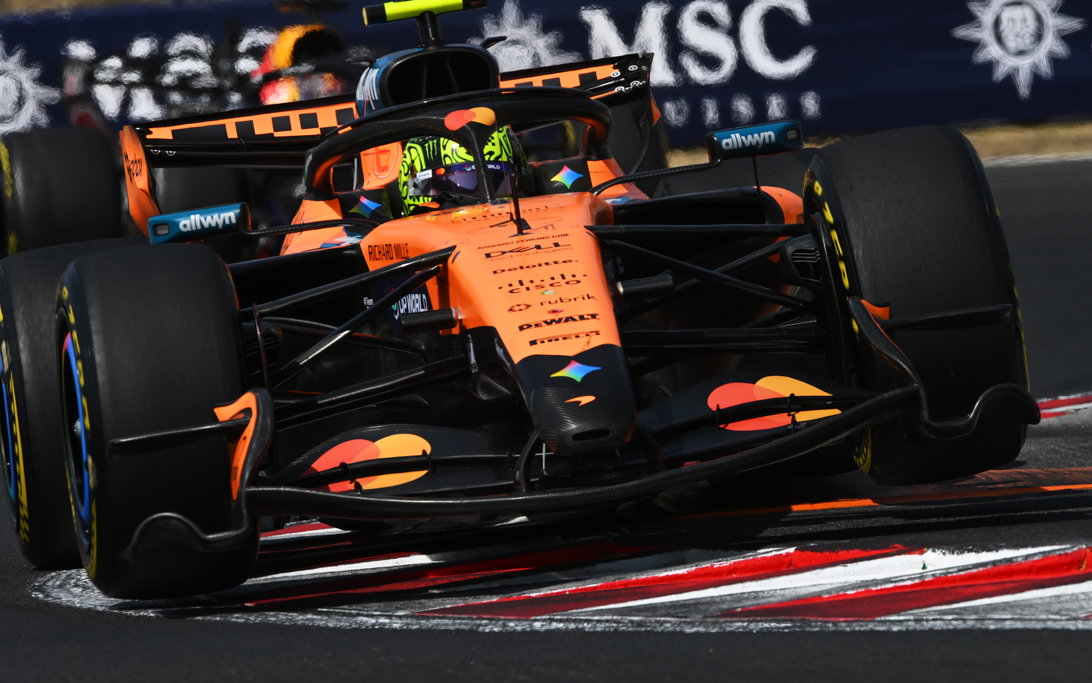
McLaren acknowledges the complexity of its rotating rear wing, refined by Ferrari, and debuts it cautiously with Oscar Piastri in Hungarian GP practice after an initial Montreal bring.
Ferrari pioneers a 270-degree rotating flap rather than DRS, generating lift to cut drag. Validation starts in China and culminates in a Miami debut after Ferrari’s extensive work.

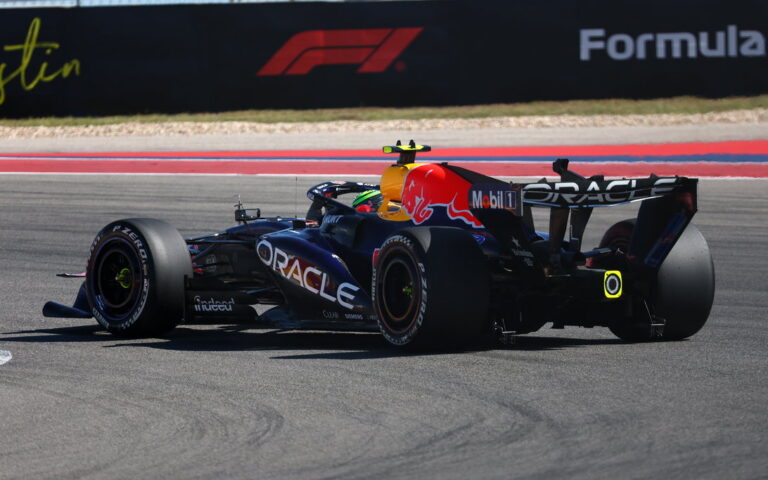
Red Bull fits a variant to the RB22, but airflow fails to reattach reliably. Max Verstappen crashes in Austria qualifying and Silverstone, forcing withdrawal before a cautious Hungary reintroduction.
McLaren debuted its rotating rear wing on Piastri’s car in Hungary after a careful Montreal evaluation.
Andrea Stella describes McLaren’s programme as complicated, centred on reliable actuation within regulatory boundaries and controlled switching. The target is predictable handling and balance across the car’s operating window.
Engineers stress the wing changes global aerodynamic load, not merely flap behaviour. Integration influences ride, yaw sensitivity, and braking stability, so robustness precedes any aggressive race deployment.
Red Bull’s early implementation suffered airflow reattachment failures, prompting a temporary withdrawal.
McLaren views wind-tunnel tools as limited for reattachment studies. Trackside data and onboards lead decisions, aligning with insights from its McLaren–Ferrari F1 edge evaluation.
Budapest running matches expectations, with consistent switching and no instability reported. An initial sign-off follows, and the team targets iterative updates as it broadens deployment through upcoming rounds.
Track data outweighs wind-tunnel results when characterising reattachment margins on rotating rear wings.
Ferrari’s unit operates trouble-free so far, reinforcing confidence in the architecture. That steadiness underpins momentum as they chase a fourth title in the current rules cycle.
McLaren plans to refine profiles, actuation timing, and control maps per circuit demands. The programme complements broader performance pushes, including spending more on its power unit strategies.
Compared with Red Bull’s approach, McLaren emphasises margin on reattachment, given the delicate flow regime. Track learning shapes safe operating windows and circuit-specific thresholds.
The project underscores how teams study rivals yet pace deployment under tight regulations. If reliability holds, the concept offers meaningful straight-line efficiency without compromising corner performance.
Visual Summary
FERRARI
Invents
McLAREN
Refines & Learns
RED BULL
Struggles
🛫 270° ROTATION
Beyond DRS: The McLaren rear wing rotates like an airplane flap, not just lifts to reduce drag!
Beyond DRS: The McLaren rear wing rotates like an airplane flap, not just lifts to reduce drag!
Goal
Reduce drag ➔ More top speed on the straights
Risk
If air doesn’t reattach: instability, crashes
FERRARI
Invents 270° wing
✓ Reliable
🚀 Miami GP
✓ Reliable
🚀 Miami GP
RED BULL
Copies wing
Crash risk!
🛑 Withdrawn after UK GP
Crash risk!
🛑 Withdrawn after UK GP
McLAREN
Waits & Tests
🤓 Data-driven
👍 Safe debut: Hungary
🤓 Data-driven
👍 Safe debut: Hungary
Precision over Panic!
McLaren’s cautious trial means their rotating wing works on track, not just in theory.
The innovation relay is ON for F1 supremacy.
The innovation relay is ON for F1 supremacy.

Daniel Miller reports on Formula 1 Grand Prix weekends with race-day analysis, team-radio highlights, and point-standings updates. He explains power-unit upgrades, aerodynamic developments, and driver rivalries in straightforward, SEO-friendly language for a global F1 audience.