

https://shop.fervogear.com/cart

What the Italian GP Heat Hazard Warning Really Means

Highlights
- FIA declares ‘heat hazard’ for Italian Grand Prix at Monza
- Heat hazard triggers mandatory driver cooling systems in all cars
- Temperatures forecasted above 30°C, possibly reaching mid-30s
- Drivers may choose to wear cooling vest or add ballast
- Oscar Piastri supports vest use but warns of potential issues
- Cooling systems will be tested during Friday’s practice session
The FIA has declared a heat hazard for the Italian Grand Prix at Monza, activating mandatory cockpit cooling measures after forecasts indicate dangerously high temperatures across the competitive sessions.
The mechanism originates from Qatar 2023, with 2025 regulations requiring a declaration when forecast ambient conditions reach 31°C or higher for a Sprint or Grand Prix.

Monza’s outlook suggests sustained heat above 30°C, potentially mid‑30s, reflecting regional heatwaves. That shapes preparations during the Italian Grand Prix build‑up from Friday to Sunday.
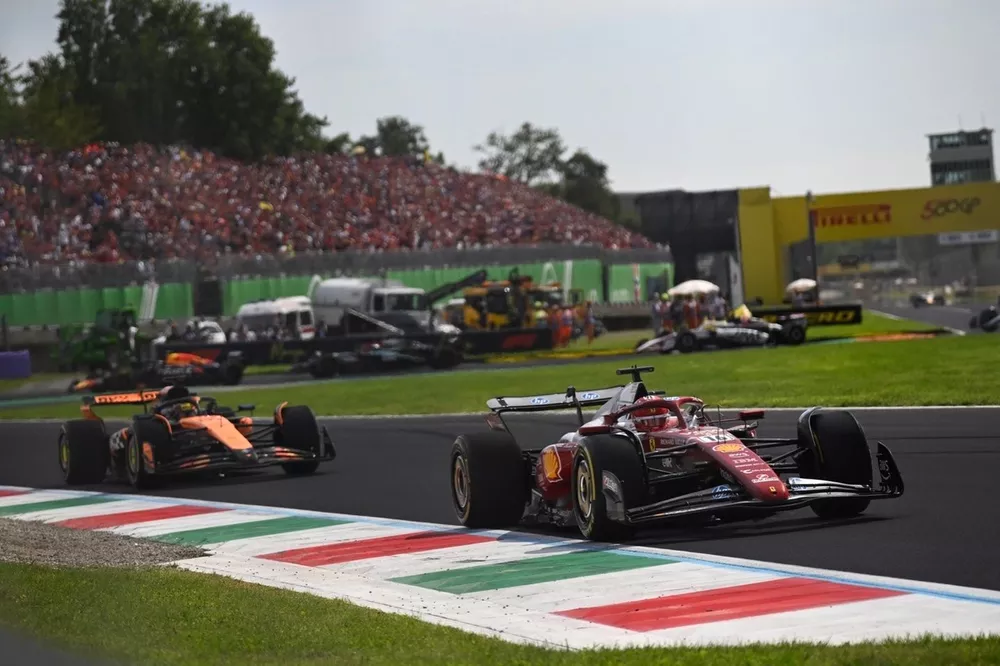
FIA triggers Article B1.5.10 after the Heat Index is forecast to exceed 31.0°C during sessions at Monza.
Race director Rui Marques confirms the alert under Article B1.5.10, which uses a Heat Index threshold above 31.0°C during sessions as the procedural trigger.
Teams must install a Driver Cooling System comprising a pump, plumbing, and a thermal storage unit that circulates chilled fluid through tubing integrated into a fireproof driver vest.
Drivers may choose not to wear the vest, but the car then carries 0.5kg of cockpit ballast to equalize weight, preserving fairness while allowing packaging and balance preferences.
Oscar Piastri expects to run the vest based on past trials. He notes potential relief, though failures can worsen heat load, so teams will prioritize reliability and consistent cooling delivery.
Piastri: the vest can help, but a system failure risks compounding heat stress.
Friday practice provides the validation window, with squads assessing system endurance, flow rates, driver comfort, failure modes, and any installation compromises around wiring, plumbing, and thermal mass.
Heat management influences stint length, lifting and coasting needs, and tyre degradation, increasing strategic sensitivity to compound choice and pressures, as outlined in our Italian Grand Prix tyres briefing.
Ambient temperatures also stress power‑unit and brake cooling, plus ERS thermal limits, potentially affecting deployment strategies, as detailed in our Italian Grand Prix engines analysis.
Cooling hardware and procedures will be proven in Friday practice before any competitive mileage.
This move aligns with the FIA’s post‑Qatar safety drive and complements wider guidance issued this week, including the heat warning framework for Monza.
Execution will decide competitiveness. Teams that stabilize cockpit conditions while minimizing weight and aero penalties should gain across qualifying, the Sprint, and Sunday’s race.
Visual Summary
HEAT HAZARD
at Monza
at Monza
⇆
🏋️♂️
0.5kg
FIA declares a heat hazard for the Italian GP:
Cooling vests for the drivers or extra weight —
all eyes on how humans and machines will endure Monza’s fiery test.
VS
34°C forecast
Heat for all sessions
Article B1.5.10
FIA’s heat warning trigger
🧑🔧
Oscar Piastri:
“It helps a bit,
but if it fails, it can make things worse. Worth trying for any cooling at Monza.”
Oscar Piastri:
“It helps a bit,
but if it fails, it can make things worse. Worth trying for any cooling at Monza.”

Daniel Miller reports on Formula 1 Grand Prix weekends with race-day analysis, team-radio highlights, and point-standings updates. He explains power-unit upgrades, aerodynamic developments, and driver rivalries in straightforward, SEO-friendly language for a global F1 audience.