

https://shop.fervogear.com/cart

F1 Denies Hamilton’s Plan to Control Dangerous Closing Speeds in Baku


Highlights
- Lewis Hamilton proposed rule changes after near-miss with Liam Lawson.
- Teams rejected Hamilton’s idea due to major energy strategy impacts.
- 2026 energy rules cause dangerous 50 km/h speed differences on track.
- Hamilton received reprimand for impeding Lawson during Baku practice session.
- FIA likely to review energy rules to improve safety at future races.
Lewis Hamilton urged a change to manage closing speeds at Baku after a near-miss with Liam Lawson in practice, but teams rejected it citing the impact of 2026 energy rules.
Lawson braked from around 300 km/h between Turns 18 and 19 to avoid Hamilton’s Ferrari, highlighting a hazardous speed delta through Baku’s flat‑out final sweeps on the 2026 power-management map.

The incident sharpened debate, during the Azerbaijan Grand Prix weekend, over deployment windows. Out‑laps conserve charge and run slowly, while push laps delay release until the run to the line.
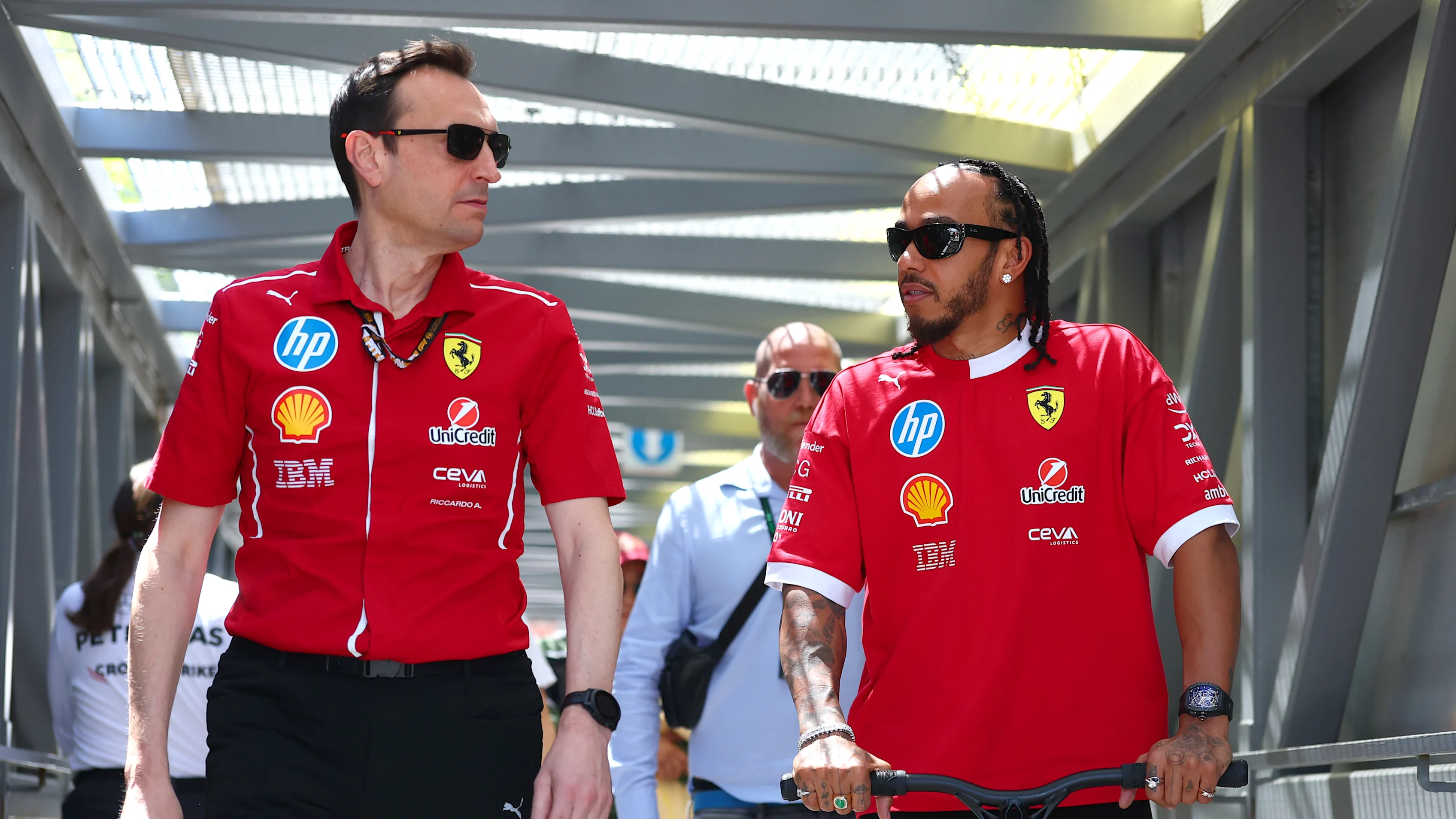
At Baku that divergence reached 50 km/h, compressing reaction time in a corridor. Race director Rui Marques asked out‑laps to keep offline from Turns 16 to 18 to mitigate risk.
Hamilton discussed the near-miss with stewards and received a reprimand for impeding Lawson. He proposed allowing full electrical deployment from the final corner to beyond the finish for push laps.
The logic was clear: remove slow cars in the fastest zone and cut judgment calls at full throttle. The idea found traction in briefing but clashed with teams’ energy‑strategy constraints.
Speed delta through Turns 18–19 reached about 50 km/h, amplifying risk in Baku’s flat‑out finale.
Teams argued the change, mooted an hour before qualifying, would upend deployment models and car balance. Reworking maps mid‑weekend risked inequity and reliability, with parc fermé restrictions limiting meaningful recalibration.
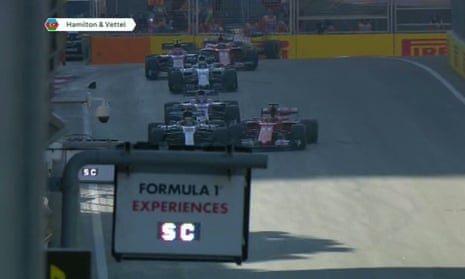
Hamilton’s sanction also reflected race‑control guidance. He did not keep sufficiently offline on an out‑lap, slowing Lawson through the approach, which ultimately triggered the near‑miss and the impeding call.
Hamilton received a reprimand for impeding Liam Lawson in free practice two.
The broader issue sits with the 2026 power‑unit split between combustion and electrical deployment. Aggressive harvesting and delayed release create large deltas; street circuits with blind kinks magnify hazard profile.
FIA is expected to review energy rules to curb extreme speed differentials before future events.
Operational fixes exist, but solve little. Clearer radio calls, off‑line expectations, and gaps help. Yet structural rules, not etiquette, determine if a push‑lap car catches an out‑lap at 300 km/h.
Expect FIA and teams to test options: guaranteed deployment windows, protected zones, or revised minimum‑speed protocols, amid ongoing Baku track repairs. Any change must preserve competitive integrity while prioritising safety.
Visual Summary
🏁
+50 km/h
🥽
⇦
Street Circuit Squeeze
⇨
Street Circuit Squeeze
⇨
⚠️
Hamilton: “The speed gap is dangerous!”
50 km/h gap
Between out lap and push lap cars in final sector
⚡ Battery strategy chaos
2026 rules force slowdowns before start/finish
Near Miss
Lawson brakes HARD at 300km/h
⏱️
Practice, Baku’s final corners: Hamilton nearly collides with Lawson due to energy rules handcuffing speeds.
Practice, Baku’s final corners: Hamilton nearly collides with Lawson due to energy rules handcuffing speeds.
Proposed fix: Full power allowed for all drivers in the last sector.
Teams rejected (too late for strategy changes).
Teams rejected (too late for strategy changes).
Baku’s narrow walls and new energy rules create a
danger zone — F1 must solve this before the next street fight.
danger zone — F1 must solve this before the next street fight.

Daniel Miller reports on Formula 1 Grand Prix weekends with race-day analysis, team-radio highlights, and point-standings updates. He explains power-unit upgrades, aerodynamic developments, and driver rivalries in straightforward, SEO-friendly language for a global F1 audience.