

https://shop.fervogear.com/cart

F1’s 2027 Strategy for High-Degradation Tyres Revealed

Highlights
- Formula 1 to introduce higher-degradation tyres in 2027 season
- 2026 tyres caused fewer pitstops due to lower than expected wear
- Pirelli tested 2027 tyres on 2026 cars at Imola with top drivers
- 2027 tyres designed for more wear to boost multi-pitstop strategies
- Next tyre test scheduled in mid-October at Magny-Cours circuit
Formula 1 will introduce higher-degradation tyres for 2027, aiming to revive multi-stop racing after 2026’s one-stop trend. Pirelli’s updated compounds target increased wear without undermining safety.
The shift addresses a season shaped by conservative tyre behaviour. Reduced degradation narrowed pit windows, limited undercut potency, and favoured tyre nursing over aggressive pace.

The effect was clear at the Azerbaijan Grand Prix, where most drivers stopped once. Hungary proved an outlier, as Lando Norris won with three stops on a strategy-led charge.
Pirelli’s 2026 range reflected uncertainty. Team simulations diverged by up to 30% on downforce, equating to roughly four seconds a lap, forcing broad operating margins.
Without representative 2026 cars, development relied on mule chassis carrying provisional aero and older power units. That limited correlation and steered constructions toward durability.
The result was lower-than-expected wear and fewer stops, yet consistent stints across compounds. Strategic variance compressed, especially on abrasion-light surfaces.
Pirelli’s 2026 constructions skewed durable, compressing strategies and encouraging one-stoppers across many circuits.
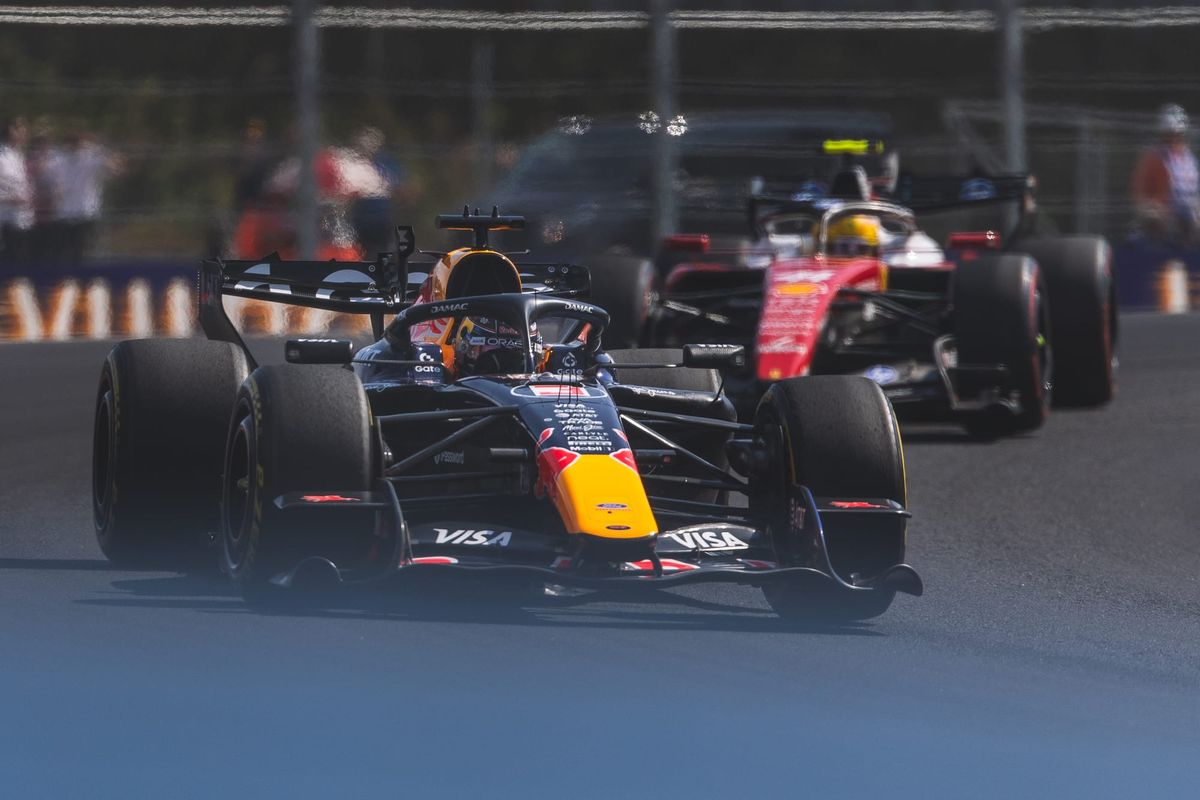
For 2027, Pirelli has tested on current-spec 2026 cars at Imola, improving correlation. Ferrari ran Lewis Hamilton, Charles Leclerc, and Antonio Giovinazzi; Red Bull used Liam Lawson and Arvid Lindblad.
Across roughly 400 laps, programmes compared constructions and compounds tuned for higher heat build and controlled thermal decay. The intent is predictable, faster wear without instability.
Around 400 Imola laps gave Pirelli direct feedback on constructions targeting higher degradation.
Chief engineer Simone Berra says priorities shifted from balance to degradation generation. Structural changes target both axles to raise surface temperatures and accelerate wear within safety limits.
These tyres aim to promote two and three-stop races, broadening strategy choice and undercut opportunities. The plan aligns with broader FIA F1 2027 changes to improve racing.
Testing continues mid-October at Magny-Cours, using the circuit’s watering system to evaluate wets and intermediates. Wet-weather performance remains crucial under 2027’s aerodynamic and powertrain profile.
This tyre direction complements the season reset outlined during the F1 launch for 2027, and proposals for shorter 2027 races intended to compress action and strategy windows.
Higher degradation is intended to widen strategy variance, not manufacture chaos.
Teams must revisit modelling, stint lengths, and pitcrew throughput. Greater degradation could penalise defensive tyre management and reward pace, traffic handling, and decisive pit calls.
If Pirelli hits its target window, multi-stop racing should return without excessive drop-off. The challenge is balancing entertainment with integrity, tyre longevity, and driver confidence.
Visual Summary
2026
Long life
2027
Heavy wear
2026: 1 Stop dominant
2027: Multiple Stops?
More pitstops. More drama. New F1 races ahead.
Pirelli’s 2027 tyres are built to transform strategy — expect teams to battle wear, not just rivals.
Ferrari & Red Bull drivers:400+ laps testing at Imola
Wet test coming: Magny-Cours, October

Daniel Miller reports on Formula 1 Grand Prix weekends with race-day analysis, team-radio highlights, and point-standings updates. He explains power-unit upgrades, aerodynamic developments, and driver rivalries in straightforward, SEO-friendly language for a global F1 audience.