
https://shop.fervogear.com/cart

Mercedes Tackles W17 Flaws with Exclusive F1 Upgrade

Highlights
- Mercedes introduced major W17 aerodynamic upgrade before Bahrain GP.
- Sidepod redesigned with straight ramp, lower bodywork near rear wheels.
- Floor and diffuser throat heavily reworked for better pressure distribution.
- Upgrade adds about 4% more downforce without increasing drag.
- Focus on improving slow corner exits and car’s dynamic balance.
- Changes debut during Malaysia’s Bahrain GP, testing upgrades in hot climate.
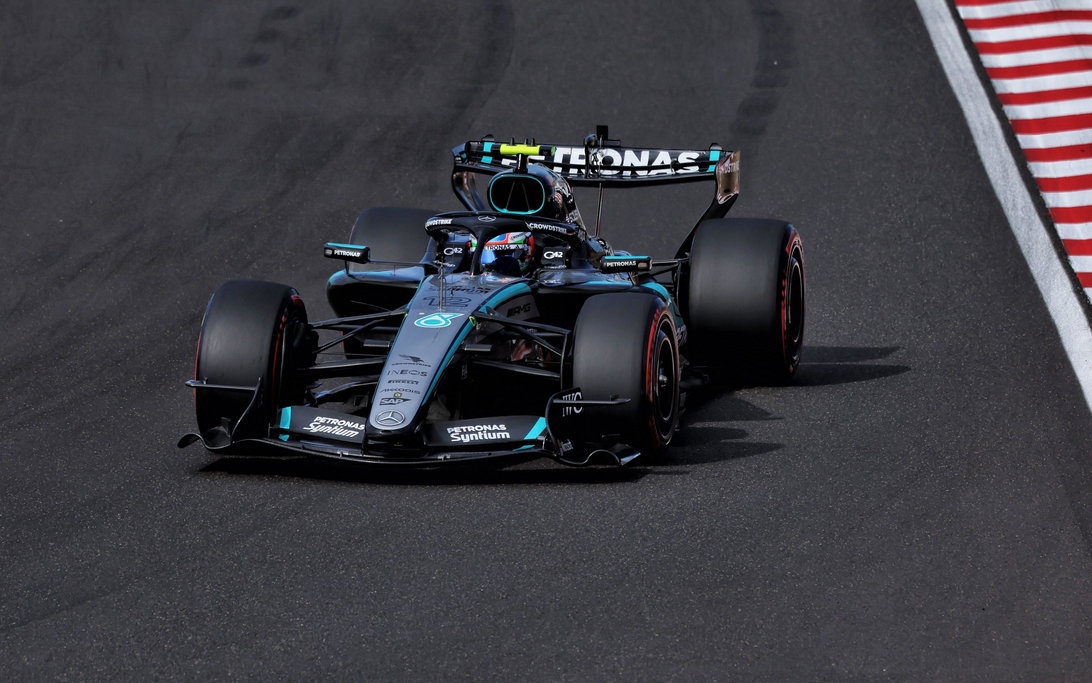
Mercedes has introduced a rare aerodynamic upgrade for the W17 ahead of the Bahrain Grand Prix in Malaysia, targeting a key weakness. It is the first aero change since Canada.
The most visible change sits around the sidepod area. A straight ramp now sweeps rearward, while lower bodywork drops near kerb height ahead of the rear wheels.

Cooling gills at cockpit level are repositioned. The Sepang-specific version runs a slimmer rear section to suit heat and humidity, while guiding flow more cleanly toward the rear axle.
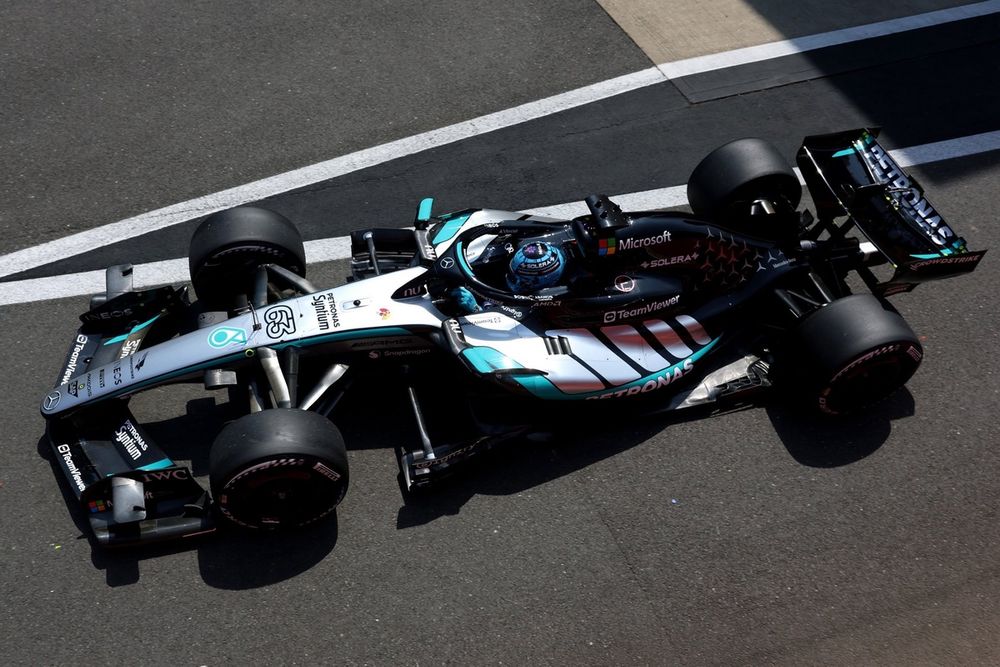
Mercedes has also reworked the floor around the diffuser throat. The aim is to reshape pressure distribution at the exit, a central determinant of overall aerodynamic load and consistency.
Internal projections indicate roughly four percent more downforce without extra drag. That preserves straight-line speed, suggesting a targeted refinement rather than a wholesale concept shift.
Mercedes targets about 4% more downforce without increasing drag, protecting straight-line performance.
The expected gain should stabilise the W17 on slow-corner exits, where traction and platform control have lagged. It addresses a persistent weakness despite the car’s strong power unit.
Sidepod reshaping and a reworked diffuser throat aim to improve airflow attachment and pressure distribution.
Sepang’s blend of long straights and fast sequences offers a representative test. Mercedes has prepared with this venue in mind, including thermal management through the revised gill arrangement.
The update lands as teams juggle development with planning for the 2026 season. Mercedes prioritises detail gains over resets, carrying learning toward the next rules phase.
This package continues a direction set earlier in the year, with emphasis on bodywork and floor interaction. The sidepod-driven changes will be judged against correlation through practice and race data.
The upgrade debuts at the Bahrain GP weekend in Malaysia, with correlation checks pivotal across practice and race runs.
Key indicators include traction off slow corners, stability through fast changes of direction, and tyre life. If validated, the W17 should be more competitive across upcoming venues.
There is little margin as rivals roll out updates. Mercedes relies on methodical execution, underpinned by a long-term record of adaptation, to close the gap through this phase.
Visual Summary
Bold New Airflow, Sharper Corners.
Mercedes’ rare W17 aero upgrade:
4% more downforce
with
zero extra drag
4% more downforce
with
zero extra drag
Downforce Increase
+4%
🏁
New look, new flow, new hope.
Will the W17 dance through Sepang’s corners? Malaysia is the proving ground.
New look, new flow, new hope.
Will the W17 dance through Sepang’s corners? Malaysia is the proving ground.

Daniel Miller reports on Formula 1 Grand Prix weekends with race-day analysis, team-radio highlights, and point-standings updates. He explains power-unit upgrades, aerodynamic developments, and driver rivalries in straightforward, SEO-friendly language for a global F1 audience.