

https://shop.fervogear.com/cart


Audi F1 Drivers Reveal Engine’s Biggest Flaw and How to Fix It

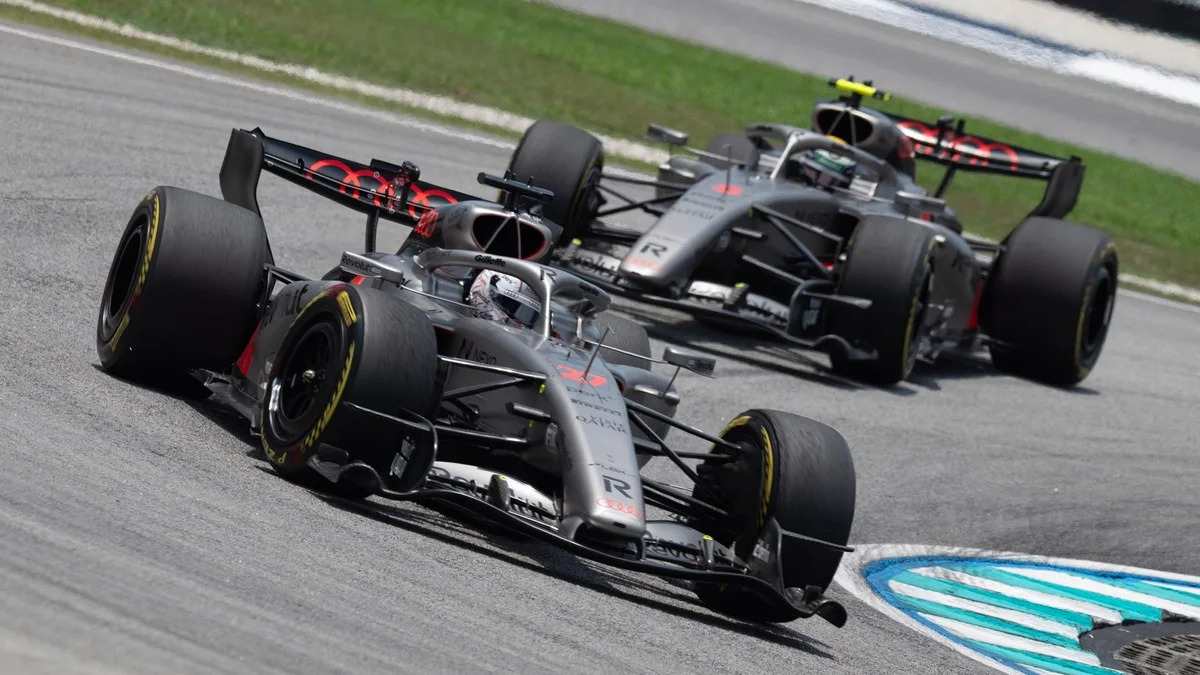
Highlights
- Audi F1 engines lose power in extreme heat at Singapore, Malaysia.
- Power unit struggles under heat, not due to cooling issues.
- Recent upgrades showed progress, confirmed in Malaysia after Baku debut.
- Drivers expect continued development and patience for improved performance.
- Audi aims to balance power delivery and reliability in varied conditions.
Audi faces a clear constraint as hot-weather races expose a power shortfall in its Formula 1 engine. Nico Hülkenberg and Gabriel Bortoleto confirm losses in Singapore and Malaysia.
Both venues are less power-sensitive, yet persistent ambient temperatures around 31 degrees Celsius magnify the issue. The heat reduces outright engine output and narrows Audi’s competitiveness window.

Crucially, the limitation is not primarily cooling-related. The team is not opening bodywork dramatically, but the power unit itself appears thermally sensitive under sustained heat load.
“The power unit itself struggles under heat, reducing outright engine output.”
Expectations for Singapore are therefore measured. Race execution and tyre management remain vital, but raw engine performance in high heat is the main headwind.
Bortoleto remains upbeat, citing Audi’s engine pedigree in DTM and Le Mans as a guide. He argues patience and steady development will close the gap as understanding grows.
“They’ve built excellent engines before; patience and development will turn this around.”
A recent upgrade package introduced in Baku has started to pay off. While that track’s 90-degree corner profile muddied the read, Malaysia provided clearer validation of the step. The team detailed the change after its Baku upgrade first appeared.
Bortoleto reports improvements from corner entry through to exit, describing a solid, broad-based gain. That progress suggests Audi’s development path is directionally sound.
Malaysia offered the first representative confirmation that the Baku upgrade worked as intended.
Hülkenberg stresses that mapping the car around the upgrade takes time. Audi leans on wind tunnel data and CFD to fine-tune the aero and correlate it with track behaviour.
With major questions around the package eased, attention turns to incremental gains. The process is iterative, but the learning curve now looks less steep.
In the broader picture, Audi is building towards a higher performance baseline while tackling the heat sensitivity. That aligns with its push to become a consistent reference point, as outlined in its recent turnaround trajectory.
Balancing power delivery with reliability across climates is the next test. Lessons from Asia should inform calibration, cooling margin, and deployment strategy at varied circuits, supporting ongoing expansion goals.
The long-term plan prioritises steady, validated improvements over headline chasing. With the driver group fronting a complex programme, planning also extends to future structure and responsibilities, as seen in the 2027 lineup outlook.
For now, Audi’s path is clear: mitigate the heat-related power loss, consolidate the aero gains, and keep chipping away. The ceiling rises as understanding deepens.
Visual Summary
POWER MELTDOWN IN THE HEAT
-20%
Power Unit Output Drop (in extreme heat)
⬆️
Upgrades Deliver
Confirmed improvement (Malaysia)
Confirmed improvement (Malaysia)
Audi’s challenge isn’t cooling –
it’s pure engine loss as the heat intensifies.
it’s pure engine loss as the heat intensifies.
“This has been our biggest limitation, but patience will pay off.
Audi has built winning engines before –
now it’s F1’s turn.”
– Gabriel Bortoleto
Audi has built winning engines before –
now it’s F1’s turn.”
– Gabriel Bortoleto
Audi F1 Engine Journey
Heat exposes Audi’s growing pains, but step-by-step progress and proven pedigree keep hope high.
Can patience and tech breakthroughs fire up their title dreams?
Can patience and tech breakthroughs fire up their title dreams?

Daniel Miller reports on Formula 1 Grand Prix weekends with race-day analysis, team-radio highlights, and point-standings updates. He explains power-unit upgrades, aerodynamic developments, and driver rivalries in straightforward, SEO-friendly language for a global F1 audience.