

https://shop.fervogear.com/cart


Alex Albon Praises Williams for Best Cooling Vests in Racing

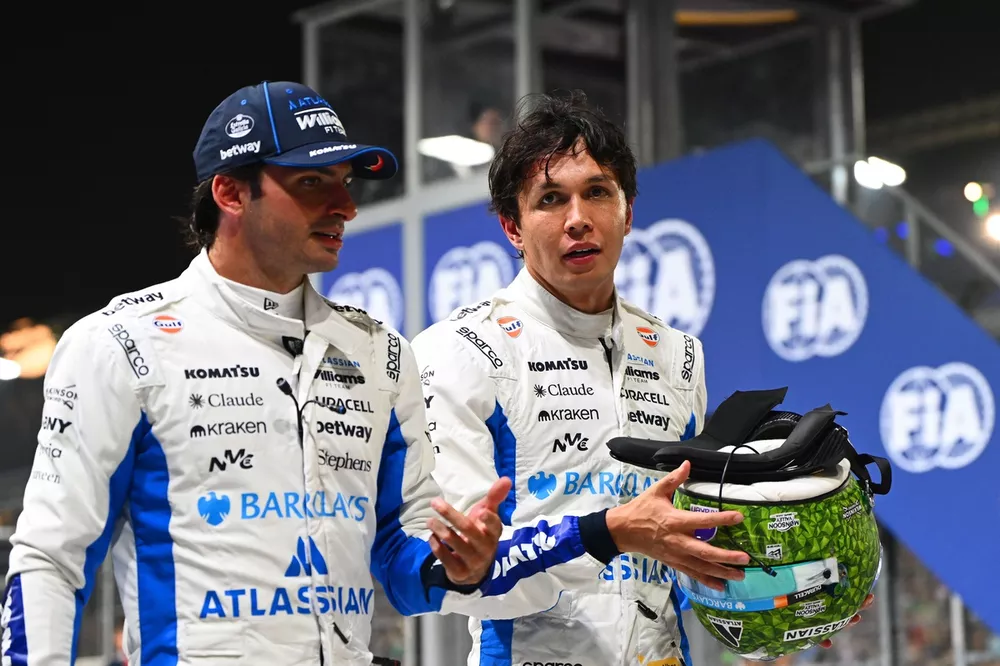
Highlights
- Alex Albon praised Williams’ cooling vest as best on grid.
- Singapore GP faced Heat Hazard with 30°C and 78% humidity.
- Drivers chose cooling vest or ballast after 2023 Qatar GP issues.
- Max Verstappen criticized vest for limiting movement and reliability.
- Kimi Antonelli suffered heat stroke due to vest malfunctions.
- Upcoming races expected cooler; Qatar GP faces possible cancellation.
Alex Albon hails Williams’ cooling vest as the best on the grid after a sweltering Singapore Grand Prix run under a Heat Hazard, with 30°C temperatures and 78% humidity.
The choice between wearing a cooling vest or adding equivalent ballast, introduced after the gruelling 2023 Qatar GP, shapes driver preparation and car setup. Williams commits to the vest.
Albon’s race unravels with escalating brake temperatures, forcing management before a late retirement, aligning with issues detailed in Albon’s three-wheel issue analysis.
Even so, Albon reports the Williams system delivers when it activates. He says it fails for the first 10 laps, then stabilises and provides consistent cabin relief thereafter.
“Williams’ cooling vest is the best on the grid.” — Alex Albon
He adds many teams struggle to make similar systems work reliably. Carlos Sainz echoes the broader point that robust cooling solutions can be a competitive advantage in extreme heat.
Not everyone buys in. Pierre Gasly claims he does not need the vest, while Isack Hadjar says it should be banned, arguing physical strain is part of racing.
Max Verstappen says vest cables restrict movement and questions whether cooling lasts a full race distance.
Max Verstappen takes a practical view, noting cockpit heat is manageable and not “sauna-like.” He doubts the vest’s endurance and says cables limit driver range of motion.
Reliability fears grow after Kimi Antonelli’s experiences. He reports early failures, a pump breakdown, and a session where 50°C water led to heat stroke in Austin.
Kimi Antonelli suffered heat stroke after 50°C water circulated through a failed cooling vest system.
That mix of performance gains and failures sustains an ongoing paddock discussion, as explored in the broader cooling vests debate around safety, regulation, and fairness.
Short-term forecasts point to cooler events and reduced Heat Hazard risk. Qatar remains the outlier but could be cancelled amid ongoing regional conflict.
Williams’ execution on cooling sits within a wider technical push, reflected in its 50th anniversary celebrations and future-facing 2027 F1 car project.
Singapore ran under a Heat Hazard: 30°C ambient and 78% humidity shaped race strategy and reliability.
Visual Summary
🥈
Others
Others
🥇
Williams
Williams
🥉
30°C | 78% humidity
🧊 COOL 🟦
Albon: “Best on the grid”
Williams cooling vest delivers comfort after 10 hot laps.
COOLING
🔥 HEAT 🟥
Many complained: Unreliable, limits movement, barely lasts
Gasly: “No need.” Verstappen: “Doesn’t last.” Hadjar: “Should be banned.”
CONFIDENCE
👕
Williams’ cooling vest became the true star of the Singapore GP heat — raising the bar for racing comfort.
Williams’ cooling vest became the true star of the Singapore GP heat — raising the bar for racing comfort.

Zane Muniz writes across NASCAR, IndyCar, F1, IMSA, NHRA, and dirt-racing news. His breaking-news alerts and event previews ensure motorsport fans never miss a lap, drift, or drag-strip showdown.