
https://shop.fervogear.com/cart


Christian Horner Praised for F1 Engine After Maiden Win

Highlights
- Red Bull Ford Powertrains achieved first F1 race win recently
- Christian Horner led Red Bull Racing until July 2025
- First win with in-house engine happened at Bahrain Grand Prix
- Max Verstappen secured consecutive wins, confirming engine competitiveness
- Horner noted leadership changes after co-founder Dietrich Mateschitz’s death
- Red Bull developed own power units after Honda’s 2021 exit
Christian Horner says Red Bull shareholders called to thank him after Red Bull Ford Powertrains’ first Formula 1 win in Bahrain, a pivotal milestone for the team’s in‑house power unit.
Although replaced as team principal by Laurent Mekies in July 2025, Horner’s groundwork underpins the project that now delivers on track.

His two decades in charge produced eight drivers’ crowns and six constructors’ titles, while steering the shift from customer engines to an integrated power unit operation after Honda’s planned withdrawal.
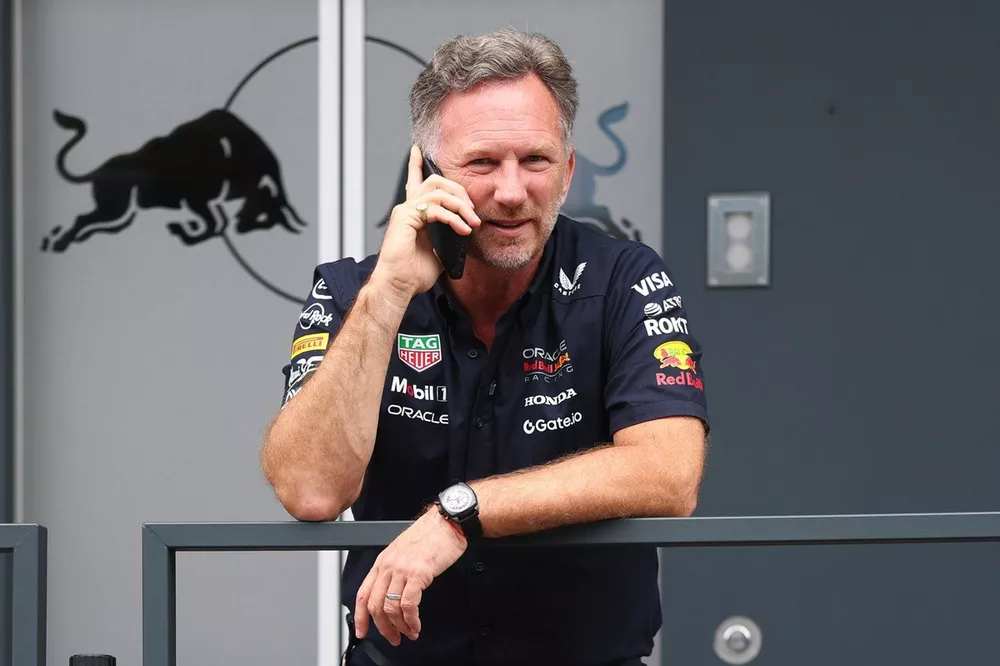
Red Bull ran Honda power under its badge until 2025 before debuting a Ford co‑developed unit in 2026, when Max Verstappen delivered first victory for the in‑house project in Bahrain.
Verstappen followed up with Singapore success a week later, reinforcing early competitiveness and validating Red Bull Powertrains’ aggressive timelines and staffing model.
Horner frames the achievement as the payoff for building Red Bull Powertrains from scratch, recruiting specialists, and fostering autonomy on site at Milton Keynes after Honda’s 2020 exit decision.
“Winning a Grand Prix is very hard, and it meant a lot to everyone who helped deliver this engine,” Horner says.
He says shareholder recognition via a congratulatory call underlined the collective effort behind the engine group during its formative months and through its first competitive milestones.
The significance of those early results, and Horner’s role, features in his reflections on the programme’s F1 engine wins and the strategic choices that shaped them.
The upbeat call contrasts with the message he received in 2025, when he was removed amid a post‑Dietrich Mateschitz restructuring and a shift toward more centralised oversight.
That change reflected evolving priorities among key stakeholders, including the Yoovidhya family, and contributed to a deadlock that made his departure inevitable, explored further in the team principal offer context.
Horner was replaced by Laurent Mekies in July 2025 amid a shift to more centralised Red Bull oversight.
For Red Bull, the engine division’s quick return on investment supports the rationale for bringing performance‑critical technology in‑house under the 2026 framework, rather than remaining dependent on external suppliers.
That strategic gamble, detailed in Red Bull’s own assessment of its F1 powertrain gamble, now has clear competitive validation.
Equally, the early wins illustrate a smoother integration between chassis and power unit groups at Milton Keynes, with shorter feedback loops and clear accountability improving development cadence and reliability.
Max Verstappen’s Bahrain and Singapore victories quickly validated Red Bull Powertrains’ direction.
The next test is sustainability across varied circuits and conditions, but the foundation looks solid, as outlined in Red Bull’s review of its first year with the new power unit.
Visual Summary
Red Bull’s Engine, Red-Hot
First F1 victory for Red Bull-Ford Powertrains 🔥
(Malaysia Grand Prix, 2026)
(Malaysia Grand Prix, 2026)
WIN
Horner’s Journey
New Power
Red Bull-Ford
Red Bull-Ford
📞
Dismissed
2025
📞
Thank You
2026
🏆 8
Drivers’ Titles
🏁 6
Constructors’ Titles
🚀
1st In-House Engine Win
“Red Bull’s engine ignition was sparked by Horner’s vision—a milestone years in the making.”

Daniel Miller reports on Formula 1 Grand Prix weekends with race-day analysis, team-radio highlights, and point-standings updates. He explains power-unit upgrades, aerodynamic developments, and driver rivalries in straightforward, SEO-friendly language for a global F1 audience.