

https://shop.fervogear.com/cart

Radical McLaren Upgrade Targets Its Biggest Performance Flaw

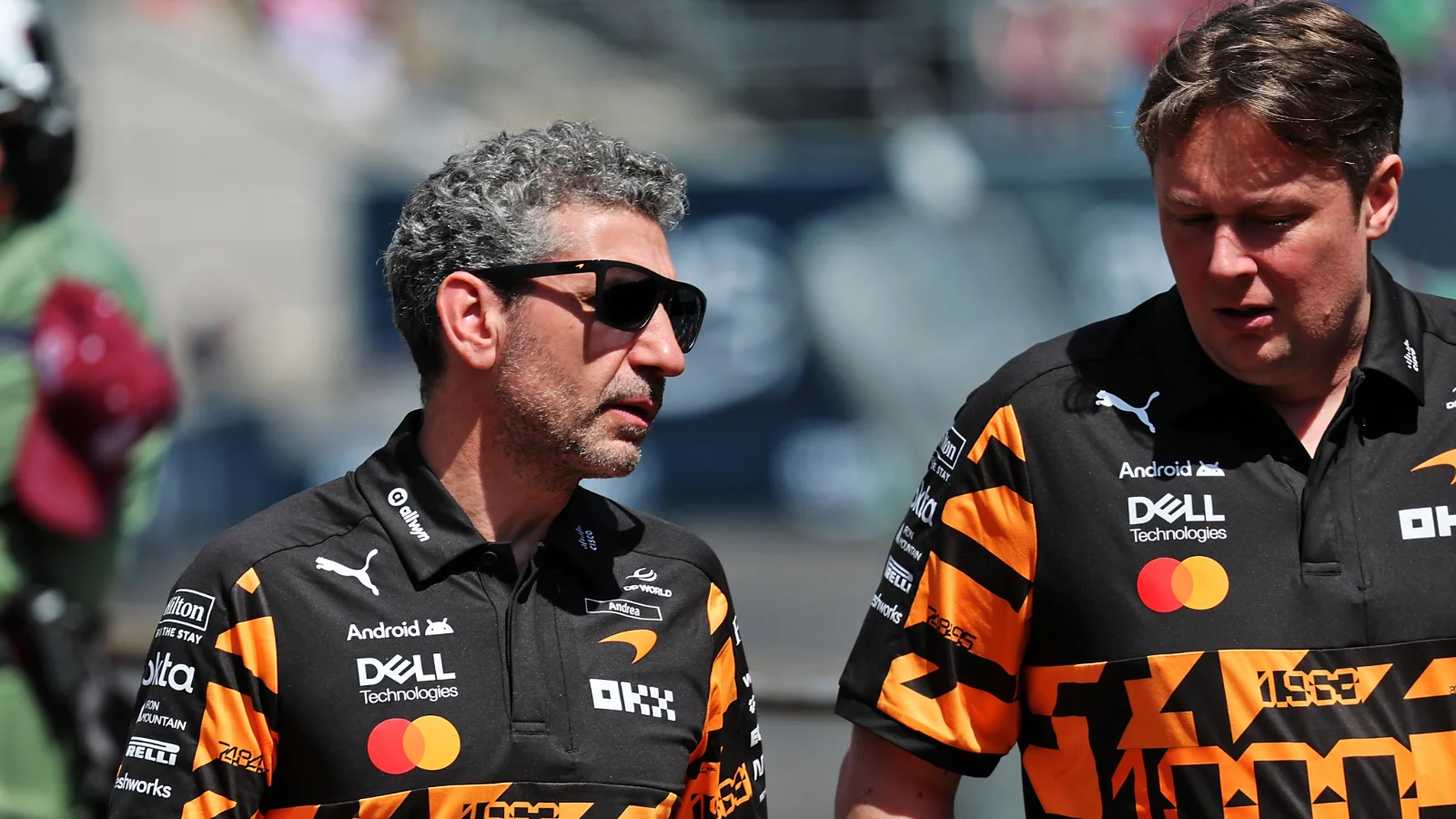
Highlights
- McLaren upgraded MCL40 sidepods to reduce high aerodynamic drag.
- Sidepod inlets now squared with horizontal lip, like Red Bull.
- Internal ducting reshaped, improving airflow and cooling efficiency.
- Upgrade targets better straight-line speed for Norris and Piastri.
- Change may influence future McLaren cooling system designs.
- Azerbaijan GP marks key step in McLaren’s aerodynamic progress.
McLaren arrives in Baku with a major MCL40 sidepod upgrade, targeting chronic straight-line drag and promising a tangible efficiency boost for Lando Norris and Oscar Piastri.
The most visible change is a squarer sidepod inlet with a pronounced horizontal lip, echoing Red Bull’s layout, to manage separation and energise the undercut flow.

That exterior tweak fronts a deeper repackaging. Internal ducting around the undercut is reshaped, while radiator and heat-exchanger areas remain unchanged to preserve baseline cooling capacity.
By altering duct geometry and positioning, McLaren manipulates pressure and local flow speeds, smoothing the cooling path and trimming associated drag without compromising thermal headroom.
McLaren introduces squared sidepod inlets with a pronounced horizontal lip in Baku.
This tackles a long-standing handicap that costs time on the straights, particularly at Baku, and underpins a more efficiency-led approach described in the team’s focused Baku showdown coverage.
Crucially, the concept aligns with longer-term packaging philosophy. If correlation holds, lessons here could influence McLaren’s cooling architecture for 2027 and beyond across varied circuit demands.
Internal ducting reshaped to cut cooling drag without reducing heat-exchanger area.
Under the cost cap and aerodynamic testing limits, targeting cooling-induced drag is efficient spend. It yields lap-time on power tracks without the risk of downforce eroding elsewhere.
Any straight-line uplift aids qualifying tow-less laps and race defence, supporting the constructors’ push. Norris’s Baku form features in this race summary, highlighting what marginal gains can unlock.
The step builds on recent developments, from the Italian package to detailed airflow trials, including the team’s H-wing lessons and earlier car feature analysis.
Efficiency gains target qualifying and race pace as McLaren chases Ferrari in the constructors’ fight.
Validation now depends on temperature sensitivity, traffic wake behaviour, and ride-height windows. If robust, this upgrade narrows McLaren’s deficit to the leaders without sacrificing operational flexibility.
Visual Summary
Old Drag
New Surge
Less Drag, More Speed 🏎️💨
McLaren’s sidepod revolution debuts at Baku: A new boxy inlet and smarter internal ducts slash aerodynamic drag, unlocking crucial speed on the straights—without overheating.
Ferrari
McLaren
Innovation Inside:
Sophisticated ductwork ➔ lower drag, faster on straights
Sophisticated ductwork ➔ lower drag, faster on straights

Daniel Miller reports on Formula 1 Grand Prix weekends with race-day analysis, team-radio highlights, and point-standings updates. He explains power-unit upgrades, aerodynamic developments, and driver rivalries in straightforward, SEO-friendly language for a global F1 audience.