
https://shop.fervogear.com/cart

How Cadillac’s Fix Dropped F1 Brake Temps by 100°C – Bottas Explains


Highlights
- Cadillac cut front brake temperatures by about 100 degrees Celsius.
- Bottas retired from multiple races due to brake overheating issues.
- Cooling duct redesign introduced at Azerbaijan GP improved brake temps.
- Cadillac hired Craig Skinner, Eric Blandin, and Tim Lean for engineering.
- Perez expects challenges at Bahrain and Sepang due to circuit nature.
- Perez reported Ferrari’s ADUO 2 upgrade added 0.15 seconds performance.
Valtteri Bottas says Cadillac has slashed front brake temperatures by about 100C after revising its cooling architecture, a key step in resolving the MAC-26’s season-defining reliability weakness.
Brake overheating forced retirements in Hungary, Monaco, and Austria, and also sidelined Sergio Perez at the Red Bull Ring. Drivers often had to manage temps instead of racing flat-out.

Initial tweaks to inlet scoops and apertures at Hungary failed to arrest the problem. Genuine progress followed with new inlet and exit duct designs for the Azerbaijan Grand Prix.
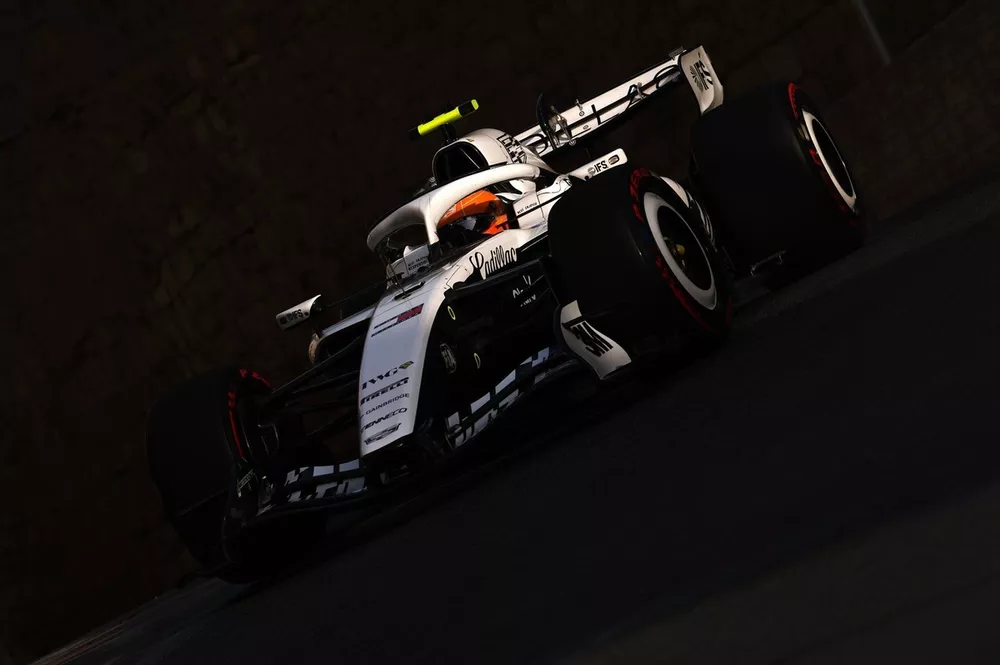
Bottas reports roughly 100C lower front brake temperatures since that update, providing vital thermal margin and decoupling brake management from stint planning.
“We’ve reduced about 100 degrees of brake temperature, and that gives us more margin.” — Valtteri Bottas
The redesign sits within brake‑duct regulations and carries aerodynamic consequences. Larger exits and altered flow paths can raise drag and affect front‑axle wake, so Cadillac balances cooling margin against performance.
Upcoming heat tests in Bahrain and Sepang will stress the fix. Sustained heavy braking and limited cooling airflow there will reveal whether the solution scales across extreme conditions.
Perez expects those venues to expose remaining weaknesses, particularly through long, fast sweeps. He admits Malaysia may bring Cadillac “back to our reality” despite incremental progress.
“I’m not looking forward to Malaysia. I think we will be back to our reality.” — Sergio Perez
Perez also benchmarked Ferrari’s ADUO 2 power unit upgrade at around 0.15s. It is modest, yet meaningful given the field’s compression and the team’s need for predictable baselines.
Perez estimates Ferrari’s ADUO 2 upgrade is worth roughly 0.15 seconds.
Cadillac has strengthened its technical group, hiring Craig Skinner, Eric Blandin, and Tim Lean, with details of the new signings underlining that direction.
Skinner’s background as Red Bull chief designer offers process rigor. Perez notes Skinner influenced floor philosophy there, aiding balance, although accident damage masked some gains.
Blandin’s leadership should sharpen aero direction, while Lean’s modelling focus targets correlation and development rate. Those hires complement Cadillac’s evolving US‑UK structure strategy.
Even with the cooling gain, outright pace remains the benchmark. The objective now is stable, repeatable windows that let drivers push, then unlock further aero and mechanical upgrades.
Bottas’s earlier frustration with recurring stoppages framed this priority, yet the Baku step suggests the loop is finally closing.
Visual Summary
–100°C
Cadillac Finally Cools Its Brakes
Major overheating fix puts Bottas & Perez back in the race
3
Retirements
from overheated brakes
Retirements
from overheated brakes
🛠️
3 new engineers
from Red Bull, Aston, McLaren
from Red Bull, Aston, McLaren
🔥
Sepang: The next heat test
🚗💨
💥
“More margin, for sure!”
“We’ve reduced about 100 degrees of brake temperature, and that gives us more margin, for sure.”
— Valtteri Bottas
— Valtteri Bottas
Perez: “Not looking forward to Malaysia… I think we will be back to our reality.”
Engineering Upgrades
Competitive Future?

Daniel Miller reports on Formula 1 Grand Prix weekends with race-day analysis, team-radio highlights, and point-standings updates. He explains power-unit upgrades, aerodynamic developments, and driver rivalries in straightforward, SEO-friendly language for a global F1 audience.